Sore Fingertips? Painless Diabetes Testing Tips
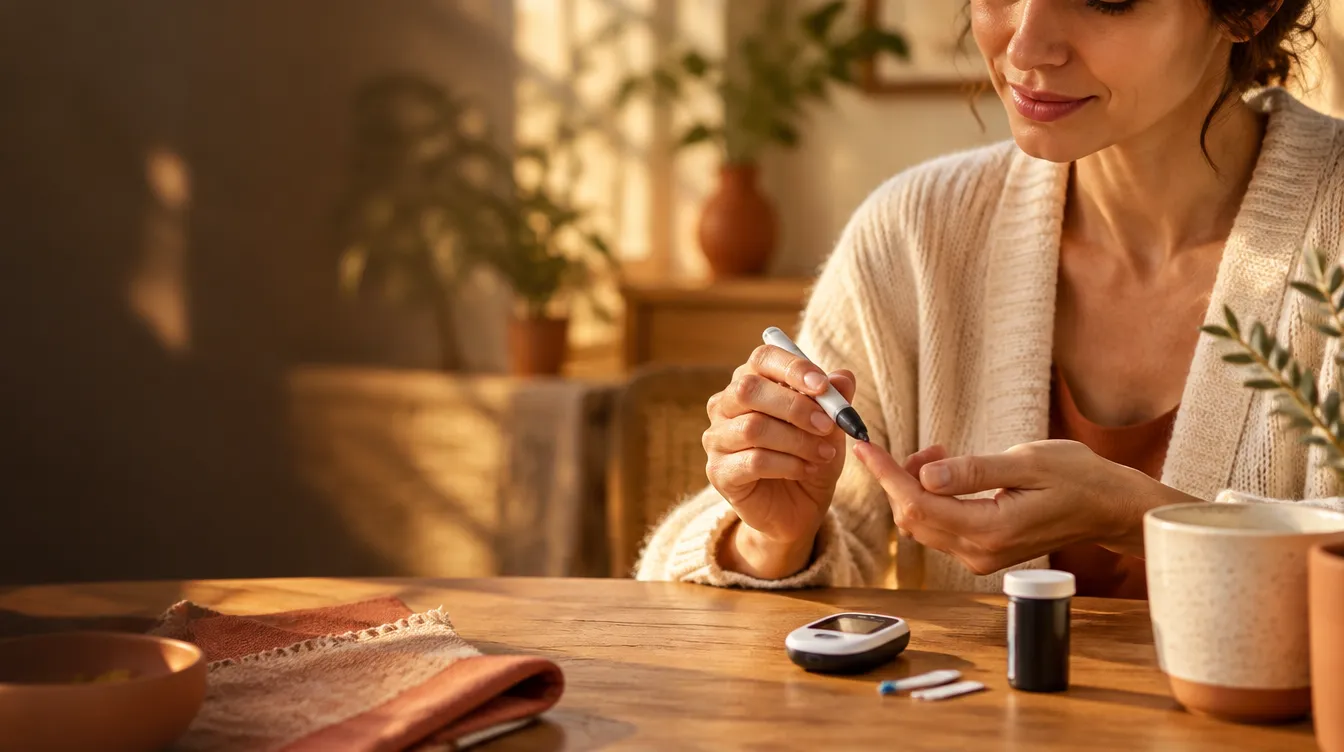
Quick answer: Sore fingertips come from repeated punctures in the same spots with lancets set too deep — and nearly all of it is fixable. Use the thinnest lancet gauge your meter supports (30–33G), set depth to the minimum that draws blood, rotate through all ten fingers systematically, lance the sides of fingertips rather than the pads, and change lancets more often than “never.” Forearm or palm alternate-site testing helps, with timing limits — and if testing pain is why you test less than you should, that’s a solvable equipment problem, not a willpower problem.
Testing pain is one of the quiet reasons people with diabetes test less than their care team recommends. It shouldn’t be — the fix is usually a settings change and a rotation habit. This guide covers the whole toolbox.
Why do fingertips get sore in the first place?
Each lancet puncture is a tiny wound. Soreness builds when the wounds stack: the same two or three favorite spots get punctured daily, calluses form, then deeper punctures become “necessary” to draw blood from toughened skin, which deepens the damage. Add the most common habit of all — never changing the lancet — and a needle that starts sharp gets micro-dulled with every use, tearing rather than piercing.
Three fixes attack the cycle directly:
- Depth dial down. Most lancing devices have 5–8 depth settings. Most people start too deep. Set to the shallowest that reliably draws blood — usually you can go at least two settings shallower than your current one.
- Gauge up (number down… actually up). Lancets are sized by gauge: higher gauge = thinner needle. If your lancing device takes universal lancets, a 30G or 33G lancet is noticeably gentler than the 26–28G defaults many people use. Our lancets guide covers the sizing. The CDC keeps plain guidance on monitoring technique.
- Rotate like it matters. Ten fingers, sides and pads — pick a pattern (pinky to thumb, both hands) and work through it. Each spot then gets punctured a tenth as often, and the skin recovers between hits.
- Change the lancet. Not every poke, but regularly — every few days rather than never. A fresh lancet needs less depth, which compounds all the other fixes.
The sides of fingertips, and other technique wins
The sides of fingertips — along the edge of each finger, not the center pad — have fewer nerve endings and heal faster, and they’re still approved sampling spots. Center-pad lancing is the most painful spot on the most-used finger, chosen by nobody who thought about it.
Two more wins:
- Warm hands draw easier blood. Cold fingers need deeper punctures. Wash with warm water or rub hands together before testing — shallower puncture, faster sample.
- Let gravity help. A hand hanging down briefly before lancing pools blood at the fingertips, so you need a smaller drop.
What is alternate site testing — and when can you use it?
Meters approved for alternate site testing can sample from the forearm, upper arm, or palm — places with fewer nerve endings, so it genuinely hurts less. But there’s a timing catch: blood from these sites lags fingertip blood by up to ~20–30 minutes when glucose is changing quickly.
The safe pattern most guidance agrees on:
- Use alternate sites for fasting, pre-meal, or bedtime readings — times when glucose is relatively stable.
- Use fingertips when glucose might be moving fast: after suspected lows, during or after exercise, right after meals, and any time you’re confirming a symptom. A forearm reading during a rapid low can read normal while your fingertip — and your body — knows otherwise.
Palm (thenar) is the exception that keeps fingertip-like accuracy in most studies, if your meter approves it and the callus there doesn’t bother you.
Do CGMs make this all moot?
For many people, largely yes — a continuous glucose monitor replaces most fingersticks with a sensor worn for 10–15 days, and fingertip checks drop to calibration-and-confirmation duty (or disappear entirely with modern sensors). Our CGM vs finger sticks guide covers cost, insurance, and accuracy trade-offs. But CGM access varies — and even CGM users occasionally need a fingerstick, so the low-pain technique above remains worth ten minutes of setup.
Also worth saying: the CGM transition has its own friction — adhesive skin reactions are the sensor-world version of sore fingertips, and barrier wipes and placement rotation solve most of that too. The pattern repeats across diabetes tech: discomfort that seems permanent is usually a technique or equipment setting away from gone. The people who test (or wear, or dose) comfortably aren’t tougher — they’ve just found the settings.
One last equipment note for meter users: the meter’s required sample size changes everything. Older meters need a big drop of blood, which forces deeper punctures; modern meters often run on a sample half the size. If your meter is more than a few years old, the new-model conversation is partly a comfort conversation — our meter buying guide covers what to look for without overpaying.
Build a rotation that actually sticks
The reason most rotation advice fails is that nobody remembers which finger they used yesterday. Make the system do the remembering:
- Pick a fixed sequence — left pinky to left thumb, then right thumb to right pinky, alternating sides of each finger as you go. That’s 20 usable spots before you repeat.
- Let the device help. Some lancing devices make even pressure on every depth setting easier; cheap ones vary. If your device needs max depth to work at all, the device is the problem, not your skin.
- Tie lancing to a visual cue. Testing before meals already happens; the rotation habit rides along free. A tiny dot sticker on the device that moves to mark “today’s finger” works better than memory.
- Give sore spots a full week off. If one fingertip is already tender, skip it entirely for seven days — the skin recovers completely, and forcing it “because it’s Tuesday” resets the healing clock.
Ten minutes of setup buys months of comfortable testing — and comfortable testing is the kind you actually do, which is the only kind that helps.
The takeaway
So: sore fingertips are a settings problem wearing a willpower costume. Thinnest lancet your device takes, shallowest depth that works, a 20-spot rotation, sides of fingers, fresh lancets every few days, warm hands, and alternate-site testing for stable-time readings — with fingertips kept for the fast-moving moments. And if the equipment math still doesn’t pencil out, that’s exactly what the CGM conversation is for. Testing you don’t dread is testing that happens.
Frequently asked questions
Why do my fingertips hurt so much from diabetes testing? Repeated punctures in the same spots with too-deep lancet settings and a never-changed lancet. The fix stack: thinnest lancet available, minimum depth, systematic rotation through all ten fingers, sides of fingers instead of pads, and lancet changes every few days.
How often should I change my lancet? Ideally every few uses; realistically, at least every few days. Lancets dull quickly, and a dull lancet tears skin rather than piercing it — more pain, more callus, deeper settings needed. “Change it never” is the single most common cause of sore fingertips.
Does alternate site testing hurt less? Yes — forearm and upper-arm skin has fewer nerve endings. But those sites lag fingertip readings by up to 20–30 minutes when glucose is changing fast, so use them for stable times (fasting, pre-meal, bedtime) and stick to fingertips when glucose may be moving.
What gauge lancet hurts the least? The highest gauge your device accepts — 30G to 33G are the thinnest common options. Pair the thin lancet with the shallowest depth setting that draws blood; the two together matter more than either alone.
Can I test blood sugar on my forearm or palm? If your meter is approved for alternate site testing, yes — forearm and upper arm for stable-time readings, palm being the more timing-accurate option. Always check your specific meter’s manual, and keep fingertip testing for suspected lows and fast-changing situations.
Related reads
This guide is also available in Spanish: ¿Yemas de dedos dolorosas? Cómo medir la glucosa sin dolor.
Want the complete system?
This guide is based on Hardy's ebooks — plain-language, step-by-step PDFs you can read in one sitting. See all guides
Educational content only — not a substitute for advice from your doctor or pharmacist. Always work with your care team.