CGM vs Finger Sticks: Which Monitoring Style Fits Your Life
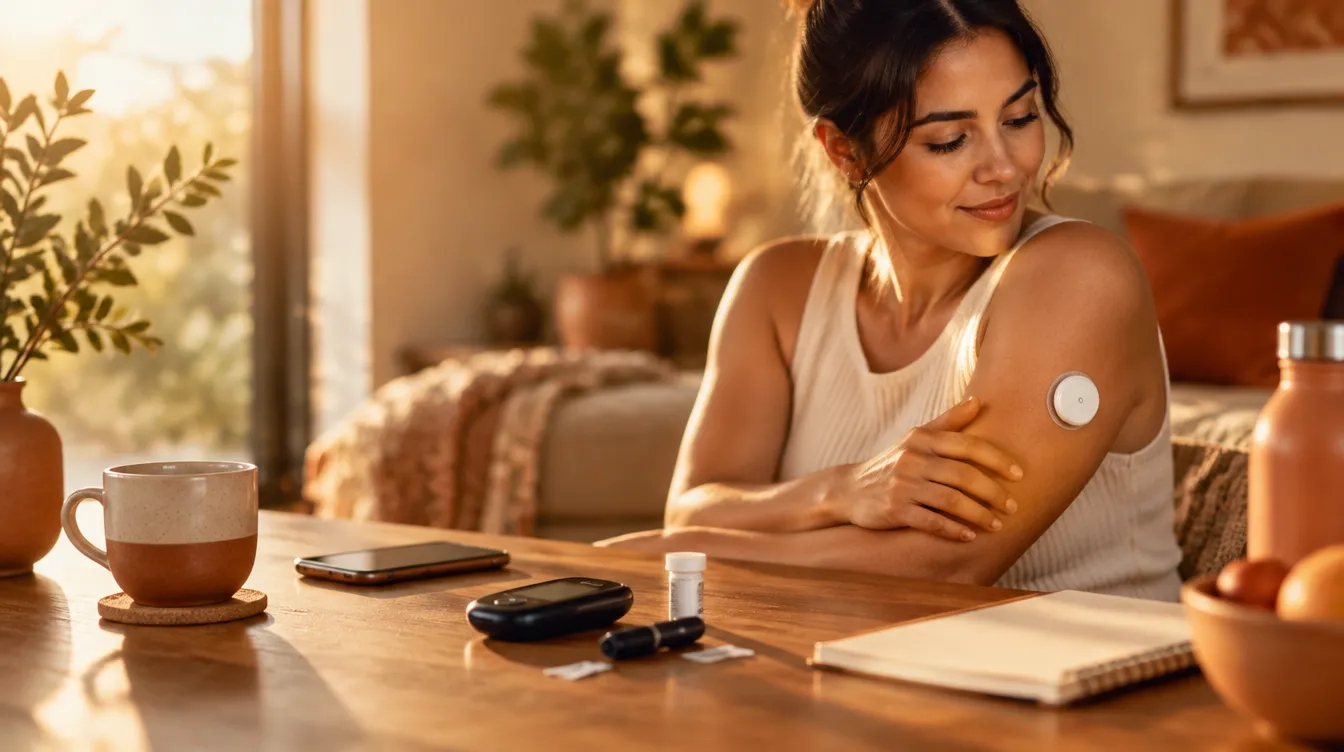
Quick answer: finger sticks give you precise single numbers at the moments you choose to test. A CGM shows a continuous stream — including overnight and after meals — for as long as its sensor lasts. CGMs cost more per month but reveal patterns a meter can’t see; meters stay unbeatable on price. Many people eventually use both.
One shows you a snapshot. The other shows you the whole film. Choosing between a CGM and a finger-stick meter is really choosing which view helps you manage your type 2 diabetes — and that depends on your targets, your budget, and how your care team wants to see your data.
This comparison stays in plain language. It’s educational and works alongside the guidance your care team has given you; whether a CGM is appropriate for you is their call, and their instructions always come first.
What does each one actually show you?
Quick answer: a finger stick is a single, accurate number at the moment you test. A CGM reads glucose in the fluid under your skin every few minutes, showing direction and speed — rising, falling, holding steady — around the clock.
Both report glucose, but they answer different questions:
- Finger stick: “What is my number right now?” — perfect for confirming how a specific meal, walk, or decision turned out.
- CGM: “What is my glucose doing all day — including while I sleep?” — arrows show whether you’re rising or dropping, and the app can show how last night’s dinner behaved for hours afterward.
The CGM’s stream of data is why so many people describe it as an eye-opener: foods and routines that looked fine at test time show a different story when you can see the full curve. It also explains why the two tools overlap: a CGM sometimes reads a little behind a finger stick during fast changes, so a big move on the arrows is worth confirming with a stick when precision matters.
What does each option cost?
Quick answer: meters are cheap to buy and cost only their strips — often the lowest-cost way to test. CGMs involve sensor purchases that repeat every 10 to 15 days, so the monthly cost is higher; insurance coverage varies a lot.
A rough cost picture:
| Finger-stick meter | CGM | |
|---|---|---|
| Upfront | Low (often free or cheap with strips) | Receiver is usually your phone |
| Ongoing | Strip refills you control | New sensor every 1–2 weeks |
| Monthly cost | Typically the lowest | Higher, unless covered |
| Coverage | Often covered well | Coverage varies by plan and diagnosis |
Because sensor costs repeat, the honest way to compare is per month, not per device: price out a month of strips for your testing frequency against a month of sensors. And check what your insurance or provincial plan covers before deciding — coverage differences can outweigh every other factor. Related: Buying Diabetes Test Strips Online Without Getting Burned walks through this step by step.
Which one fits a busy workday?
Quick answer: if you test occasionally and want low cost, a meter fits a workday better. If you want to see how your days, meals, and nights connect without stopping to test, a CGM does that work silently.
Think about your actual day:
- Choose the meter if you test a few times a day at predictable moments, want the cheapest route, and don’t mind the finger-prick ritual.
- Choose a CGM if you want overnight and after-meal patterns, hate finger pricks enough that they’d make you skip testing, or your care team wants trend data to adjust your plan.
A CGM also suits people who travel or work shifts, because it keeps recording while routine is impossible. A meter suits people who want control over when and what they spend.
Can you use both?
Quick answer: yes — many people wear a CGM for the pattern picture and keep a meter for confirming numbers, calibrating moments, and periods when sensors are out of stock.
The two tools are not rivals so much as a pair:
- Use the CGM to see how your meals, walks, and sleep connect across whole days.
- Use the meter to confirm a surprising number, during fast changes, and whenever your CGM reader asks for a check. Related: Dessert Within Your Carb Budget walks through this step by step.
If you go this route, your care team may want you to bring both data sets to appointments — a sensor graph plus occasional stick readings is often more useful for them than either alone.
What should you ask your care team?
Quick answer: ask whether a CGM fits your plan and your targets, whether your insurance covers it, how they want the data shared, and how often they want finger-stick readings alongside it.
Four questions cover the decision:
- Given my targets and treatment, is a CGM appropriate for me right now?
- What does my insurance or provincial plan cover — sensors, receiver, or neither?
- How should I share the data with you — app, reports, printouts?
- How often should I still confirm with finger sticks?
The bottom line
Quick answer: meters win on price and simplicity; CGMs win on insight. Pick based on which kind of information would actually change what you do — and revisit the choice if your plan or coverage changes.
Everything in this guide is educational and works alongside the guidance your care team has given you. Their instructions about your monitoring plan, your targets, and any device choice always come first.
Related reads
- How to Choose a Glucose Meter Without Overpaying
- Insulin Pumps Explained in Plain Language: Types, Smart Features, and Who Qualifies
- Best Apps for Tracking Blood Sugar — and What to Log Besides Numbers
- What Is Type 2 Diabetes, in Plain Kitchen Language
This guide is also available in Spanish: CGM o tira en el dedo: qué monitoreo encaja con tu vida.
Frequently asked questions
What does each one actually show you?
Quick answer: a finger stick is a single, accurate number at the moment you test. A CGM reads glucose in the fluid under your skin every few minutes, showing direction and speed — rising, falling, holding steady — around the clock.
What does each option cost?
Quick answer: meters are cheap to buy and cost only their strips — often the lowest-cost way to test. CGMs involve sensor purchases that repeat every 10 to 15 days, so the monthly cost is higher; insurance coverage varies a lot.
Which one fits a busy workday?
Quick answer: if you test occasionally and want low cost, a meter fits a workday better. If you want to see how your days, meals, and nights connect without stopping to test, a CGM does that work silently.
Can you use both?
Quick answer: yes — many people wear a CGM for the pattern picture and keep a meter for confirming numbers, calibrating moments, and periods when sensors are out of stock.
What should you ask your care team?
Quick answer: ask whether a CGM fits your plan and your targets, whether your insurance covers it, how they want the data shared, and how often they want finger-stick readings alongside it.
Want the complete system?
This guide is based on Hardy's ebooks — plain-language, step-by-step PDFs you can read in one sitting. See all guides
Educational content only — not a substitute for advice from your doctor or pharmacist. Always work with your care team.