How to Choose Diabetes Lancets That Don't Hurt
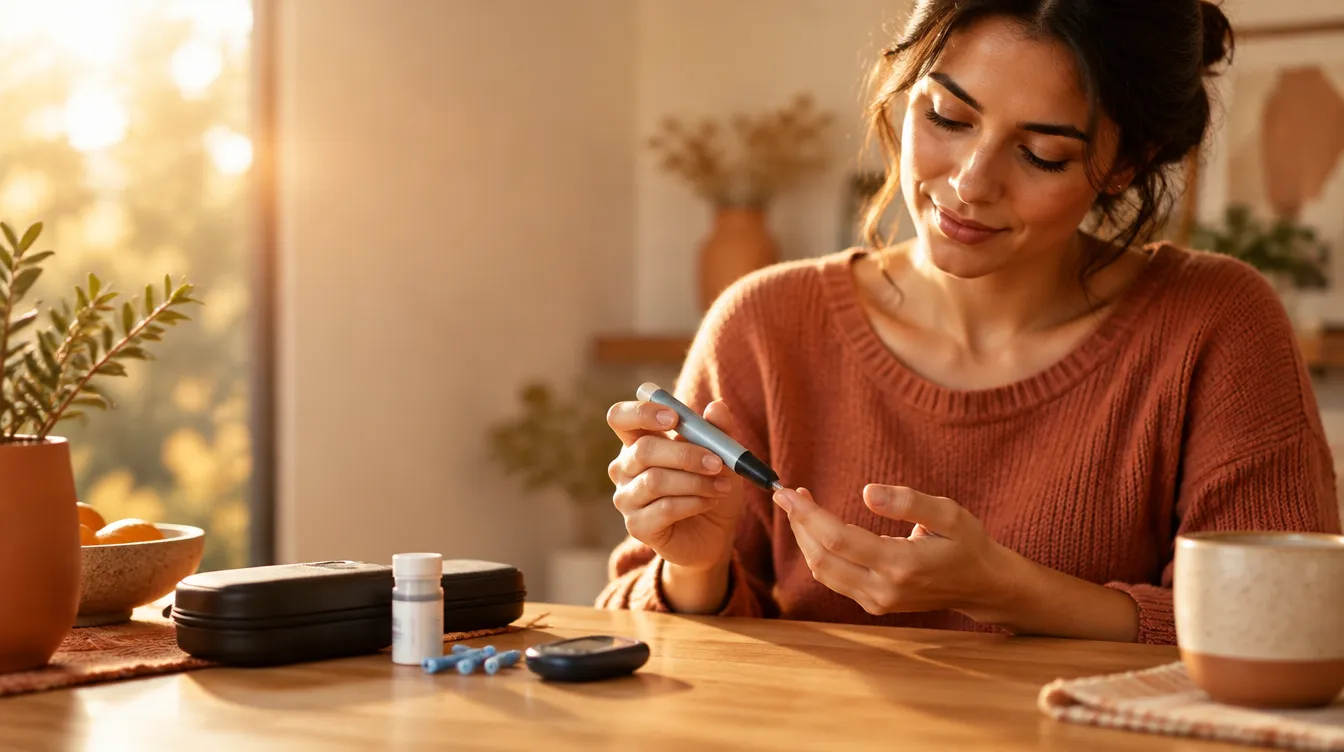
Quick answer: Lancets are the tiny needles that prick your finger for each glucose reading. Comfort comes from four controllable things: a thinner gauge (higher number), a shallower depth setting, a fresh lancet every time, and rotating where you prick. Most finger-prick pain is not something you have to live with — it is something you can fix with better choices at the device level.
Finger pricks are one of the first things a newly diagnosed person braces for. And for many people, the discomfort is real — but it is usually the result of defaults, not of testing itself. The lancets many people start with are thicker than they need to be, set to a depth deeper than they need, and reused far longer than they should be. Change those three things and the experience changes with them.
This guide walks through what a lancet actually is, why the numbers on the box matter, and how to set up pricks you stop dreading. Your care team’s instructions about testing frequency and technique always come first.
What is a lancet, and why does the gauge number matter?
A lancet is a small, sterile, single-use needle mounted in a plastic housing that locks into a spring-loaded pen-like device called a lancing device. When you press the button, the spring drives the needle in and out in a fraction of a second, and replacement lancets cost pennies apiece.
The key specification is the gauge — the thickness of the needle. Here is the part that trips people up: the gauge number runs backwards from what you’d expect. A higher gauge number means a thinner needle. So:
- 21G is a thicker needle. It creates a bigger hole and usually a bigger droplet of blood — but also noticeably more pain. Most people do not need it.
- 28G to 30G is the common everyday range. A 30G lancet is roughly half the diameter of a 21G, and the difference is something you feel immediately.
- Higher still — 31G, 32G, even 33G — gets thinner yet, though extremely thin needles can occasionally make it harder to get an adequate blood drop, especially with cold hands or poor circulation.
For most adults doing routine finger sticks, a 30G lancet is a sensible default: thin enough that the prick is brief and mild, thick enough to reliably produce blood. If you currently use 21G or 25G lancets and find testing unpleasant, swapping to 30G is the highest-impact change available, and it costs almost nothing. Thinner lancets are not a premium product — often the same price or cheaper.
One honest caveat: if your care team has specifically advised a certain lancet type, follow their advice first and mention the discomfort at your next visit.
Why do depth settings matter more than people think?
Most lancing devices have a dial with numbered depth settings. Each number changes how far the needle penetrates the skin. The common mistake is leaving the device on the middle or deepest setting “to make sure it works,” when the shallower setting would do the job with far less sensation.
The logic is simple: the deeper the needle goes, the more nerve endings it disturbs. Nerve endings for pain live in the upper layers of skin; blood lives slightly below. You want to go just deep enough to reach a capillary — no deeper.
A practical approach:
- Start two settings shallower than where your device currently is.
- Test with warm hands (more on that below). If you get a blood drop big enough to fill the strip’s sample window, stay there.
- Only move deeper if you repeatedly fail to get an adequate sample — and increase one setting at a time.
Deeper is not more accurate. The meter needs a sufficient blood sample, and once you have that, extra depth buys you nothing but pain. People who move to shallower settings and thinner lancets often report the prick becomes a tap they barely register — which matters when testing several times a day, because a routine you flinch at is a routine you skip.
Why do lancets dull faster than people think?
Lancets are coated, sharpened, and precision-made for exactly one penetration. Every additional use drags a progressively blunter tip through skin, which is why reusing a lancet ten times turns a tap into a grind — and why “one lancet per prick” is the honest rule.
The reuse myth is persistent: people keep a lancet in the device for days or weeks because “only I use it, so it’s clean.” Sterility aside, the mechanical problem alone is enough. A dull tip doesn’t slice cleanly; it pushes and tears, which hurts more and heals slower. Callused, sore fingertips are usually a reuse problem, not a testing problem.
Cost is the usual objection, and it dissolves quickly: lancets run a few cents each in boxes of 100 or more. Over a year of testing several times daily, that is trivial next to strips or a meter — a rounding error in exchange for fingertips that don’t hurt. If lancets are a budget concern, buying diabetes test strips and supplies online safely covers how to compare prices on consumables without getting burned.
Single-use also means single-prick disposal — cap it or drop it straight into a sharps container rather than leaving an exposed needle in the device.
Where and how should you prick?
Site and technique carry more comfort than most people expect.
Use the side of the fingertip, not the pad or the center. The sides of the fingers are less sensitive than the fleshy pad you touch things with, and they heal faster in daily use.
Rotate sites deliberately. Pricking the same finger in the same spot every day builds scar tissue and soreness. Cycle through several fingers — many people work across all ten over a few days. Rotation is the habit that makes high-frequency testing sustainable.
Warm your hands first. Blood flow to cold fingertips is poor, which forces you to go deeper or re-prick. Washing hands with warm water does two jobs at once: it improves circulation and clears away any sugar residue on the skin that could skew a reading. (If washing isn’t possible, alcohol swab and let it dry fully before pricking.)
Let gravity help. A hand lowered at your side for a few seconds usually produces a better drop than squeezing hard at the puncture site, which adds tissue fluid and can dilute the sample.
Press a clean tissue on it afterward rather than checking it repeatedly — fingertips recover fast when left alone. None of this is fussy: it is thirty seconds of technique that turns testing into something you barely notice.
How do lancets fit with your meter, strips, and safe disposal?
Lancets, lancing devices, test strips, and meters work as a small system, and a little compatibility thinking prevents waste:
- Lancets and devices. Most lancing devices accept standard universal-style lancets, but not all — some brands use proprietary fits. If you buy a new device, check which lancet style it takes before stocking up on refills.
- Strips and meters are the real compatibility pair. Strips are meter-specific, and using the wrong ones produces bad readings. If you are choosing new equipment, how to choose a glucose meter without overpaying covers what to match up before buying, and thinking about strips as the recurring cost often reframes the whole purchase.
- Testing method itself. If finger sticks several times a day feel like too much, CGM vs finger sticks walks through when continuous monitors replace, or complement, pricks — though even CGM users typically keep a lancet around for calibration checks.
Disposal basics. Used lancets are sharps. The safe pattern, per standard guidance: drop each used lancet directly into an FDA-cleared sharps disposal container (or a sturdy, puncture-resistant hard plastic container with a screw-on lid as an approved substitute), never into household trash loose or in the device. When the container is about three-quarters full, seal it and follow your local rules for disposal — many pharmacies and health departments run take-back programs, and rules vary by region, so check your local guidance rather than guessing.
Want the full guide?
If a surprising glucose or blood pressure reading tends to derail your day, Calm Steps After Unexpected Glucose and BP Readings puts the whole steady-response routine in one short ebook — what to check, what to ignore, and when to call someone. It’s $6.99 at Whop.
Frequently asked questions
Which lancet gauge hurts the least? Generally, the thinner the needle, the milder the prick — so higher gauge numbers (30G, 31G, 32G) hurt less than 21G or 25G. For most adults, 30G is a practical sweet spot: thin enough to barely feel, thick enough to reliably produce a blood drop. If you struggle to get adequate blood, step down the gauge rather than pressing harder, and warm your hands first.
How many times can I reuse a lancet? Once. Lancets are designed and sterilized for a single prick. Reuse doesn’t just raise infection concerns — a blunted tip tears rather than slices, which hurts more, heals slower, and builds calluses. At a few cents per lancet, single use is the cheapest comfort upgrade in diabetes testing.
Why does my finger hurt even with a new lancet? Usually one of three causes: the depth setting is too deep for your skin, you’re pricking the center of the fingertip pad instead of the side, or you’re pricking the same spot repeatedly. Move two depth settings shallower if you still get enough blood, switch to the sides of fingers, and rotate across several fingers. Sore, callused fingertips almost always trace back to one of these.
Do thinner lancets work with any lancing device? Most lancing devices accept universal-style lancets, but some brands use proprietary designs that only fit their own lancets. Before buying a big box of refills, check that the lancet style matches your device — or pick a device and lancet pairing that’s widely stocked, so refills are easy to find at any pharmacy or online.
How do I dispose of used lancets safely? Drop each used lancet directly into an FDA-cleared sharps container, or a sturdy hard-plastic container with a screw-on lid where local rules allow it. Never toss loose lancets into household trash or leave them in the lancing device. When the container is about three-quarters full, seal it and follow your local disposal guidance — pharmacies and health departments in many areas run take-back programs, and rules vary by location.
This article is educational content, not medical advice. Work with your healthcare provider on testing frequency, targets, and any persistent pain or slow-healing fingertips.
This guide is also available in Spanish: Cómo elegir lancetas de diabetes que no duelen.
Want the complete system?
This guide is based on Hardy's ebooks — plain-language, step-by-step PDFs you can read in one sitting. See all guides
Educational content only — not a substitute for advice from your doctor or pharmacist. Always work with your care team.