Pizza and Blood Sugar: What Really Happens After 2 Slices
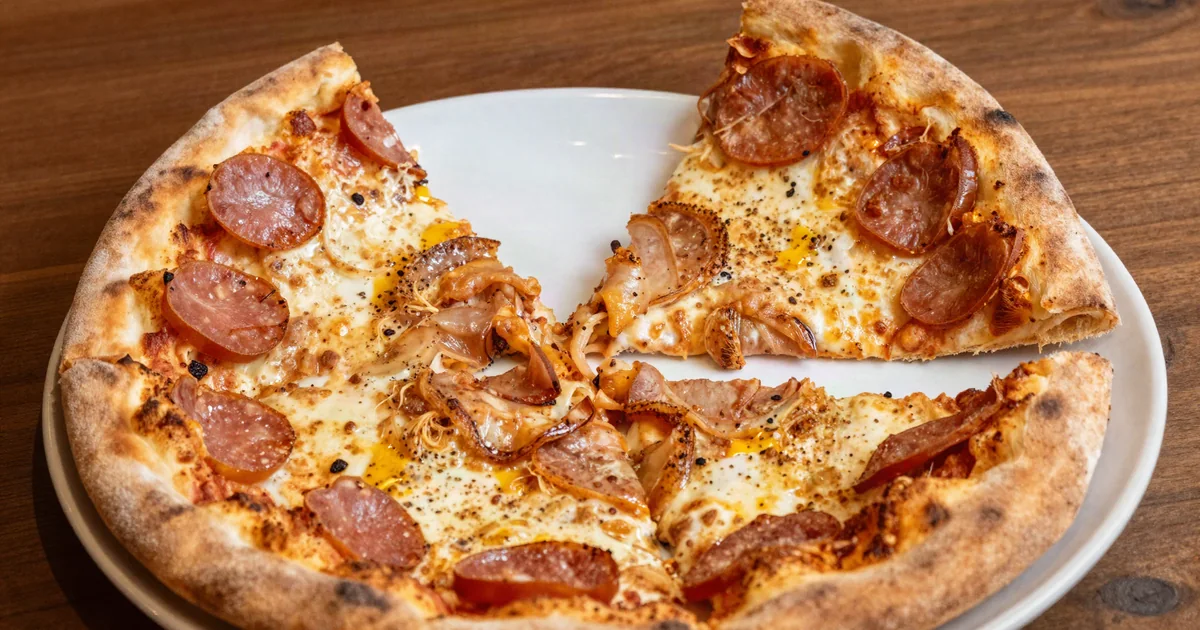
Quick answer: Two regular slices carry roughly 50 to 70 grams of carbohydrate, about the same as three or four slices of bread, so the carb bill is real but not the whole story. The fat in the cheese and the oil in the crust slows your stomach down, which means the rise often turns up late: a modest reading at one hour and the real climb at three or four, which is why the check you do matters as much as the slice you take.
I eat pizza. I have type 2 diabetes, I install water systems for a living, and a Friday with two slices in it is a normal life rather than a failure. But pizza is the one food that lied to me on my own meter, and it lied for months before I worked out why.
Here’s the reclassification, because it’s the only thing you need from this page: pizza is not a fast carb with a big number. It’s a slow delivery with a big number, and the slower it is, the less your one-hour check can tell you.
How many carbs are actually in two slices?
The crust decides almost all of it. One slice is roughly an eighth of a 14-inch pie, and thickness does the rest:
| Crust | Carbs per slice | Two slices |
|---|---|---|
| Thin | 20 to 25 g | 40 to 50 g |
| Hand-tossed | 30 to 35 g | 60 to 70 g |
| Deep dish or pan | 40 to 50 g | 80 to 100 g |
Sauce adds a few grams because tomatoes carry sugar, and a sweet sauce like barbecue adds more. Pepperoni and cheese barely move the carb count, vegetables add a gram or two, and none of that is the point. The point is that thin versus deep dish is basically two slices versus three, and the menu doesn’t tell you which one you got.
If nobody has ever shown you how to total a meal like this, learn it once. Counting is not a life sentence, it’s a skill, and it takes an afternoon to get good enough at.
Why does pizza hit me late instead of early?
Fat. Cheese, oily crust and processed meat all slow gastric emptying, which is the fancy way of saying your stomach holds onto the food longer before passing it on to be absorbed. Carbs can’t raise your blood sugar until they leave the stomach, and pizza leaves slowly.
So instead of one sharp spike the way a slice of white bread behaves, you get a long low ramp. On a continuous monitor it usually starts climbing somewhere around ninety minutes, peaks around three to four hours, and sits there. Which means the check most of us were taught to do, the one-hour one, is the check where pizza looks innocent.
Mine does exactly that. At the hour it looks respectable, close to my usual pattern, and if I stopped there I’d conclude pizza was fine and eat it four times a week. It’s the later check that tells the truth.
And the late rise has a bad habit of arriving at bedtime. A 7 p.m. pizza can still be pushing you up at 10:30, which wrecks the overnight stretch and hands you a worse morning reading that you then blame on the dawn phenomenon. Different problem, same food.
So what do I actually do about it?
Five things, in the order they matter for me.
1. I cap it at two slices before the box opens. Not at the table, not after the first slice, before. Two go on my plate, the box closes, the box leaves the room. The third slice is always the easiest decision in the world to justify, and that’s exactly why the decision has to be made while you’re still standing up. My cap is two because two is what my meter tolerates, and yours might be one. Test it.
2. I go thin when it’s an option. Same toppings, roughly half the carbs, and I don’t feel robbed. If the only option is deep dish, that’s a one-slice meal and I plan the rest of the day around it.
3. I put vegetables on it and a salad in front of it. Peppers, onions, mushrooms, spinach. Not for virtue, for volume: they fill the space a fourth slice would sit in, and the fiber blunts the curve. Salad first, then the pizza, because eating order is free and it works. I’ve written the mechanism up in eating carbs last and pizza is the best place on earth to use it.
4. I walk, and I walk late. Fifteen to twenty minutes, starting thirty to sixty minutes after the last slice, does the work of pulling glucose into muscle without needing much insulin. With a normal meal I walk right after. With pizza I go about ninety minutes in, because the peak is late, and a walk at the peak is worth two walks before it.
5. I check at three hours, not one. One reading at the hour tells you nothing about pizza. This single change is what turned pizza from a food I was scared of into a food I could plan around.
Restaurant, frozen, or homemade?
Restaurant is the least predictable. Slices are cut by hand and vary wildly, the crust gets brushed with oil or butter, and the sauce can carry sugar you didn’t order. Ask for thin if they have it, keep the two-slice cap, and know that pizza is one of the saltiest things on any menu, which matters when blood pressure is on your list too. There are workarounds in lower-sodium restaurant orders.
Frozen is the quiet trap. The label says a serving is a third of the pie, and nobody eats a third of the pie. Add the sodium, often over 700 mg per serving, and a small frozen pizza becomes an 80 to 100 gram carb meal that felt like a snack. Weigh it once, properly, and you’ll never guess again.
Homemade gives me the best numbers of the three, and it isn’t close. Thin flatbread, moderate cheese, a pile of vegetables, and I decide what a slice is. I’ve had homemade thin-crust pizza move me less than a restaurant grain bowl that was sold to me as the healthy option. Portion it before it goes in the oven, because pre-slicing removes the negotiation later.
When to call your care team
Call if your two-hour readings after meals are consistently above the range your care team gave you, if a single meal is spiking you past 180 mg/dL and staying there for hours, or if you’re cutting whole food groups to compensate and losing weight without meaning to.
Call the same day for a reading over 400 mg/dL, and call emergency services if a very high reading comes with vomiting, deep fast breathing, confusion or drowsiness.
Pizza is not an emergency and it’s not a moral test. It’s a meal with a slow bill attached, and the only thing that ever made it manageable for me was measuring instead of guessing. If you want the wider list of what actually moves glucose after eating, foods that lower blood sugar immediately is the honest version, and the walk is still the biggest lever in it.
General information, not medical advice. Your carb targets and your correction plan belong to you and your care team, and no two meters read a slice the same way.
Frequently asked questions
How many carbs are actually in two slices?
The crust decides almost all of it. One slice is roughly an eighth of a 14-inch pie, and thickness does the rest: Sauce adds a few grams because tomatoes carry sugar, and a sweet sauce like barbecue adds more.
Why does pizza hit me late instead of early?
Fat. Cheese, oily crust and processed meat all slow gastric emptying, which is the fancy way of saying your stomach holds onto the food longer before passing it on to be absorbed.
So what do I actually do about it?
Five things, in the order they matter for me. 1. I cap it at two slices before the box opens.
Restaurant, frozen, or homemade?
Restaurant is the least predictable. Slices are cut by hand and vary wildly, the crust gets brushed with oil or butter, and the sauce can carry sugar you didn't order.
Want the complete system?
This guide is based on Hardy's ebooks — plain-language, step-by-step PDFs you can read in one sitting. See all guides
Educational content only — not a substitute for advice from your doctor or pharmacist. Always work with your care team.