Foods That Lower Blood Sugar Immediately: Honest Guide
Quick answer: No food reliably drops blood sugar immediately — nothing you swallow outperforms your liver’s glucose release in the next fifteen minutes. What genuinely works fast is water, a post-meal walk, and building meals around protein, fat, and fiber so the next reading comes in lower.
This is the search that reveals an honest gap: people are looking for the food equivalent of a fire extinguisher, and the food aisle doesn’t sell one. That’s not a dodge — it’s how glucose physiology works. Food raises blood sugar or slows the rise; movement, water, and medication bring blood glucose down. But there are foods that flatten the blood sugar spikes after a meal far better than others — especially anything high in fiber — and there’s a real protocol for a high reading that isn’t an emergency. Here’s both.
Can any food actually lower blood sugar fast?
Not instantly — and any list promising “drops sugar in 10 minutes” is selling something. Glucose that’s already in your blood came from either your last meal or your liver, and eating more of anything doesn’t pull it out. What food can do is:
- Slow the next rise — vinegar before a carb-heavy meal measurably blunts the spike.
- Replace what would spike — eating nuts instead of crackers keeps the number from climbing further.
- Support the real fast levers — water helps your kidneys clear excess glucose, and fiber-rich meals flatten curves for hours.
The genuinely fast levers are movement and hydration. A 10–15 minute walk after a meal pulls glucose out of the blood while it’s arriving — this is the most reliable “immediately” tool that exists, and it’s free. Water works in the same hour: high blood sugar pulls water out of you, and rehydrating supports the kidneys as they excrete surplus glucose (how much, and when, is in the water explainer). Note the nuance, because it confuses people: exercise usually lowers blood sugar, but intense bursts or delayed effects can push readings up temporarily — the details are in our why exercise raises blood sugar explainer.
Why the walk outranks everything on any food list: muscle burns glucose without waiting for insulin. During contraction, muscle cells pull glucose in through a separate, insulin-independent doorway, which is why activity lowers readings even when insulin resistance is high — the very problem behind type 2 diabetes. That’s also why the walk works after a meal, when glucose is arriving in the blood: you’re catching it at the door. A walk after breakfast does more for the same day’s numbers than any addition to the breakfast itself.
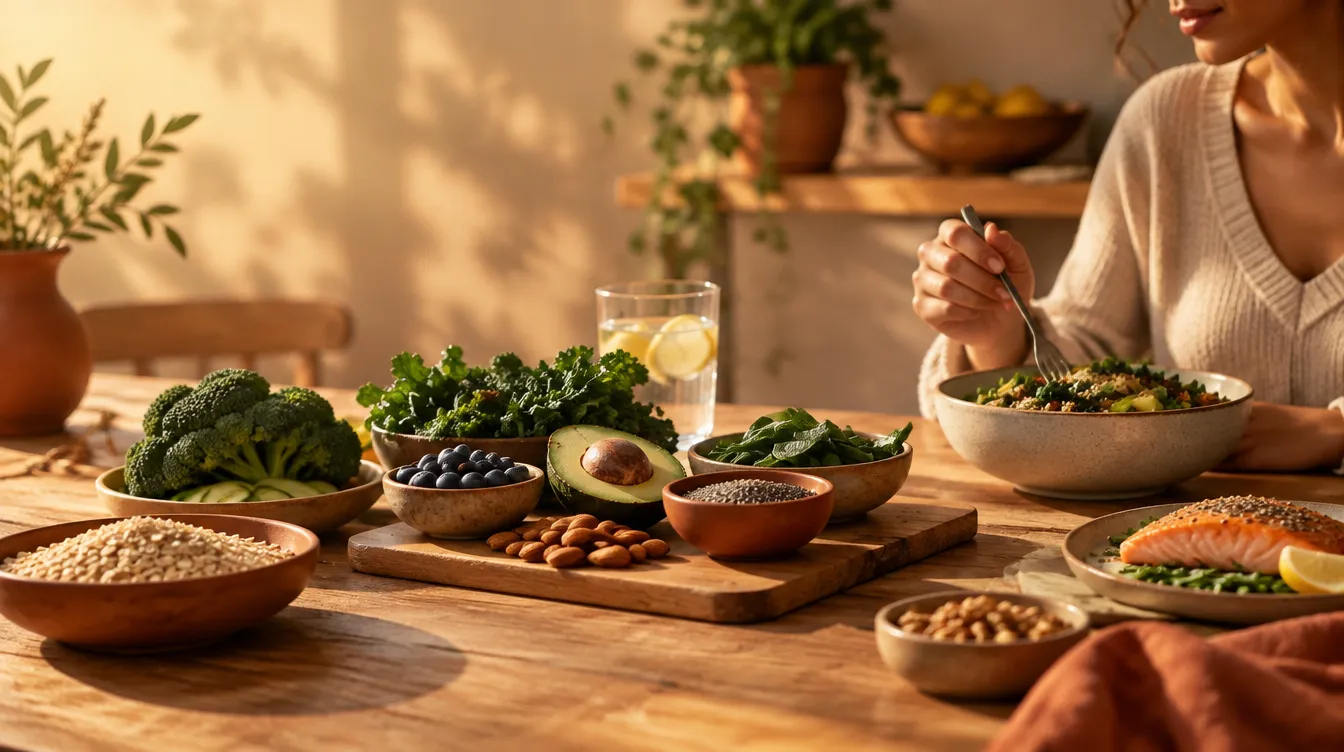
The 10 foods that help lower blood sugar
These earn their place by flattening curves or replacing fast carbs — not by magic:
- Apple cider vinegar or plain vinegar — one to two tablespoons diluted in water before a carb-heavy meal measurably reduces the post-meal spike in several trials. Strong taste, real effect, nearly free. One caution before you go further: vinegar is an experiment, not a therapy, and the supplement aisle is full of versions with promises the food itself can’t back.
- Cinnamon — modest evidence, mixed results. Some studies show a small improvement in fasting glucose over weeks; it is not an acute, same-hour lever. Use it as flavor on oatmeal, not as treatment. This is the honest caveat the cinnamon posts skip.
- Nuts — almonds, walnuts, pistachios. Fat, protein, and fiber with almost no digestible carb, so they blunt the rise of whatever they accompany and don’t spike on their own.
- Leafy greens — spinach, kale, salad greens. Very low digestible carb and high fiber volume; they physically fill the plate so the fast carbs shrink.
- Eggs — protein and fat with zero carbs; an egg-based breakfast produces a flatter morning curve than toast or cereal, which matters for the whole day.
- Beans and lentils — the best slow-carb package available: high fiber plus protein digests over hours instead of minutes.
- Plain Greek yogurt — protein-dense, low-carb when unsweetened; a snack that steadies rather than spikes.
- Avocado — fiber and monounsaturated fat, nearly no digestible carb. Spreads on toast and cuts the toast’s curve.
- Non-starchy vegetables — broccoli, peppers, zucchini, cauliflower. Fiber-first volume with minimal glucose cost.
- Water (and only water) — the only beverage on the list. Sugary drinks, juice, and even “healthy” smoothies spike fastest of all; water is both the replacement and a mild lowering tool itself.
A pattern is visible in that list: nothing on it is a “blood sugar-lowering superfood.” Everything on it either carries no fast carbs or slows the digestion of the carbs beside it. The CDC’s guidance on choosing healthy carbs frames it the same way — quality and pairing over single-hero foods. And when you eat the carbs matters as much as which: eating vegetables and protein first and carbs last measurably flattens the curve, as our eating order guide explains.
The mechanism behind the list: foods that slow glucose absorption work because protein, healthy fats, vitamins, minerals, and above all soluble fiber blunt digestion — sugar enters the blood gradually instead of all at once. That helps regulate blood sugar after a post meal spike rather than fixing a dangerous high. Any food managing blood sugar this way supports healthy blood sugar levels long term and lowers the risk of type 2 diabetes and risk of developing insulin resistance — but it works through added sugar avoidance and balanced diet patterns, not single magic bites. High blood sugar emergencies still need the medical plan your doctor gave you.
What should you do when your reading is high right now?
A workable sequence for a high-but-not-emergency reading:
- Drink a large glass of water, then move — a brisk 10–15 minute walk is the fastest honest lever.
- Don’t eat anything to “fix” it — including foods from the lists that promise drops. Nothing edible beats a walk.
- Check again in an hour — most post-meal highs fall on their own as insulin catches up.
- Ask why: was it the meal, stress, illness, or morning hormones? Highs have fingerprints — a high after a stressful meeting reads differently on your chart than a high after pizza, and it responds to different levers.
If you’re managing highs with medication or insulin, your care team’s correction instructions override everything here — some people have a prescribed correction dose exactly for this moment.
When should you call a doctor instead of self-treating?
Seek help promptly — same-day or urgent care — if you have readings persistently above your team’s stated emergency threshold (a commonly taught trigger is repeated readings above 300 mg/dL), vomiting, deep rapid breathing, fruity-smelling breath, confusion, or extreme thirst with frequent urination. These can signal diabetic ketoacidosis or a severely out-of-control pattern, and no food list applies. If you use insulin and can’t keep readings down after your correction protocol, call your care team — that is exactly the situation the protocol’s escalation step exists for. When in doubt, call — this is the category where caution beats patience. The NIDDK’s diabetes management overview is a good reference for the routine-care side of the line between daily adjustments and emergencies.
The takeaway
The honest version of “foods that lower blood sugar immediately” is this: walk and drink water for speed, eat vinegar-adjacent, protein-anchored, fiber-heavy food to shape the next curve, and treat nothing edible as a rescue drug. Run the pattern for two weeks — same walk, same plate structure — and the trend in your readings will show you more progress than any single meal ever could. The kitchen-table summary people print and tape inside the cupboard: water first, then shoes, then wait, then recheck.
Frequently asked questions
What food lowers blood sugar the fastest? No food lowers an already-high reading quickly — movement does. The fastest honest combination is a large glass of water plus a 10–15 minute brisk walk, which pulls glucose down within the hour while you’re digesting nothing.
Does drinking water lower blood sugar immediately? It helps within the hour: water rehydrates you (high glucose dehydrates you) and supports the kidneys in excreting excess glucose. It’s a supporting lever, not a rescue — pair it with a walk for a real effect.
Does vinegar really lower blood sugar after meals? Yes, modestly and consistently — one to two tablespoons diluted in water before a carb-heavy meal reduces the post-meal spike in several studies. The effect is on the shape of the curve, not on an already-high reading.
What should I eat when my blood sugar is high? Nothing, ideally — drink water, take a walk, and recheck in an hour. If you need to eat, choose zero-carb options like nuts, eggs, or leafy greens so you don’t add to the load. Avoid the “it lowers blood sugar” foods marketed as quick fixes.
When is a high blood sugar reading an emergency? Call for urgent help if readings stay extremely high (commonly 300 mg/dL or above), or if you have vomiting, deep rapid breathing, fruity-smelling breath, confusion, or extreme thirst. Those signs can mean ketoacidosis — no home protocol applies.
This guide is also available in Spanish: Alimentos que bajan el azúcar en sangre rápido: guía honesta.
Want the complete system?
This guide is based on Hardy's ebooks — plain-language, step-by-step PDFs you can read in one sitting. See all guides
Educational content only — not a substitute for advice from your doctor or pharmacist. Always work with your care team.