Is Sourdough Bread Good for Diabetes? What Actually Changes
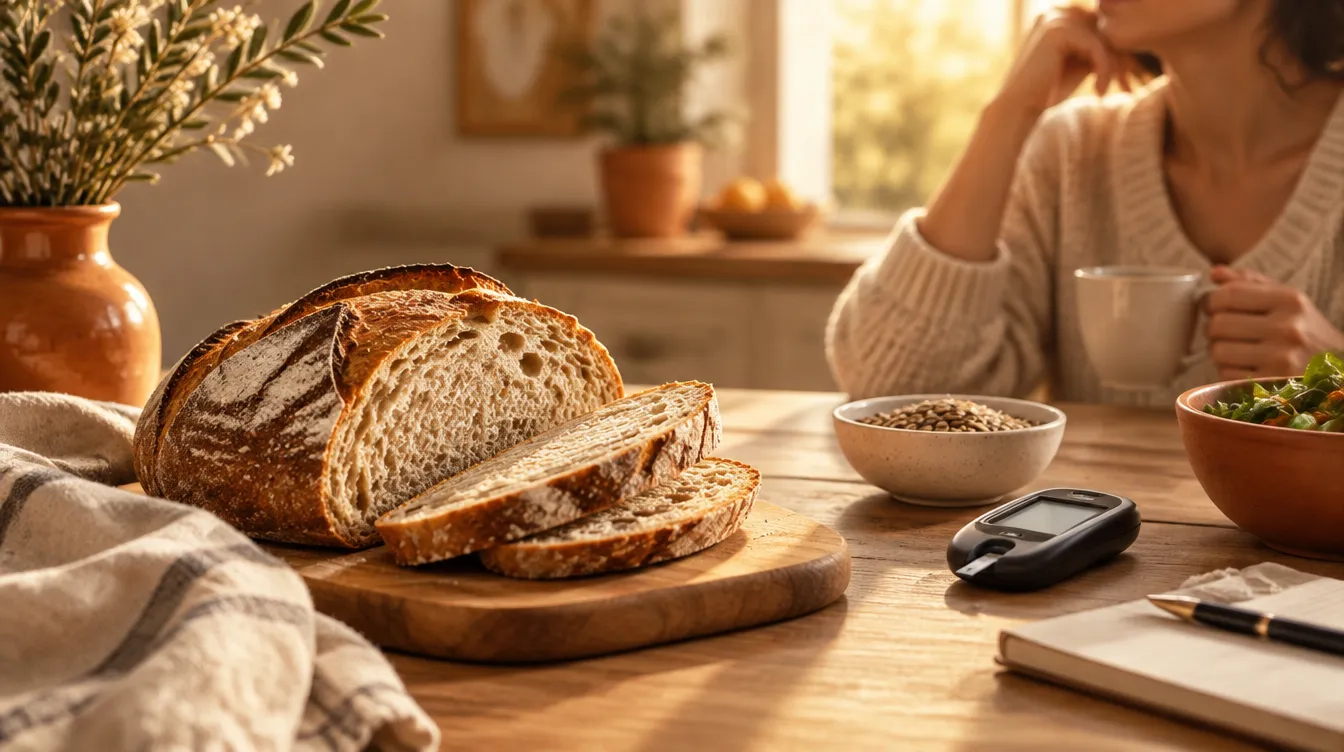
Quick answer: Sourdough is one of the better bread choices if you have diabetes — fermentation lowers its glycemic index (roughly 53 vs. 75 for standard white bread) and breaks down some of the compounds that spike blood sugar. But it’s still bread, still carbs, and the toppings, portion size, and your own glucose response decide more than the label does.
If you’ve been told to avoid bread entirely, the sourdough question can feel like a trap: it sounds too good to be true. Real sourdough actually is different from other bread — measurably, chemically different — but “different” and “unlimited” are not the same thing. Here’s what fermentation changes, what it doesn’t, and how to figure out whether it works for you specifically.
What fermentation actually does
Traditional sourdough is leavened by wild yeast and lactic acid bacteria over a long fermentation — often 12 to 24 hours or more. That time does several things that a quick commercial yeast rise never gets to:
- It partially breaks down starches. Some of the starch that would otherwise be rapidly converted to glucose gets consumed or restructured during fermentation. Less rapidly available starch means a slower, lower glucose curve.
- It reduces FODMAPs, especially fructans. The bacteria in a sourdough starter feed on fructans — the fermentable carbohydrates that cause both digestive trouble and, in some people, a modest blood sugar contribution. Long fermentation can cut fructan content substantially.
- It produces organic acids, particularly acetic acid. These acids slow gastric emptying — the rate at which food leaves your stomach and enters your small intestine, where glucose is absorbed. Slower emptying means a flatter glucose curve rather than a sharp spike.
- It lowers the glycemic index. Studies of sourdough breads consistently find GI values around the low-to-mid 50s, compared to roughly 75 for standard white bread. For reference, the glycemic index ranks how fast a carb-containing food raises blood glucose on a 0–100 scale — MedlinePlus has a clear overview.
Put together, that’s a genuinely different blood sugar behavior than the same flour baked as quick-rise white bread. This is not marketing; it’s measurable.
But it’s still bread — the honest caveats
A lower glycemic index is not a license. A few things sourdough does not do:
- It doesn’t remove the carbs. A typical slice of sourdough still carries 15–25 grams of carbohydrate, and all of that eventually becomes glucose in your blood. The curve is lower and slower — not absent.
- Portion size still wins. Three slices of low-GI bread can outweigh two slices of regular bread in total glucose load. If you’re counting carbs, count sourdough like any other bread.
- Toppings matter enormously. Butter, jam, honey, and sugary spreads can turn a gentle glucose curve into a spike. Avocado, eggs, cheese, nut butter, or smoked salmon do the opposite — fat and protein slow absorption further.
- “Your mileage may vary” is literally true here. Individual glucose responses to the same bread can differ a lot. A continuous glucose monitor or even a few fingerstick checks two hours after a sourdough meal will tell you more than any study can.
If you want a broader picture of where bread fits in a diabetic diet at all, we cover that in can diabetics eat bread? — sourdough is one of the strongest options in that comparison.
Whole-grain sourdough vs. white sourdough
Not all sourdough is equal. The fermentation improves any base flour, but the base flour still matters:
- Whole-grain sourdough keeps the bran and germ, which add fiber that further slows absorption. This is the best of both worlds — fermentation benefits plus whole-grain benefits.
- White sourdough starts from refined flour with the fiber removed. The fermentation still lowers its GI versus regular white bread, but you’re starting from a worse baseline.
So if you like sourdough and want the friendliest version for blood sugar: whole grain, dense crumb, real fermentation. If you want to see how another staple compares, we’ve looked at is oatmeal good for diabetes? — oatmeal is the other food people assume is automatically fine and sometimes isn’t.
The commercial “sourdough-style” trap
Here’s where careful shopping matters. Supermarket shelves are full of breads labeled “sourdough flavor” or “sourdough-style” that were actually raised with commercial yeast, sometimes with acid added for taste. Those products get the tang without the fermentation.
Why it matters: the blood sugar benefits come from the time — the hours of bacterial fermentation that break down starches and fructans and generate organic acids. A yeast-raised bread with sour flavoring delivers none of it.
How to spot real sourdough:
- The ingredient list should be short: flour, water, salt, and a starter or culture. No “yeast” listed (or at minimum, yeast alongside a genuine culture for a long proof).
- Words like “sourdough flavor,” “artificially sourdough flavored,” or a soft, squishy, uniform crumb are red flags.
- A real bakery or an ingredient list you can read is your safest bet.
Why glycemic index alone doesn’t tell the whole story
The GI of ~53 is useful shorthand, but it has a known blind spot: it measures the speed of glucose rise per gram of carb, not the total load. That’s why the related figure — glycemic load — matters. Glycemic load multiplies the GI by the actual carb amount in a serving. A 30-gram slice of sourdough lands in genuinely friendly territory; a 120-gram sourdough roll starts the same meal at four times the load, and no amount of fermentation cancels that.
Two more practical nuances:
- Starch retrogradation. When bread cools, some of its starch re-crystallizes (retrogrades) into a form digested more slowly — so day-old sourdough, or sourdough toasted from yesterday’s loaf, tends to behave a touch better than bread eaten warm from the oven. Small effect, but it works in your favor.
- Freshness and proofing time vary by bakery. A slow, cold-fermented loaf from a craft baker generally tests better than a mass-market “overnight” loaf. If you have two bakeries to choose from, the one that talks about fermentation time in hours is usually the one worth buying.
None of this turns sourdough into a special food for diabetes — it stays a lower, slower carb source that still requires the same arithmetic as any other carb.
Practical rules if you eat sourdough with diabetes
- One slice to start. Test your glucose before and about 90–120 minutes after. Your response is the verdict.
- Pair it with protein or fat. Eggs, cheese, avocado, or nut butter flatten the curve further.
- Choose whole-grain when available. Same fermentation, better baseline.
- Eat it earlier in the meal, not alone as a snack. We’ve written about eating carbs last and blood sugar — vegetable or protein first, bread later, makes any bread behave better.
- Don’t stack it on a day of other high-carb foods. Sourdough is a better bread, not a carb-free one.
And if you need between-meal options that behave better than any bread, our list of snacks that don’t spike blood sugar is a good place to look.
The bottom line
Sourdough is legitimately one of the best bread choices for blood sugar — real fermentation lowers its glycemic index, trims fructans, and slows digestion in ways ordinary bread can’t match. It’s still a carb-containing food, so portion and toppings decide as much as the loaf does. Whole-grain sourdough beats white, real fermented sourdough beats the supermarket “sourdough-style” impostors, and your own glucose meter beats everyone’s opinion — including ours.
For people managing diabetes who don’t want to give up bread, sourdough is a reasonable thing to keep on the table. Just keep the slice count honest and test your own response.
This guide is also available in Spanish: ¿El pan de masa madre es bueno para la diabetes? Lo que.
Frequently asked questions
Does sourdough raise blood sugar less than white bread?
Yes, measurably. Studies of sourdough breads consistently find GI values around the low-to-mid 50s, compared to roughly 75 for standard white bread, because fermentation partially breaks down starches and produces organic acids that slow gastric emptying. That gives a flatter glucose curve rather than a sharp spike.
How much carbohydrate is in a slice of sourdough?
A typical slice of sourdough still carries 15–25 grams of carbohydrate, and all of that eventually becomes glucose in your blood. The curve is lower and slower, not absent, so if you're counting carbs, count sourdough like any other bread.
How can I tell real sourdough from sourdough-style bread?
The ingredient list should be short: flour, water, salt, and a starter or culture, with no yeast listed. Words like sourdough flavor, or a soft, squishy, uniform crumb, are red flags, because the benefits come from the hours of bacterial fermentation rather than the tang.
Is whole-grain sourdough better than white sourdough?
Yes. Whole-grain sourdough keeps the bran and germ, which add fiber that further slows absorption, so you get fermentation benefits plus whole-grain benefits. White sourdough starts from refined flour with the fiber removed, so its lower GI is a gain from a worse baseline.
How do I know sourdough works for me specifically?
Individual glucose responses to the same bread can differ a lot. A continuous glucose monitor or even a few fingerstick checks two hours after a sourdough meal will tell you more than any study can, and portion size still wins over a lower glycemic index.
Want the complete system?
This guide is based on Hardy's ebooks — plain-language, step-by-step PDFs you can read in one sitting. See all guides
Educational content only — not a substitute for advice from your doctor or pharmacist. Always work with your care team.