Can Diabetics Eat Bread? What the Numbers Say
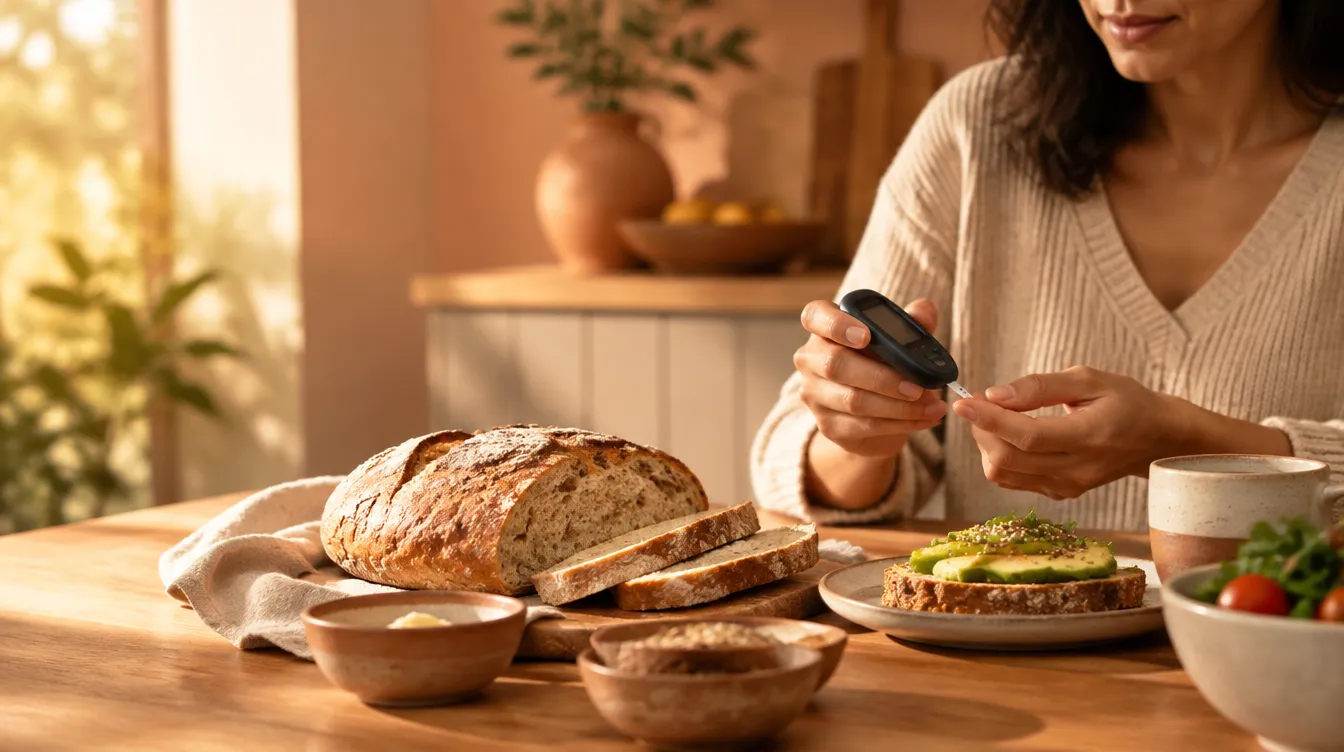
Quick answer: Yes, people with type 2 diabetes can eat bread — no food is banned. What matters is the slice count, the type, and what rides with it. Two slices of standard white bread carry roughly 30 grams of fast carbohydrate; a similar amount of dense seeded or sourdough bread digests noticeably slower, and pairing bread with protein and fat flattens the curve further. The meter, not the ban list, decides.
Bread is probably the most-mourned food in type 2 diabetes — the thing people genuinely believe they have to give up forever. The truth is more workable: bread is a concentrated fast-carb source, and pretending otherwise doesn’t help, but a ban that doesn’t survive real life isn’t a strategy either. The CDC’s guidance on choosing healthy carbs makes the same point from the other direction: the key is portioning and choosing carbs with fiber, not eliminating the category. Here’s what actually moves the number when bread is on the plate.
What does bread actually do to blood sugar?
Most commercial bread is starch that digests quickly. One standard slice carries roughly 15 grams of carbohydrate with little fiber, so the classic two-slice sandwich lands around 30 grams of fast carbs — enough for a real glucose rise over the next hour or two. That’s not a malfunction; it’s what bread is. The question is how to change the shape of the curve without removing the food.
The levers, roughly by how much they matter:
- Portion. One slice instead of two, or an open-faced sandwich, cuts the load in half with zero other changes. This is the biggest single lever and the most underused.
- Type. Dense, heavy breads — seeded multigrain, wholegrain rye, pumpernickel, sourdough — digest slower than soft white sandwich bread. “Whole wheat” on the label isn’t enough; a fluffy whole-wheat loaf can spike like white. Weight and density beat label color.
- What travels with it. Bread eaten with eggs, cheese, avocado, meat, or olive oil spikes less than the same bread alone — protein and fat slow gastric emptying. A buttered-and-egged slice is a different event than dry toast.
- Timing within the meal. Eating the protein and vegetables first and the bread last takes the edge off the spike for free.
Is sourdough actually better?
Partly, yes — and the reason is interesting. Sourdough’s long fermentation does two things: the starter’s acids slow the rate at which starch digests, and the process partially pre-digests some of the starch itself. Studies comparing sourdough to the same flour made as yeast bread consistently show a lower and slower glucose rise for the sourdough version. Genuine slow-fermented bakery sourdough is the real thing; most supermarket “sourdough-style” loaves are regular bread with vinegar added for tang, and they don’t carry the same effect. Check the ingredient list — a real sourdough lists flour, water, salt, and a starter culture, not yeast plus acidifiers.
Even the genuine article isn’t a free pass: it still carries the same total carbohydrate, so a huge sourdough portion still spikes. It’s a slower curve, not a smaller load.
So what’s a realistic portion?
A workable starting point is one to two slices of a dense bread per meal, with the type chosen for density over softness — and then your own meter makes the final call. Test 1–2 hours after the meal a few times with your usual bread, then again with a denser type, and keep whatever your readings reward. The same budget logic we applied to rice, and later to dessert, works identically here: fit the portion inside the meal’s carb allowance rather than stacking it on top. The American Diabetes Association’s food-label guide walks through the exact panel lines to compare when two breads look similar — and if you want the framework for fitting the winner into your day, our carb budget guide shows how the allowance is built.
Two practical household moves:
- Buy the densest bread your family will actually eat — seeded rye and pumpernickel pass the taste test in most households.
- Freeze sliced bread and toast from frozen; the portion decision gets made once, at slicing time, not mid-meal.
What about the rest of the bakery aisle?
The same logic extends down the aisle, and the differences are bigger than people expect:
- Wraps and flatbreads look lighter but often carry more carbohydrate than two slices of bread — check the label, not the shape.
- Bagels are routinely three to four slices’ worth of carbohydrate in one item. Half a bagel is a realistic “slice.”
- Croissants and pastries add fat, which slows the curve slightly, but the refined flour load is high and the fat is the kind worth limiting anyway.
- Crackers and crispbreads vary enormously — the dense seeded crispbreads are genuinely among the best bread-aisle options; buttery crackers are among the worst.
This is the same reasoning the snacks guide applies between meals and our restaurant ordering guide applies when someone else bakes the bread. Bread isn’t special — it’s just the place where portion, density, and pairing matter most visibly.
Does toasting, freezing, or reheating change anything?
Yes, more than most people expect — the same starch-science that made cooled rice interesting applies to bread:
- Toasting dries and slightly gelatinizes the starch, which modestly slows digestion. A toasted slice spikes a little less than the same slice soft. The effect is real but small — it doesn’t rescue a three-slice portion.
- Freezing and thawing bread before eating converts part of its starch into resistant starch, which digests slower. Toast-from-frozen combines two mild benefits in one habit.
- Stale and reheated bread lands closer to the resistant-starch end too, which is one reason day-old dense breads were traditionally the everyday loaf.
None of these turn white sandwich bread into pumpernickel — the type and portion still dominate. But if your household already toasts from the freezer, you’ve been getting a small discount all along, and it costs nothing to keep.
The takeaway
So: keep the bread — a sandwich you actually enjoy is sustainable, and sustainability is what these numbers respond to over months. Choose dense over soft, make one slice do the work of two by loading it well, eat the protein first, and let the meter pick the winner among the breads you like. If a specific bread keeps spiking harder than expected, that’s a swap conversation, not a ban — and if your mornings or restaurant meals are where bread bites hardest, our dawn phenomenon guide and restaurant ordering guide cover both. The meter stays the referee, same as with rice.
Frequently asked questions
Is sourdough bread good for diabetics? Genuinely fermented sourdough produces a lower, slower glucose rise than the same flour baked with yeast, thanks to its fermentation acids. It still carries the same total carbs, so portion still rules — and most supermarket “sourdough-style” loaves aren’t real sourdough.
What bread has the lowest impact on blood sugar? Dense, heavy breads: seeded wholegrain, wholegrain rye, pumpernickel, and real sourdough. Density and fiber beat label color — a fluffy “whole wheat” loaf can spike like white bread.
How many slices of bread can a diabetic eat per day? There’s no universal number. A common starting point is one to two slices of a dense bread per meal within the day’s carb budget, adjusted by your own post-meal readings and your care team’s targets.
Are wraps better than bread for diabetes? Usually not — many tortillas and wraps carry more carbohydrate than two slices of bread despite looking lighter. Compare labels by carb count per serving, not by shape.
Should I switch to gluten-free bread? Only if you need to avoid gluten. Most gluten-free breads are made from refined starches (rice, tapioca, potato) and often spike faster than wheat bread. Gluten-free is not low-carb and not automatically diabetes-friendly.
This guide is also available in Spanish: ¿Pueden comer pan los diabéticos? Lo que dicen los números.
Want the complete system?
This guide is based on Hardy's ebooks — plain-language, step-by-step PDFs you can read in one sitting. See all guides
Educational content only — not a substitute for advice from your doctor or pharmacist. Always work with your care team.