How To Test Blood Sugar At Home
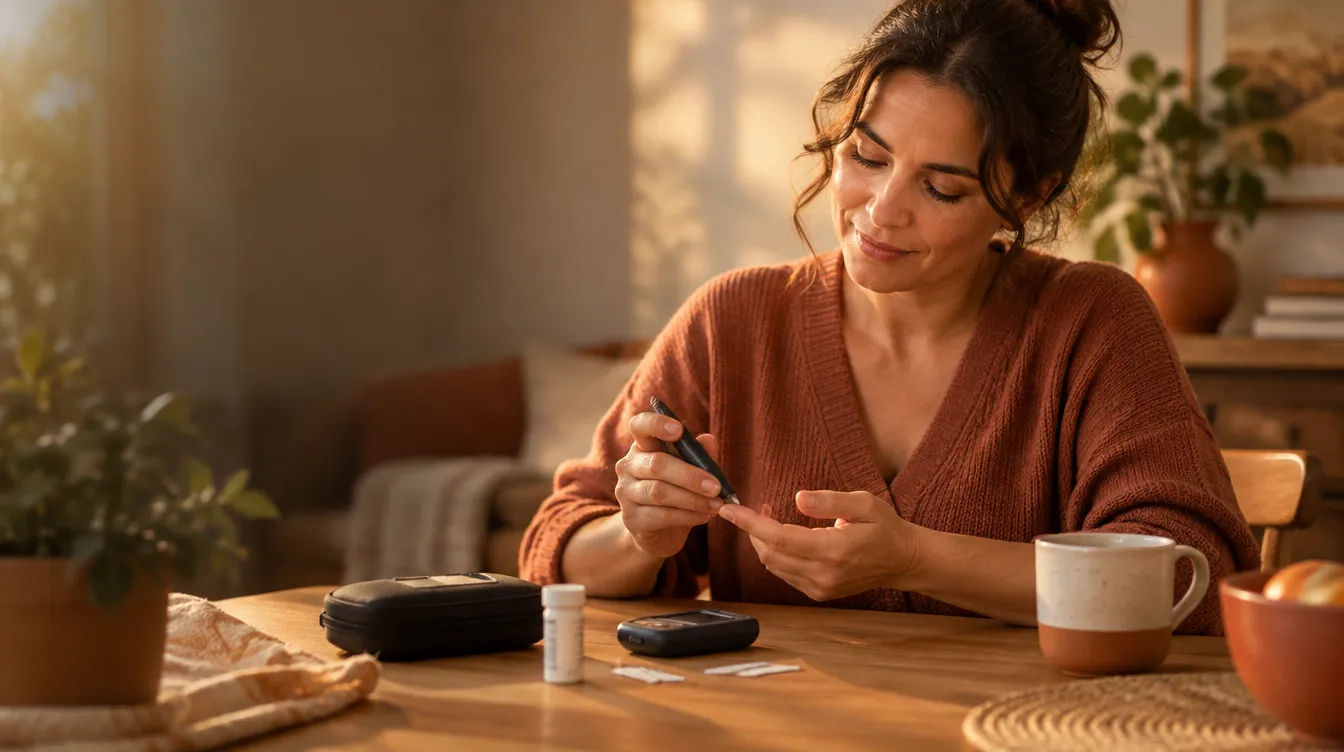
How to Test Blood Sugar at Home: The No-Nonsense Guide
Quick answer: Wash your hands, load a fresh lancet, prick the side of a fingertip, touch the drop of blood to the strip in your meter, and read the number in about five seconds. The pricking part is easy — what actually changes your results is knowing when to test and doing it the same way every time.
I’m Hardy. I have type 2 diabetes, high blood pressure and CKD, and I’ve taken my A1C from 9 down to 6.5 over time. Along the way I tested my blood sugar at home thousands of times, and I got it wrong for a long stretch — testing whenever I remembered, on whatever finger was closest, sometimes with hands that weren’t exactly clean. The numbers I got back were real numbers. They just weren’t very useful.
This is the guide I wish someone had handed me at the start. Plain steps, no drama, and nothing here that replaces what your care team tells you about your own targets or medicines.
How do you test blood sugar at home, step by step?
You test by getting a clean drop of blood onto a strip your meter can read — in that order, and the “clean” part matters more than most people think.
Here’s the whole routine:
- Wash your hands with soap and warm water, then dry them fully. Warm water gets blood moving; dry hands mean the drop doesn’t smear.
- Put a fresh lancet in the device. Reusing lancets isn’t a badge of honour — a dull needle hurts more and can leave you squeezing harder than you should.
- Prick the side of a fingertip, not the pad. The side has fewer nerve endings, so it stings less, and you rotate fingers so no one spot gets tender.
- Let a drop form on its own and touch the strip to it, or apply the drop to the strip the way your meter’s instructions describe.
- Read the number and write it down — with a note about what you’d eaten or done.
That’s it. Five steps, five seconds, no mystery. Most meters need a small amount of blood, and a test strip that hasn’t expired. Check the strip vial date every so often; expired strips are a quiet source of numbers that don’t match how you actually feel.
When should you test your blood sugar?
You test at set points tied to your day — fasting, before a meal, about two hours after the first bite of a meal, and bedtime. Each one answers a different question. Random checks answer nothing in particular.
- Fasting (before you eat in the morning) shows how your body handled the overnight stretch. This is the one that tells the clearest long-term story.
- Before a meal gives you a starting point, the baseline that meal is building on.
- Two hours after the first bite shows how that particular meal and your body’s response worked together. Start the clock at the first bite, not the last.
- Bedtime tells you whether you’re heading into the night in a steady place.
Don’t test just because the meter is sitting there. I wasted months testing whenever I remembered, and all I collected was a pile of numbers with no story attached. If you’re trying to work out how many checks a day actually make sense for you, there’s a longer answer in How Often Should You Test Your Blood Sugar? — but decide the times first, then let the habit follow.
Why do small mistakes skew your readings so much?
Because a meter reads a drop of blood the size of a pinhead, so anything on your skin becomes part of the sample. A meter isn’t wrong — it’s reporting exactly what you gave it.
The classics I’ve lived through:
- Dirty or creamy hands. The famous one: handling fruit, juice or jam and then testing can send a reading 50+ points higher than it should be. Lotion and hand cream do something similar. Wash and dry, every time.
- Cold fingers. Cold hands mean poor circulation, which means a thin, hard-to-get drop and a reading you have to work for. Warm your hands first.
- Expired or badly stored strips. Heat, humidity and old age all chip away at accuracy. A strip that’s been in a hot car is a wildcard.
- Squeezing too hard. Milking your fingertip forces tissue fluid into the drop and dilutes it. Let the blood come; if it won’t, try a different finger or a lower, warmer spot.
- Reusing lancets. Dull needles, more pain, more squeezing, worse samples — and a small infection risk if your immune system is already busy with CKD.
None of these are moral failings. They’re just mechanics. Fix the mechanics and your numbers start matching your life.
What do the numbers actually mean?
Each number is a snapshot of one moment, not a grade on your character or your day. Read it as information about a specific situation.
| When you tested | What the number is really telling you |
|---|---|
| Fasting, before eating | How your body handled the long overnight gap |
| Before a meal | Your starting point — the baseline the meal sits on top of |
| Two hours after first bite | How that meal and your body’s response worked together |
| Bedtime | Whether you’re heading into the night steady |
What counts as “in range” is personal — it depends on your age, your kidneys, your other conditions and what your care team has agreed with you. There’s a separate post on the normal sugar level range and one on what an A1C of 5.1, 5.2 or 5.3 means, if you want the detail. What I’d ask you not to do is judge a single reading in isolation. Patterns are the point. One high number after a birthday dinner is a data point. The same high number every Tuesday is a lead.
Should you use a meter or a CGM?
Both work. A meter with strips is cheaper and completely adequate for most home testing; a CGM shows you the shape of the whole day instead of a few dots. Cheaper doesn’t mean worse, and expensive doesn’t mean better.
What matters far more than the brand is consistency — same routine, same rough times, same clean hands. A modest meter used properly beats a fancy one used randomly. If you’re weighing up the two, I wrote about the trade-offs separately, and if you buy strips online, be careful about where from; expired or badly stored strips sold cheap are a false economy.
One thing I’d say to anyone with CKD or high blood pressure in the mix: whatever you’re tracking, bring the log to your appointments. Don’t change any medicine on your own based on a reading — that’s a conversation for your care team, who can see the whole picture.
How do you build a testing habit that sticks?
You build the habit by shrinking it: a small number of fixed times, a written log, and no guilt on the days it slips. Same time daily beats frequent random checks, every time.
The trick that worked for me was logging pairs — the number next to what I’d eaten or done. Not a food diary, just a short note: “two slices toast, 8:10am, 2hr = high.” After a few weeks, patterns show up that no general advice could have told me, because they were about my body. Yours will be different from mine, and that’s exactly the point.
Carbs aren’t the only thing that moves a reading, but they’re the biggest lever after a meal, and understanding which foods count is worth an evening of reading — the ADA carbohydrate guide explains it without the finger-wagging. If you want the meal-time version of this, Foods That Lower Blood Sugar Immediately: Honest Guide covers it honestly,
Frequently asked questions
How do you test blood sugar at home, step by step?
You test by getting a clean drop of blood onto a strip your meter can read — in that order, and the "clean" part matters more than most people think.
When should you test your blood sugar?
You test at set points tied to your day — fasting, before a meal, about two hours after the first bite of a meal, and bedtime.
Why do small mistakes skew your readings so much?
Because a meter reads a drop of blood the size of a pinhead, so anything on your skin becomes part of the sample.
What do the numbers actually mean?
Each number is a snapshot of one moment, not a grade on your character or your day. Read it as information about a specific situation.
Should you use a meter or a CGM?
Both work. A meter with strips is cheaper and completely adequate for most home testing; a CGM shows you the shape of the whole day instead of a few dots.
How do you build a testing habit that sticks?
You build the habit by shrinking it: a small number of fixed times, a written log, and no guilt on the days it slips.
Want the complete system?
This guide is based on Hardy's ebooks — plain-language, step-by-step PDFs you can read in one sitting. See all guides
Educational content only — not a substitute for advice from your doctor or pharmacist. Always work with your care team.