Diabetes Fast Food Guide: What to Order at McDonald's
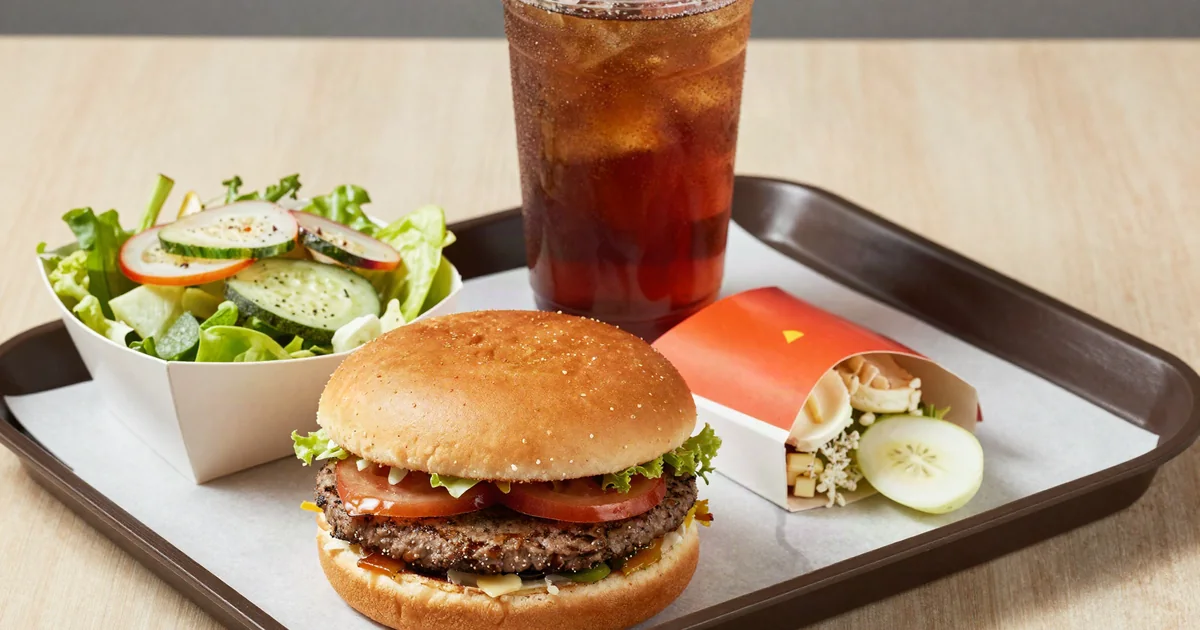
Quick answer: Yes, you can eat there, and the plan is one protein-forward item, the carb-heavy pieces kept small, and nothing sweet in the cup. A Quarter Pounder with cheese and a diet drink lands around 45 grams of carbs, while two cheeseburgers, a small fries and a small Coke go past 100, and it’s the same restaurant either way.
I ate fast food for years and it wasn’t laziness. It was access. When you’re installing water systems twelve and sixteen hours a day and your lunch window is the twenty minutes between two jobs, the drive-thru isn’t a treat and it isn’t a failure, it’s the only kitchen within reach. That distinction matters to me, because the advice that starts with “just pack a lunch” has never once met my Tuesday.
So here’s the reclassification that made this workable: it’s not the burger that gets you, it’s the drink and the second bun. The burger is a known quantity with a printed number. The rest of the tray is where the damage hides, and it’s all stuff you can leave off without losing the meal.
For the shelf itself, the sodium table behind this article lists 24 real products across three countries, with a source on every row.
Can I eat at McDonald’s with diabetes at all?
Yes. There’s no forbidden item on the menu, there’s a portion and a frequency and a what-comes-with-it.
Everything below comes from the published nutrition numbers, and I say “roughly” because they move a little by region and by year. You’re not doing chemistry in a drive-thru. You’re making a decent bet with public information.
What do I order at breakfast?
Three orders, and I’ve run all three.
Egg McMuffin and a black coffee. Roughly 310 calories, about 30 grams of carbs, around 770 mg of sodium, and 17 grams of protein. One English muffin is the only real carb on the plate and it’s a small, defined one. This is the quiet winner of the entire menu and it holds me until lunch.
Sausage McMuffin with Egg, no hash browns. Around 480 calories, roughly 30 grams of carbs, about 830 mg of sodium. Same structure, more fat and salt from the sausage. The autopilot mistake is the hash brown, which adds about 18 grams of carbs and another 310 mg of sodium that your breakfast did not need. If you love them, order them sometimes and count them honestly.
One Sausage Burrito and coffee. About 310 calories, roughly 25 grams of carbs, around 800 mg of sodium. The tortilla is the budget and at one it’s modest. Two puts you near 50 grams before you’ve had a drink, which some people handle and some people don’t. Start at one, check at the hour, then decide with a number instead of a guess.
What do I order at lunch?
Two paths, and neither of them is a punishment.
Quarter Pounder with Cheese and a diet drink. Roughly 520 calories, about 42 grams of carbs, 30 grams of protein, and around 1,140 mg of sodium. All the carbs are in the bun, so there’s nothing to pick at. The sodium is the number to respect here, and it’s the reason the drink matters so much: a medium Coke on the side turns a manageable order into a rough afternoon twice over, once for sugar and once for salt that makes you retain water. With CKD in my own chart, salt isn’t a rounding error for me.
McChicken or McDouble, small fries, zero-sugar drink. McChicken is about 390 calories, roughly 38 grams of carbs, around 560 mg of sodium. McDouble runs about 390 calories with roughly 32 grams of carbs but closer to 920 mg of sodium. Either one plus a small fries, roughly 22 grams of carbs, plus a zero-sugar drink puts you near 60 grams. That’s the high side of a meal and not a disaster.
What should I skip?
The large fries. Fries aren’t poison, the slope is. Small is about 22 grams of carbs, medium about 44, large about 66. The large is a second sandwich’s worth of carbs that you’ll eat without noticing while scrolling. Order the small, every time, and if you’re still hungry get a second sandwich instead, because protein at least tells your body it ate.
Sugary drinks. The biggest single number on the tray by a mile. A medium Coca-Cola is about 270 calories and roughly 70 grams of sugar, liquid carbs that arrive in four minutes and leave you with nothing. A large is worse. Water, unsweetened iced tea, black coffee, zero-sugar soda: all free from a blood sugar standpoint, and no, they don’t make the meal taste worse.
Sweet sauces. Big Mac sauce alone carries about 7 grams of sugar per sandwich, and the dipping sauces run 9 to 11 grams a packet. Mustard, ketchup in moderation, and the lighter mayo options are the low-sugar moves. One packet, not three.
The crispy chicken sandwiches with sauce and a big bun. Forty-five grams of carbs and over 1,000 mg of sodium, for something that isn’t better than the grilled version.
Breakfast pastries and pancakes. Forty to sixty grams of carbs with almost no protein to slow any of it down. If you want something sweet at breakfast, that’s easier to control at home than at a speaker box.
Why is the drink the whole decision?
Because carbs you drink behave like a leak you opened on purpose. No fiber, no fat, no protein, nothing to slow delivery, so it hits fast and hard and takes the meal’s whole budget with it. A medium Coke has about the same sugar as a whole dessert course.
The habit that holds long term isn’t never having a real Coke. It’s making the zero-carb drink the default, so the one time you do order the real thing it’s a decision you made on a Friday instead of something that happened to you at a window.
What matters more than which sandwich I pick?
One sandwich is a meal, two is two meals. The combo menu is built to blur that line and you don’t have to buy it.
Small is a real size. Small fries and small drinks exist, and the difference between a satisfying order and a spiking one is usually that medium quietly became large sometime in the last two years.
Eat the protein first and the bun last. Free, changes nothing you ordered, blunts the peak. I use it every single time, and the mechanism is in eating carbs last.
Walk after. Twenty minutes at lunch is worth more than any swap on the menu.
Then check at the hour and at two. My one-hour number sits near 8 mmol/L and I’m under 6 by two hours, so I can see whether a specific order fits that shape or breaks it. Your meter is the only source that knows what your body does with a Quarter Pounder bun versus an English muffin. Mine doesn’t treat them the same and I doubt yours does either.
When to call your care team
Call if your after-meal readings are consistently above the range they set for you, if fast food has quietly become most days and your A1C is climbing, or if you’re cutting meals to compensate and running low.
Call the same day for a reading over 400 mg/dL. Call emergency services for vomiting, deep rapid breathing, confusion or drowsiness alongside a very high reading, since that combination is not a wait-and-see.
And if sodium is the number that’s actually out of control in your chart, lower-sodium restaurant orders is the more useful page than this one, and the Subway version of this guide covers a different set of traps. The rest of the series keeps the same format: Starbucks for the drink side, and Tim Hortons if that’s where your morning actually happens.
General information, not medical advice. Nutrition numbers are approximate and change; your carb targets and your safe frequency come from your care team.
Frequently asked questions
Can I eat at McDonald's with diabetes at all?
Yes. There's no forbidden item on the menu, there's a portion and a frequency and a what-comes-with-it. Everything below comes from the published nutrition numbers, and I say "roughly" because they move a little by region and by year.
What do I order at breakfast?
Three orders, and I've run all three. Egg McMuffin and a black coffee. Roughly 310 calories, about 30 grams of carbs, around 770 mg of sodium, and 17 grams of protein.
What do I order at lunch?
Two paths, and neither of them is a punishment. Quarter Pounder with Cheese and a diet drink. Roughly 520 calories, about 42 grams of carbs, 30 grams of protein, and around 1,140 mg of sodium.
What should I skip?
The large fries. Fries aren't poison, the slope is. Small is about 22 grams of carbs, medium about 44, large about 66.
Why is the drink the whole decision?
Because carbs you drink behave like a leak you opened on purpose. No fiber, no fat, no protein, nothing to slow delivery, so it hits fast and hard and takes the meal's whole budget with it.
What matters more than which sandwich I pick?
One sandwich is a meal, two is two meals. The combo menu is built to blur that line and you don't have to buy it.
Want the complete system?
This guide is based on Hardy's ebooks — plain-language, step-by-step PDFs you can read in one sitting. See all guides
Educational content only — not a substitute for advice from your doctor or pharmacist. Always work with your care team.