Your Diabetes Medical Bag: Work and Travel Checklist
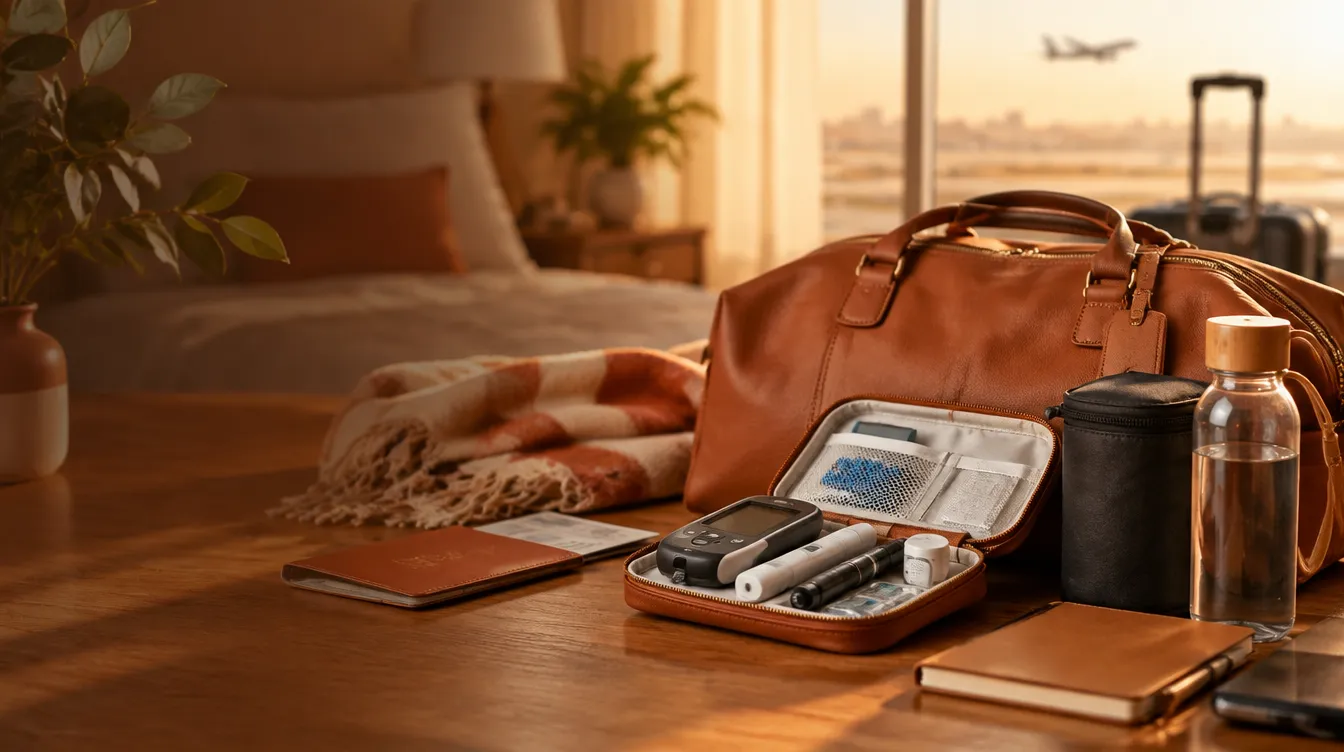
Quick answer: a packed diabetes bag holds three layers — your testing supplies, a fast-sugar treatment for lows if your medication can cause them, and enough food and backup supplies to survive a delayed commute or a lost suitcase. Build it once, restock it weekly, and keep it where you already keep your keys.
Diabetes doesn’t pause because you’re at the office, in a car, or on a plane. The days that go wrong are rarely about the condition itself — they’re about the supplies that stayed home: the meter in the other bag, the low you weren’t prepared for, the insulin that sat in a hot car.
A packed bag removes that whole category of problem. Everything here is educational and works alongside the guidance your care team has given you; their instructions about what you carry always come first.
What goes in the everyday bag?
Quick answer: meter (or CGM backup plan), strips, lancing device and lancets, a fast-sugar treatment if your medication can cause lows, a slow-burning snack, your medication for the time away from home, and water.
The everyday layer, small enough to live in a desk drawer or day bag:
- Testing: meter, strips, lancing device, spare lancets, spare batteries if yours uses them.
- Fast sugar (if your care team has told you lows are possible): glucose tabs or four juice boxes’ worth of equivalent — something measured, not a guess.
- A slow snack: crackers, a nut bar, or whatever pairs with your plan when a meeting runs into lunch.
- Medication for the hours you’re out, in its original packaging.
- Water. High - **Water.**bloodsugar and long meetings both dehydrate you. sugar and long meetings both dehydrate you. Related: Type 2 Diabetes Grocery Shopping Without Losing Favorites walks through this step by step.
Keep the bag packed as a unit. A “diabetes drawer” you restock from is fine at home; the moment the bag travels with you, you stop making daily packing decisions — and daily decisions are where gaps appear.
What changes for travel?
Quick answer: double the supplies, split them between two bags, protect medication from temperature, keep everything in original packaging, and carry a note from your care team listing your conditions and devices.
The travel layer adds rules, not much bulk:
- Two bags. Half your supplies in carry-on, half in the other bag. Checked luggage gets lost; a backup set means the trip survives.
- Temperature. Insulin and test strips have temperature limits — a car glovebox in summer or a freezing cargo hold can ruin both. Carry medication with you, in an insulated pouch if the trip is long.
- Original boxes. Airport security and customs move faster when everything is labeled and factory-sealed.
- A doctor’s note listing your condition, devices, and medications — worth the five minutes it takes to request.
- Time zones. If your medication timing matters, ask your care team how to shift it before the trip, not at the airport.
The five things most people forget
Quick answer: a fast-sugar treatment, spare test strips, a charging cable for meter or CGM reader, emergency contact info, and a way to sit down and eat if the day collapses — patience included.
The gaps that show up when it counts: Related: After-Dinner Walks For Steadier Blood Sugar walks through this step by step.
- No fast sugar on board. The most common miss, and the most serious if your medication can cause lows.
- Strips but no lancet device (or the reverse) — the parts travel separately in most bags.
- A dead battery in the meter or reader with no charger in the bag.
- Contact card. Who to call, which pharmacy fills your prescriptions — one card covers a lost-bag day.
- A real meal plan for delays. Fast sugar handles lows; delayed flights and overtime need a snack that behaves like a meal in your plan.
How do you keep it working?
Quick answer: one weekly restock moment, tied to something you already do — Sunday prep is perfect. Check expiry dates, strip counts, and that the fast-sugar item hasn’t migrated to someone’s pocket.
Build the bag once this week and it pays for itself the first time a meeting runs late or a highway slows to a crawl. The restock is one minute: everything back in place, expiry dates scanned, nothing missing.
Everything in this guide is educational and works alongside the guidance your care team has given you. Their instructions about your supplies, medication, and low-sugar treatment always come first.
Related reads
Frequently asked questions
What should I pack in a diabetes bag for work or travel?
Your testing supplies, a fast-sugar treatment if your medication can cause lows, a slow-burning snack, your medication for the hours away from home, and water. Pack it as one unit so you never make daily packing decisions where gaps appear.
What do people with diabetes most often forget to pack?
A fast-sugar treatment, spare test strips, a charging cable for the meter or CGM reader, emergency contact info, and a real snack for delayed days. The fast-sugar item is the most common miss and the most serious one.
How do I travel with insulin and test strips?
Split supplies between two bags, keep everything in original packaging, and carry insulin with you in an insulated pouch since gloveboxes and cargo holds can ruin it. Ask your care team about shifting medication timing before the trip, not at the airport. *Everything in this guide is educational and works alongside the guidance your care team has given you.
Want the complete system?
This guide is based on Hardy's ebooks — plain-language, step-by-step PDFs you can read in one sitting. See all guides
Educational content only — not a substitute for advice from your doctor or pharmacist. Always work with your care team.