8 Kidney-Friendly Breakfasts That Aren't Boring
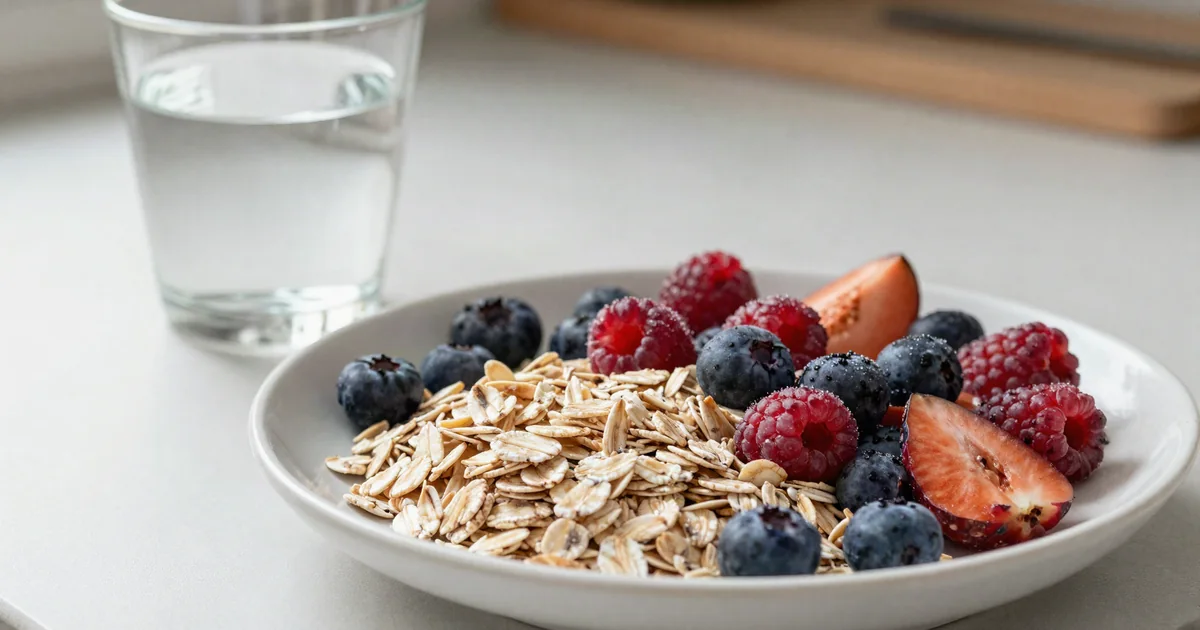
Quick answer: A kidney-friendly breakfast keeps sodium, phosphorus and potassium on a leash and still carries you to lunch without a detour through the cupboard. These eight are what I rotate, and none of them costs more than eight minutes at the stove.
My A1C was 9 and it sits at 6.5 now. My eGFR is the number I check second, after my blood pressure, and I’ve watched it move enough times to know it doesn’t care how motivated I felt in January. Breakfast is where I get the most control for the least effort, because a bad decision at seven in the morning repeats about 300 times a year.
Most people think the kidney diet is about giving things up. It’s not, it’s about load per plate. Sodium pulls blood pressure up, and blood pressure is the second-biggest cause of kidney damage after diabetes. Phosphorus from additives goes in faster than your kidneys clear it. Potassium gets portioned, not banned.
When a box is the question, the Snack Checker reads the barcode and gives sodium, sugar and salt per 100 g — the number the front of the pack avoids.
Why does breakfast decide more of the day than dinner does?
Because breakfast is the meal with the least attention and the most packaging.
You’re standing up, the kettle is going, and whatever is within arm’s reach is what you eat. That’s why the cereal box wins arguments it should lose. The front says whole grain, the back says 320 mg of sodium and a phosphorus additive you can’t pronounce. It’s marketing doing its job at your expense.
My rule is boring and it holds: a breakfast needs a protein, a low-potassium fruit or vegetable, and a starch I portioned myself. If I can’t name all three, it’s a snack.
The potassium foods guide for stage 3 CKD is the page to read next if your labs have potassium at the top of the range.
The eight I actually rotate
1. Egg white veggie scramble with white toast
Two or three egg whites, bell pepper, onion, herbs, one slice of white toast. Egg white gives you the protein with a fraction of the phosphorus in the yolk. Peppers and onions are about as low as vegetables go on potassium. And here’s where the kidney diet gets strange, white toast beats whole wheat on both minerals, because bran is exactly where they live. Your heart book and your kidney book fight here.
2. Oatmeal with berries, half-cup portion
Half a cup of dry rolled oats, water, a small handful of blueberries. Plain oats, not the flavoured packets, those carry sodium, phosphate additives and enough sugar to make the rest of the morning an event.
Half a cup dry is a reasonable load. Berries run lower on potassium than banana or orange, so you get sweet without moving the number you’re watching.
3. Apple slices, rice cakes, thin cream cheese
Two unsalted rice cakes, a thin spread of plain cream cheese, a sliced apple. Apples are the reliable low-potassium fruit, the one I never reconsider. Rice cakes without salt are close to zero sodium. The cream cheese stays thin, because dairy is phosphorus.
4. Pancakes from scratch, not from a box
Flour, one egg white, a little sugar, baking powder, water. Strawberries or a thread of honey instead of syrup. Boxed mix is where phosphate additives live, usually as monocalcium phosphate, added for shelf life rather than for you. Four pantry things takes three extra minutes and removes a whole category of additive. It’s also the breakfast that made me stop feeling like a patient, a pancake on a Sunday looks like a normal life.
5. Smoothie, with the right fruit in the blender
Frozen strawberries, a few blueberries, half a small apple, ice, water. Not milk. A smoothie is only as good as what you leave out. No banana. No orange juice. No spinach. No protein powder, because powders are a phosphorus delivery system with a fitness label. Fruit, ice, liquid, done.
6. English muffin egg sandwich
Plain English muffin, egg white cooked in the pan, a thin slice of low-sodium cheese if your plan allows it. This is the drive-thru sandwich rebuilt at home, and the rebuild isn’t close, it’s a different object. Sausage and bacon are the sodium and phosphorus carriers in the original; take them out and you have bread, egg and cheese. An English muffin runs lower on both minerals than a bran muffin, which surprises people who assume bran is the good one.
7. Overnight oats with unsweetened almond milk
Half a cup of rolled oats, unsweetened almond milk, into the fridge at night, raspberries in the morning. The work happened while I was asleep. Almond milk is much lower in phosphorus and potassium than cow’s milk, with one check: some brands add phosphates as a stabiliser, so read the ingredient list and put it back if you find the word.
8. Cream of Wheat, small bowl, real toppings
Original Cream of Wheat with water, a spoon of brown sugar or sliced peaches. Classic hot cereals sit lower on potassium than bran flakes or granola, and a modest bowl keeps phosphorus sane. The instant flavoured cups are the trap, same additive story as the pancake mix. Buy the plain box and sweeten it yourself.
What is the potassium trap in “healthy” breakfasts?
The foods with the wellness halo are often the worst offenders, and nobody puts a warning on a green smoothie.
A banana on your oatmeal, a glass of orange juice, a bran muffin from the coffee shop, a smoothie with a fistful of spinach, any one of those can carry more potassium than a whole day of the boring breakfast you were apologising for. Bran is high in both minerals, so the muffin is a double. Juice drops the fibre and concentrates the fruit. Spinach gets the people who were trying hardest, and if you avoid high-oxalate foods for your kidneys it’s on both lists anyway.
The trap works on your psychology, not your stomach. You’re trying to do right by an organ you can’t feel, so you reach for the food with the halo on it, and the number climbs while you’re being virtuous about it.
The fix isn’t to fear fruit. It’s to pick the fruit that fits and the portion that fits. If your last labs had potassium at the top of the range, take this page to your dietitian and rebuild the rotation with them instead of with me. Their number, your breakfast.
If you’re newer to this, the walkthrough on planning familiar meals without phosphorus guesswork handles the additive side.
What do I do when breakfast happens somewhere else?
You order the closest thing to the list and stop treating it as a failure. At a diner that’s eggs, dry toast and fruit, no added salt. At a coffee shop it’s the egg bites and a black coffee, not the pastry case.
I read every label for sodium now, and that habit did more for my blood pressure than any single food I added or removed. Bread, sauce, packaged anything, that’s where it hides, and most people meet their first 700 mg before nine in the morning.
When to call your care team
- Potassium or phosphorus flagged high on a lab, call and ask what to change, don’t self-correct from a search result.
- New or worsening swelling in your ankles, feet or around your eyes.
- Shortness of breath, or waking up breathless.
- A reading over 400 mg/dL on your meter, or 180/120 with chest pain, breathlessness, vision changes or a severe headache, emergency care, not a callback.
General information, not medical advice. Your potassium, phosphorus, protein and sodium targets are set by your care team, not by a blog, and they change as your labs change. Never stop or change a medication because of something you read here.
Frequently asked questions
Why does breakfast decide more of the day than dinner does?
Because breakfast is the meal with the least attention and the most packaging. You're standing up, the kettle is going, and whatever is within arm's reach is what you eat.
What is the potassium trap in "healthy" breakfasts?
The foods with the wellness halo are often the worst offenders, and nobody puts a warning on a green smoothie.
What do I do when breakfast happens somewhere else?
You order the closest thing to the list and stop treating it as a failure. At a diner that's eggs, dry toast and fruit, no added salt.
Want the complete system?
This guide is based on Hardy's ebooks — plain-language, step-by-step PDFs you can read in one sitting. See all guides
Educational content only — not a substitute for advice from your doctor or pharmacist. Always work with your care team.