What Blood Pressure Is Considered Low?
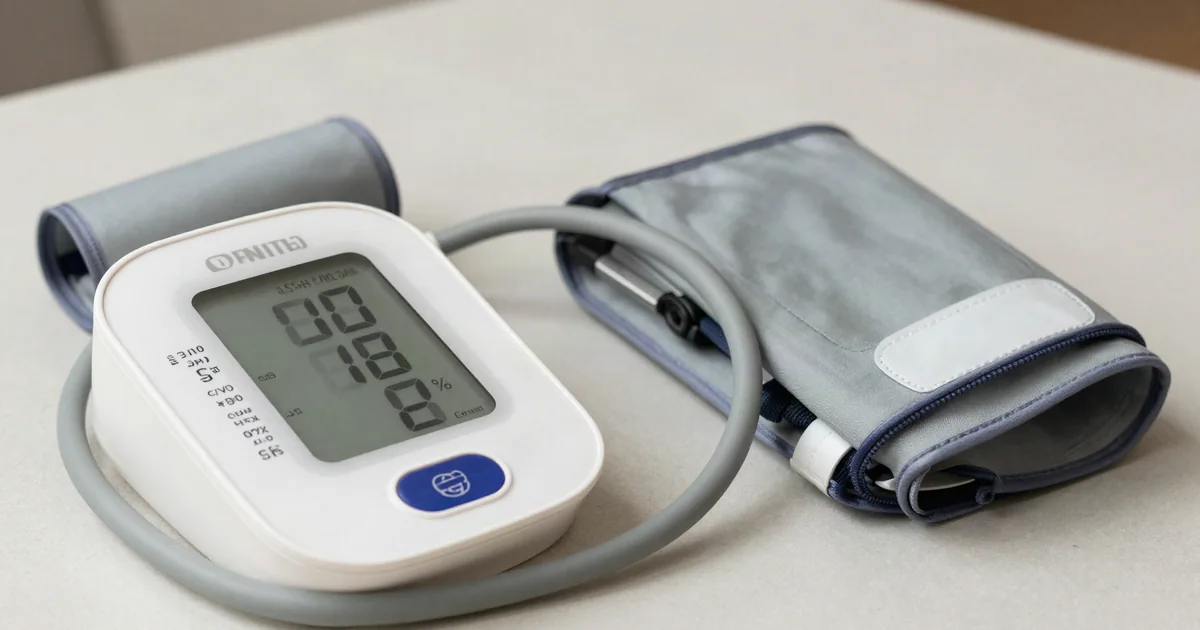
Quick answer: Blood pressure under about 90/60 mmHg is the cut-off most people mean by “low.” It is a convention, not a hard rule. A reading like 95/60 is usually fine if you feel well. Low blood pressure matters when it comes with dizziness, fainting, blurry vision or confusion.
You took a reading at home or at a pharmacy. The screen said something like 95/60, and now you are wondering if something is wrong. Nobody told you what the numbers mean, and the internet is full of worst-case answers. Most of the time, a number like this is harmless. This post explains what “low” means, why some people run low normally, and how to tell a reading you can ignore from one worth a phone call.
What counts as low blood pressure
Blood pressure is written as two numbers. The top one is systolic, the pressure when your heart beats. The bottom one is diastolic, the pressure between beats. Both are measured in millimetres of mercury, written mmHg.
Under 120/80 is commonly called normal. Under about 90/60 is the usual line people draw for low. You will see that figure on most health sites, including the American Heart Association’s pages.
But it is a convention. Nobody flipped a switch at 89. A reading of 92/58 is not a different category of person from 88/62. Doctors look at the number, your symptoms, your usual readings and your health history together.
One low number also doesn’t mean you have low blood pressure as a condition. Readings bounce around all day. Stress, a cold room, a full bladder and the way you sat can all move them.
If you want the full breakdown of what each number means, see the explainer linked at the end of this post.
Low and fine: why some people always run low
Some people simply have lower blood pressure than average, and it never causes trouble.
If you feel well, a low reading on its own is usually not a problem. Many doctors treat it as a healthy sign, because lower pressure puts less strain on the heart and blood vessels over time.
Groups who often read low without any issue include:
- Athletes and very active people. A well-trained heart pumps more with each beat, so it can do the same job at a lower pressure and slower pulse.
- Younger people. Healthy young adults, especially slim ones, often sit in the 90s over 60s.
- People who have always run low. If your readings have been similar for years and you feel fine, that is probably just your baseline.
The word that matters is “baseline.” A drop from your usual 125/80 to 95/60 tells a doctor more than a steady 95/60 you have had since your twenties. That is why keeping a record helps, and a later section covers how.
Low and worth a call: the symptoms that matter
The number is only half the story. What matters is whether your body is getting enough blood flow to the brain and organs. When it isn’t, you feel it.
Symptoms that go with a low reading and deserve attention:
- Dizziness or lightheadedness that does not pass
- Fainting or nearly fainting
- Blurry or fading vision
- Confusion or trouble thinking clearly
- Cold, clammy, pale skin
- Fast, shallow breathing
- Unusual weakness or deep fatigue
A low number with none of these is a different situation from a low number with several of them.
Some signs call for urgent care, not a routine appointment. Fainting, chest pain, severe confusion, a very fast heartbeat with a low reading, or a low reading after an injury, heavy bleeding, infection or a new medicine should be treated as an emergency. Call your local emergency number.
I am not a doctor. I am a patient who has been frightened by a number before. When symptoms and a low reading show up together, let a professional sort it out.
Everyday causes that are usually harmless
Plenty of ordinary things push blood pressure down for a while. Knowing them takes some of the fear out of a single odd reading.
- Dehydration. Less fluid in your blood means lower pressure. Hot weather, sweating, vomiting, diarrhoea or simply not drinking enough can do it.
- Heat. Warm rooms, hot baths and saunas widen blood vessels, which lowers pressure.
- Standing up fast. Gravity pulls blood toward your legs for a moment. Your body usually corrects this in seconds, but sometimes you get a head rush first.
- Big meals. After eating, blood flow shifts to your gut. Pressure can dip, and this is more noticeable in older adults.
- Pregnancy. Blood pressure often falls in the first two trimesters. Your care team will track it.
- Long periods of bed rest or standing still.
A reading taken right after one of these is often just a snapshot of that moment. Retake it later, after you have had water and rested, before you decide anything.
Some medicines, heart conditions, hormone problems and serious infections can also cause low blood pressure. Those are reasons to talk to a doctor if the low readings keep coming back. Never change a medicine because of a reading. Ask the person who prescribed it.
How to record a low reading so it means something
A single number can’t tell anyone much. A short log can.
Measure the same way each time. Sit quietly for five minutes, back supported, feet flat, arm resting at heart level. Skip caffeine and exercise for 30 minutes beforehand. Use a cuff that fits your upper arm. The home-reading guide linked below walks through this step by step.
Write down:
- Date and time
- Both numbers and your pulse
- Whether you were sitting or standing
- How you felt, in plain words (“fine,” “lightheaded,” “tired”)
- What came before: a meal, a hot shower, a workout, a poor night’s sleep
- Any medicines you take, if you take any
If you get dizzy when you stand, ask your doctor whether to check lying, sitting and standing. A drop on standing has a name, orthostatic hypotension, and a log of positions helps a clinician spot it.
Take two readings a minute apart and note both. Do this for a week or two. Bring the notebook or phone to your appointment. It is more useful than any one number.
What to do right now
If you feel fine and your reading is a bit low, you probably do not need to do anything. Retake it in a while, and keep logging.
If you feel lightheaded or woozy, sit or lie down and drink some water. Stay put until it passes. Get up slowly. Lying down with your legs raised can help blood flow back toward your head. Do not drive while you feel unsteady.
Call your doctor’s office, not an emergency line, if:
- Low readings keep showing up, especially if they are lower than your usual
- You get dizzy spells often, even if they pass
- You have started a new medicine and your readings changed
- You have diabetes or kidney disease and notice new fatigue, weakness or dizziness. These conditions can affect how your body handles fluid and pressure, so it is worth mentioning
Seek urgent help for fainting, chest pain, confusion, or a low reading along with severe illness, injury or bleeding.
Do not salt your food heavily or change your diet to “fix” a low number on your own. Sodium advice depends on your health, particularly if you have kidney problems or high blood pressure at other times. Ask your doctor or dietitian.
FAQ
Is 90/60 dangerous? Not by itself. It is right at the usual cut-off, and many healthy people sit there. What matters is how you feel. If you have no symptoms, it is often fine. If you are dizzy, faint or confused, get medical advice.
Can blood pressure be too low even without symptoms? Sometimes a doctor will still want to look, for example if a reading is far below your normal or you have a heart condition. But for most people with no symptoms, a lowish reading is not a concern. Mention it at your next visit.
Can I have low and high blood pressure at different times? Yes. Blood pressure moves through the day, and some people swing between readings. This is one reason a log of repeated, properly taken readings beats a single number. Share the whole record with your doctor.
The bottom line
Under about 90/60 is the common line for low blood pressure, but it is a guide, not a diagnosis. A reading like 95/60 with no symptoms is usually nothing to worry about, especially if you are young, fit or have always run low. Pay attention to how you feel. Dizziness, fainting, blurry vision or confusion mean you should get checked. Many dips come from heat, dehydration, a big meal or standing too fast. Log your readings, retake them properly, and let your doctor read the pattern.
If you want to understand the two numbers better, start with blood pressure numbers explained. To get cleaner readings, see how to read blood pressure at home correctly. And if dizziness and tiredness are what worry you most, high blood pressure, dizziness and feeling tired covers the overlap.
Sources: American Heart Association, CDC, MedlinePlus, National Kidney Foundation.
This article is for general information only and is not medical advice. Talk to your doctor or care team about your own health.
This page is education, not medical advice. Bring your questions and your own numbers to your doctor or care team — they know your history.
Want the complete system?
This guide is based on Hardy's ebooks — plain-language, step-by-step PDFs you can read in one sitting. See all guides
Educational content only — not a substitute for advice from your doctor or pharmacist. Always work with your care team.