What Is the Lowest Blood Pressure Reading?
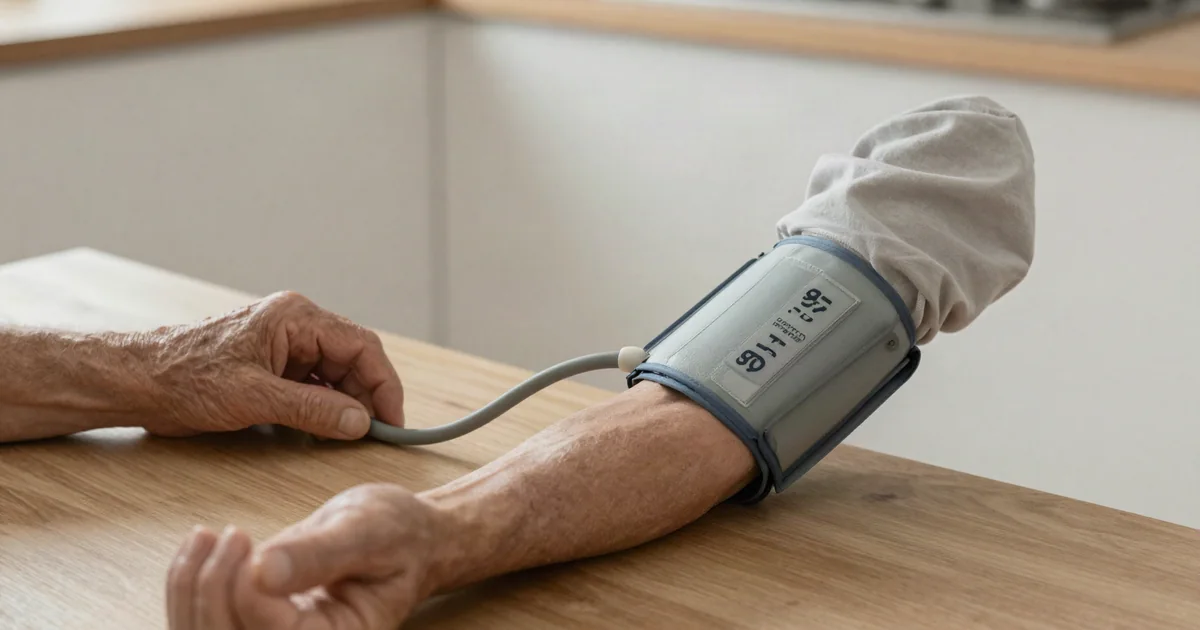
Quick answer: There is no single “lowest safe” blood pressure. What matters is whether your organs are getting enough blood flow and whether you have symptoms. A reading under 90/60 is commonly called low, and many healthy people sit there without trouble. A low number with fainting, confusion, cold clammy skin or a racing pulse is an emergency.
You probably searched this because you saw a low number on a cuff, or you are worried about one. That is a fair thing to worry about. Most of the advice online is about pressure that is too high. This page covers the other end. It explains how to tell a harmless low reading from a dangerous one, what to do, and what to have ready if you need to call for help.
Why there is no single lowest number
Blood pressure is a means to an end. The goal is to push enough blood to your brain, heart, kidneys and other organs. A number only matters if it stops that from happening.
Some people run at 85/55 their whole lives. They feel fine, they are fit, and their doctor is not worried. Other people drop from 150/90 to 100/60 and feel terrible, because their body was used to a higher pressure.
That is why no organisation gives one floor that applies to everyone. The commonly used cutoff for “low” is under 90/60 mmHg. It is a label, not a danger line. The American Heart Association says much the same: a low reading is a problem mainly when it causes symptoms.
So a single low number, with no symptoms, is not a diagnosis. Your usual baseline, your symptoms and the cause all matter more. If you have kidney disease, diabetes or heart problems, your doctor may judge “low” differently for you, so ask what your own range should be.
Readings that usually prompt urgent assessment
Clinicians do not act on one magic figure. Still, some patterns make them look closer.
A top number (systolic) under about 90 with symptoms usually needs prompt medical attention. Many emergency teams get concerned when the systolic falls under 90 mmHg in someone who looks unwell. A drop of 20 or more points from your usual reading, even if the number is not extreme, can also matter.
Other patterns that get attention:
- A top number in the 70s or 80s, even if you feel fairly well, especially if it is new for you.
- A big gap between lying and standing readings. Doctors call a fall of 20 points on top or 10 on the bottom within three minutes of standing “orthostatic hypotension.”
- A low reading that keeps repeating, not a one-off.
These are typical clinical prompts, not rules to self-diagnose with. If you are unsure, a phone call to your doctor or a nurse line is reasonable. If you also have any of the symptoms below, skip the phone call and get emergency help.
For more on what the two numbers mean, see the guide linked at the end of this page.
Symptoms that mean emergency
When blood pressure falls far enough that organs are short of blood, the body gives warning signs. This state is sometimes called shock. You do not need to be sure that is what it is. If the low reading comes with any of these, call emergency services.
- Fainting or nearly fainting, or being unable to stand without going grey or dizzy.
- Cold, clammy, pale or bluish skin.
- A very fast pulse that feels like it is racing or fluttering, often with fast, shallow breathing.
- Confusion, unusual sleepiness, slurred words, or not making sense.
- Very little urine, or none for many hours. Your kidneys are sensitive to low blood flow, which matters a lot if you already have kidney disease.
- Chest pain, or sudden severe shortness of breath.
A few of these together are more worrying than one on its own. But confusion or fainting is enough by itself.
Do not wait to see if it passes. Do not drive yourself. Lie down, ideally with your legs raised if you are not having chest pain or trouble breathing, and let someone stay with you until help arrives.
Common causes of low readings
Low pressure has many causes. Some are minor. Some are urgent.
Dehydration. Vomiting, diarrhoea, fever, heavy sweating or not drinking enough all reduce the volume of blood in your system. Pressure falls as a result. People with diabetes can dehydrate quickly when blood sugar runs high, because the body passes extra fluid as urine.
Bleeding. Blood loss, whether visible or hidden, can drop pressure fast. Black or bloody stools, vomiting blood, or a serious injury with a low reading is an emergency.
Medication. Blood pressure medicines, water pills, and some other drugs can push readings down, particularly after a dose change, illness or weight loss. Not everyone takes any of these, and this page does not assume you do. If you do, the cause may be a drug effect.
Other causes. Severe infection, heart problems, allergic reactions, standing up too quickly, long periods in the heat, and some hormone conditions can all play a part.
You cannot tell the cause from the number alone. That is why a doctor needs the full picture.
What not to do
When you see a low number, it is tempting to fix it yourself. Two common moves can make things worse.
Do not stop or change a medicine on your own. If you take blood pressure medication and suspect it is the cause, call your prescriber or pharmacist the same day. Stopping suddenly can cause its own problems, and the real cause may be something else, like dehydration or infection. Let a clinician make that call with you.
Do not load up on salt to push your pressure up. Salt tablets, salty broth by the bowlful or similar tricks are risky. Some people are told by their doctor to eat more salt for certain conditions. That is a decision for a clinician, not something to try because a cuff read low. If you have high blood pressure, heart disease or kidney disease, extra salt can do real harm.
Also avoid:
- Alcohol, which lowers pressure further and dehydrates you.
- Standing up fast or taking a hot bath or shower while you feel faint.
- Ignoring a reading you do not trust. Recheck it properly first.
Sipping water is usually fine if you are awake, alert and not vomiting.
Check that the reading is right
Home cuffs can be wrong. A cuff that is too big, a bent arm, a talking session, a recent coffee or a cuff placed over clothing can all change the number.
Before you panic, sit quietly for five minutes with your back supported, feet flat and your arm resting at heart level. Use the correct cuff size. Take two readings a minute apart. If the number is still low and you feel unwell, treat it as real.
If you feel awful, trust how you feel over the cuff. A normal-looking number does not cancel out fainting or confusion. A cuff can also struggle to read when pressure is very low or the pulse is very fast or irregular. An error message or an odd result in someone who looks unwell is a reason to get help, not to keep re-testing.
If you measure at home often, keep a written log of readings with the date, time and how you felt. A pattern of lows is useful information for your doctor.
What to have ready when you call for help
If you call emergency services or a doctor, clear details help them move faster. You do not need all of this. Give what you know.
- The readings: your latest numbers, the time you took them, and your usual range.
- Your symptoms: what you feel, when it started, and whether it is getting worse.
- Your conditions: diabetes, kidney disease, heart problems, or anything else diagnosed.
- Your medicines: a list of everything you take, including supplements and over-the-counter products. If you take nothing, say so.
- Recent events: vomiting, diarrhoea, fever, bleeding, a fall, a new drug, a recent illness, or not eating and drinking.
- Allergies.
- Your location and a contact number.
Keep a short note on your phone or fridge with your conditions, medicines and doctor’s number. If you feel faint, sit or lie down first, then make the call. Unlock the door if you are alone, so responders can get in.
FAQ
Can blood pressure be too low to measure? Yes. In severe shock, pressure can fall so far that a home cuff gives an error or no result. A weak or absent pulse, grey skin and unresponsiveness alongside that are an emergency. Call emergency services immediately and do not rely on the cuff.
Is 80/50 dangerous? It can be, but not always. Some people with long-standing low pressure feel fine at that level. If it is new for you, or you feel dizzy, confused, cold or very weak, get urgent medical help. If unsure, call a doctor or nurse line.
Can low blood pressure harm my kidneys? It can. Kidneys need steady blood flow to filter well, and a significant drop can injure them, especially if you already have kidney disease. Very little urine is a warning sign. Tell your care team about low readings, and ask what range is right for you.
The bottom line
There is no universal lowest safe blood pressure. Under 90/60 is commonly called low, but many people live well at that level. What turns a low number into an emergency is how you feel and how your body is coping. Fainting, confusion, cold clammy skin, a racing pulse or very little urine means you should call emergency services. Do not stop medicines on your own, and do not use salt to force your pressure up. Recheck the reading properly, note your symptoms, and have your conditions and medicines ready. When in doubt, get medical help instead of waiting.
If you want to understand what the two numbers mean, start with our guide to blood pressure numbers explained. To make sure your readings are trustworthy, see how to read blood pressure at home correctly.
Sources: American Heart Association (heart.org), MedlinePlus (medlineplus.gov), CDC (cdc.gov), National Kidney Foundation (kidney.org).
This article is for general information and is not medical advice. Talk to your doctor, pharmacist or dietitian about your own situation. If you think you are having a medical emergency, call your local emergency number.
This page is education, not medical advice. Bring your questions and your own numbers to your doctor or care team — they know your history.
Want the complete system?
This guide is based on Hardy's ebooks — plain-language, step-by-step PDFs you can read in one sitting. See all guides
Educational content only — not a substitute for advice from your doctor or pharmacist. Always work with your care team.