Remedy for High Blood Pressure: What Actually Works Naturally
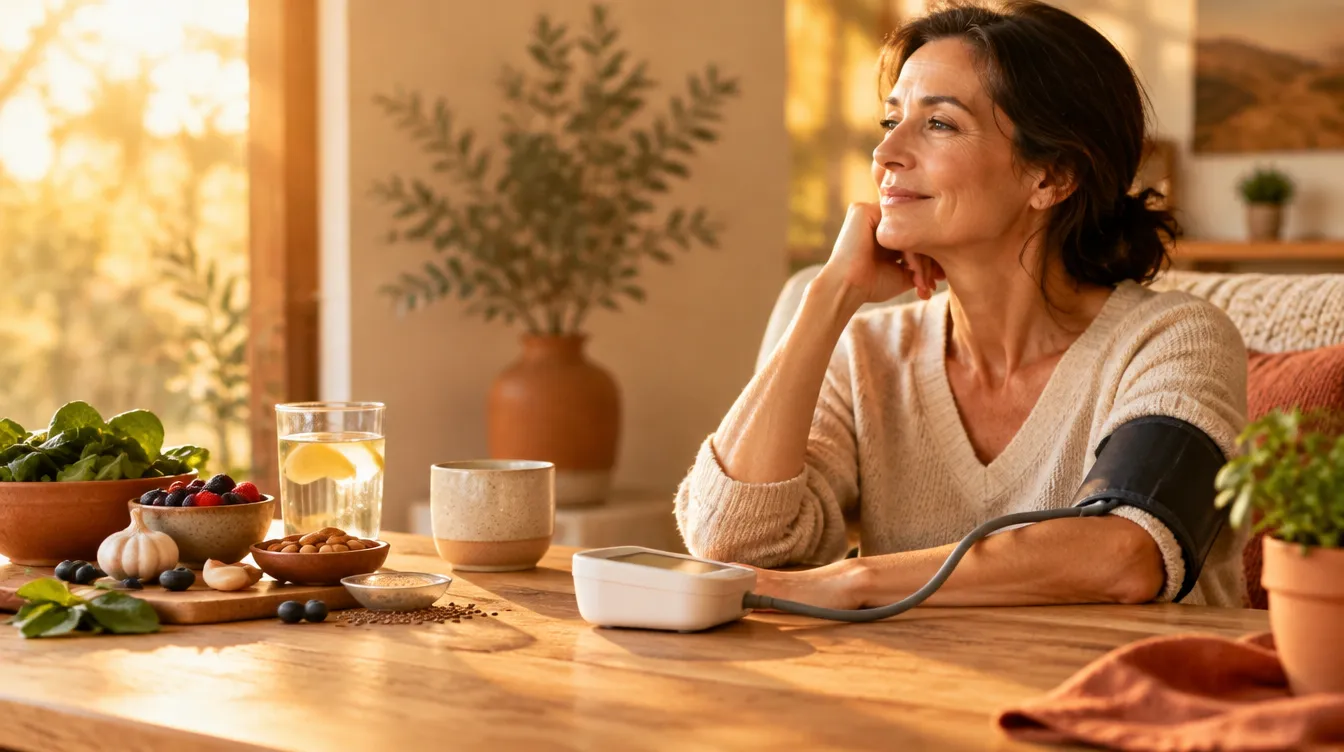
Quick answer: The home remedies with the strongest evidence are regular walking, potassium-rich foods, better sleep, cutting hidden sodium, and slow breathing practice. None of them replace medication or a diagnosis — they’re habits that support the plan your care team already has, and the honest ones work slowly, over weeks, not overnight.
When a reading comes back high, the search that follows is almost always the same one: is there a remedy for high blood pressure — a natural one? It’s a fair question, and it deserves a straighter answer than the internet usually gives. Some habits genuinely move blood pressure. Some are noise. A few are actively risky when mixed with medication.
This guide covers the remedies with actual evidence behind them, how long they take to show up in readings, and how to use them without stepping on your care team’s plan. If you want the full routine on how to lower blood pressure, that post goes deeper.
A packet in your hand can be checked in seconds with the free Snack Checker — barcode in, sodium, sugar and salt out.
Which natural remedies for high blood pressure have real evidence?
Quick answer: five have solid support — regular aerobic walking, potassium-rich foods, treating poor sleep, cutting hidden sodium, and slow breathing practice. Expect changes over weeks, not days.
The framing matters as much as the list. A remedy works with a care plan, not instead of one. High blood pressure that needs medication needs medication — the habits below support the numbers and sometimes, with your doctor’s involvement, let a plan change over time. That’s a decision for your care team, never for this page.
What follows is what the evidence supports, ranked roughly by how easy it is to actually do.
Does walking lower blood pressure?
Quick answer: yes — regular brisk walking is one of the best-supported habits for blood pressure, and it doesn’t require a gym, a program, or 10,000 steps.
The pattern that shows up in research is simple: most days of the week, enough walking to raise your breathing a little, for 20–30 minutes or broken into shorter chunks. The effect builds over several weeks. Two details make it stick in real life:
- Attach it to something you already do. After lunch, after the school run, after dinner. A walk that needs a fresh decision every day doesn’t survive a busy week.
- Lower the bar for bad days. Ten minutes counts. The average across the month is what matters, and a walk you actually take beats a longer one you skip.
If your numbers are very high or you have symptoms (chest pain, dizziness), ask your care team before starting — that’s a threshold question, not a formality.
Which foods help blood pressure?
Quick answer: potassium-rich foods are the headline — bananas, potatoes, beans, leafy greens, yogurt. Cutting hidden sodium matters just as much, and usually more.
Two levers, one direction:
- Add potassium. Most people get less potassium than they need, and potassium is the mineral that helps the body balance sodium out. Whole foods do this best: potatoes with skin, beans, bananas, spinach, avocado, plain yogurt. (If you have kidney disease, potassium needs a different conversation with your care team — don’t add large amounts on your own.)
- Subtract sodium you didn’t know you were eating. Bread, deli meat, canned soup, sauces, and restaurant meals carry most of the sodium in a typical week — the salt shaker is a minor player. One cart of lower-sodium groceries shows the swap-by-swap version.
The DASH-style pattern — more plants, more potassium foods, less processed food — is the evidence-backed umbrella over both levers, and it works without diet-speak or a single banned food.
Does sleep affect blood pressure?
Quick answer: yes. Short sleep, poor-quality sleep, and untreated sleep apnea are all linked to higher blood pressure — and sleep is the remedy people most often forget to try.
Seven to eight hours is the usual target, but quality counts as much as the count. Loud snoring, waking unrefreshed, or a partner reporting breathing pauses are worth mentioning to a doctor — treating sleep apnea can move blood pressure meaningfully. A fixed wake time, less screen light in the last hour, and no caffeine after early afternoon are the cheap fixes to try first.
Does slow breathing or meditation lower blood pressure?
Quick answer: slow breathing (roughly 6 breaths a minute, a few minutes a day) shows modest, real effects — useful as a daily habit, not as an emergency trick to fix a single high reading.
The technique is unglamorous: inhale about four seconds, exhale about six, repeat for five minutes. Done daily, studies show small reductions. Done once, right before re-measuring to make a number come out lower, it mostly just changes the number you record — which defeats the purpose. Breathing practice is for the baseline, not for the single reading.
What natural remedies should you be careful with?
Quick answer: skip supplements with big claims (especially ones marketed for blood pressure), be careful with licorice, decongestants, and high-dose NSAIDs, and never stop medication in favor of a remedy.
The risky part of “natural” isn’t the walking or the bananas — it’s the products and the shortcuts:
- Supplements promising lower numbers. Undisclosed ingredients and interactions are the problem. Tell your care team about anything you take, including “just herbal” things.
- Medication swaps. Blood pressure medication isn’t a commitment you can trade for a smoothie. If a plan change makes sense, that conversation happens with your prescriber — often because the habits are working.
- Everyday items that raise readings. Decongestants, high-dose painkillers, and real licorice can all push numbers up.
How long do natural remedies take to work?
Quick answer: give any of them 4–8 weeks of consistency before judging, and judge with a pattern — two weeks of readings taken the same way, not one number.
This is the part that keeps people quitting on week two. Blood pressure responds to averages, not to yesterday. A simple log — same chair, same time of day, one line of context — turns a scattered pile of numbers into a pattern your care team can actually use. Calmly Making Sense of Home Blood Pressure Readings covers the measuring side.
Free DASH dinner guide
If the sticking point is dinner, the meal where most of a day’s sodium lands, the free 20-page DASH dinner guide shows five dinners built without salt packets: browning, garlic, onion, herbs, lemon, and vinegar do the work instead. It is the companion to the paid 21-day cookbook, and it costs nothing.
Download the free DASH dinner guide — 20 pages, no signup.
Want the full guide?
If mornings are where your routine keeps collapsing — coffee first, measurement never quite right — the ebook Before the First Cup: A Workday Blood Pressure Routine gives you a calm, step-by-step workday routine for the $6.99: when to measure, where coffee fits, and how to build a log your care team can use.
Related reads
- How to Lower Blood Pressure: Practical Steps That Fit Real Life
- Coffee and Blood Pressure Readings: Before Your First Cup
- One Cart of Lower-Sodium Groceries for Everyone
This guide is also available in Spanish: Remedio natural para la presión alta: qué funciona.
Frequently asked questions
Can high blood pressure be treated without medication?
Sometimes, for mildly elevated numbers, lifestyle change is the first step a care team recommends — and it can be enough. For many people, though, medication plus habits is the plan. That's not failure; it's the treatment with the best track record. Never stop medication on your own.
What is the fastest natural way to lower blood pressure?
There isn't a fast one, and anything promising instant results is promising the wrong thing. The habits that work — walking, potassium foods, sleep, less sodium, breathing — compound over weeks. A single reading after a slow-breathing session tells you nothing about your baseline.
Is Apple cider vinegar a remedy for high blood pressure?
The evidence doesn't support it as a blood pressure remedy. It's harmless in food amounts, but it's not one of the habits with real support behind it.
Do I have to give up salt entirely?
No. The realistic target is the sodium you don't taste — packaged food, sauces, bread, restaurant meals. Cooking your own food with a light hand on the salt can still fit comfortably.
When should I worry about a high reading?
One high reading is information, not an emergency. Numbers with warning signs attached — chest pain, severe headache, vision changes, shortness of breath — need immediate care per your care team's instructions. Otherwise, log it with context and look at the weekly pattern.
Want the complete system?
This guide is based on Hardy's ebooks — plain-language, step-by-step PDFs you can read in one sitting. See all guides
Educational content only — not a substitute for advice from your doctor or pharmacist. Always work with your care team.