Coffee and Blood Pressure Readings: Before Your First Cup
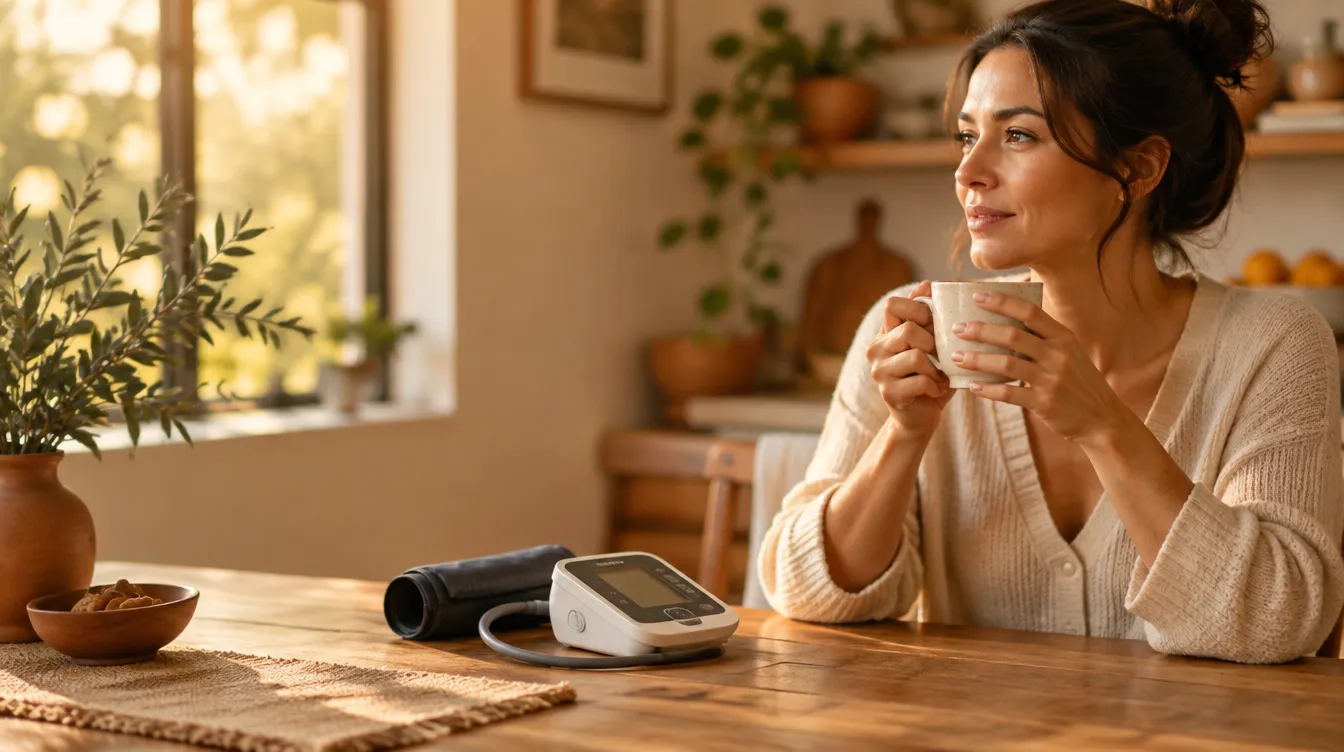
Quick answer: Caffeine can temporarily raise blood pressure in some people, and responses vary — so a single reading after coffee can’t tell you what coffee did. The reliable habit is a morning reading before the first cup: wake, measure, record, then coffee. Note when your last cup was and when you measured, and let the pattern over weeks — not one number — be what you bring to your care team.
The cuff is ready, but the morning is already moving: the coffee is brewing, the keys are somewhere near the door, and the commute is on your mind. If you have high blood pressure and drink morning coffee, the number on the screen can seem to carry two questions at once — what is my blood pressure, and did coffee affect it?
This guide keeps it simple and honest: what caffeine can and cannot do to a reading, a repeatable morning order that puts coffee after the measurement, how to keep coffee notes that are actually useful, and a backup plan for the mornings that don’t go as planned.
Everything here is educational, built to work alongside the instructions your care team has already given you. There is no caffeine interval or amount in this guide that should replace individualized guidance — their instructions about measurements and medication timing always come first.
Does coffee raise blood pressure readings?
Quick answer: caffeine can temporarily raise blood pressure for some people, and the response varies from person to person — but a single reading cannot tell you by itself whether coffee caused a particular result.
That distinction matters on the mornings when a number surprises you. Coffee timing is one detail to note, not a verdict about the cause. A rushed start, a bad night, a full bladder, or a change in the usual routine can each move the number too. You don’t need to solve the cause alone before you can take the next reading.
Coffee also doesn’t have to become a daily test of willpower. You can enjoy it and still make room for a reading before the first cup on a workday. The key is separating what you can observe from what you cannot conclude from one number — which is exactly why the order of your morning matters more than the coffee itself.
Why measure blood pressure before the first cup of coffee?
Quick answer: a before-coffee reading is one you can interpret cleanly — you don’t have to guess how much caffeine was in your system when the cuff inflated. The order is simple: wake, measure using your care team’s instructions, record the result, then have coffee.
A steady order reduces the number of decisions you face before work. The measurement steps themselves are not something to improvise: keep any instructions you’ve received in charge, including guidance about when to take medication. Do not change medication timing to make the coffee routine work.
A reading that fits naturally into getting ready feels less like a separate task. Pair it with a cue that’s already part of your morning, such as getting out of bed or starting another regular step. Once the reading is recorded, coffee follows without requiring you to reconsider the order each day. If you’re wondering how long before a reading to stop drinking coffee, or whether your usual portion matters, that’s a specific question to ask your care team — their answer overrides anything general, including this page.
How do you keep useful coffee notes with your readings?
Quick answer: record three things alongside the number: when your last cup was, when you measured, and when you had your morning coffee. If portion size is a question for you, note that too.
The timing details are easy to mix together — the last cup before the measurement, the time of the morning reading, and the coffee afterward. A clear note keeps them straight, so weeks later you (and your care team) can see the actual routine instead of reconstructing it from memory.
These notes are not a home experiment that can diagnose what caffeine does to you. They are a way to describe your routine accurately and spot questions worth raising. A log with a calm weekly average — with coffee timing written down — is worth far more than one heroic reading, or one alarming number you re-measured ten times until it looked better. Related: Calmly Making Sense of Home Blood Pressure Readings walks through this step by step.
What’s the backup plan when the morning falls apart?
Quick answer: decide the backup before you need it. If the usual setup isn’t available — an early meeting, travel, a scrambled morning — take the reading at a consistent alternative time that day rather than skipping, and note the change in context.
A plan that depends on remembering every step while the coffee brews is a fragile plan. Two things make it sturdier:
- Give the monitor one home. Put it in a convenient, consistent spot, decided before the next busy morning — not searched for while the clock is pressing.
- Keep the sequence visible. A simple card beside the monitor works: check the setup, take the reading according to your care team’s instructions, record the result, then coffee.
A single reading in a changed context is still a data point; skipping entirely is a gap. And remember: a series says more than one number. The trend across weeks is what your care team can actually use — bring the log, the coffee notes, and your specific questions to the next appointment.
Frequently asked questions
Can I drink coffee before a blood pressure reading? Caffeine can temporarily raise blood pressure for some people. That’s why most measurement guidance keeps readings and coffee apart — but the exact interval to wait is individualized. Ask your care team what they want you to do before measuring, and follow their instructions over anything general you read, including this page.
How long after coffee should I wait to measure my blood pressure? There’s no single interval that fits everyone, and no interval in this guide should replace individualized guidance. The simplest workaround is a morning reading before the first cup — then the question doesn’t come up on workdays.
Should I skip coffee if my reading was high? A single high reading is a data point, not a verdict — coffee timing is one detail to note, not proof of the cause. Note the context (last cup, measurement time, how rushed the morning was) and follow the instructions your clinician gave you for concerning readings. Don’t invent a personal cutoff or adjust medication on your own.
Does the amount of coffee matter for blood pressure readings? Portion size can be a relevant detail, and responses to caffeine vary from person to person. If portion is a question for you, note cup size or refills alongside your readings and raise the pattern with your care team — your notes are for describing your routine accurately, not for self-diagnosing caffeine’s effect.
What if I forget and drink coffee before measuring? Take the reading anyway if your care team’s instructions allow, and record the coffee timing alongside the number so the context is honest. One imperfect note is better than a skipped reading — the pattern over weeks is what matters.
This article is educational content, not medical advice. Work with your healthcare provider on targets, medication, and any concerning readings.
There’s also a free companion guide, Reliable Morning Blood Pressure Readings Before Coffee — download it free →.
This guide is also available in Spanish: Café y presión arterial: qué medir antes de la primera taza.
Want the complete system?
This guide is based on Hardy's ebooks — plain-language, step-by-step PDFs you can read in one sitting. See all guides
Educational content only — not a substitute for advice from your doctor or pharmacist. Always work with your care team.