What High Blood Pressure Feels Like for a Woman
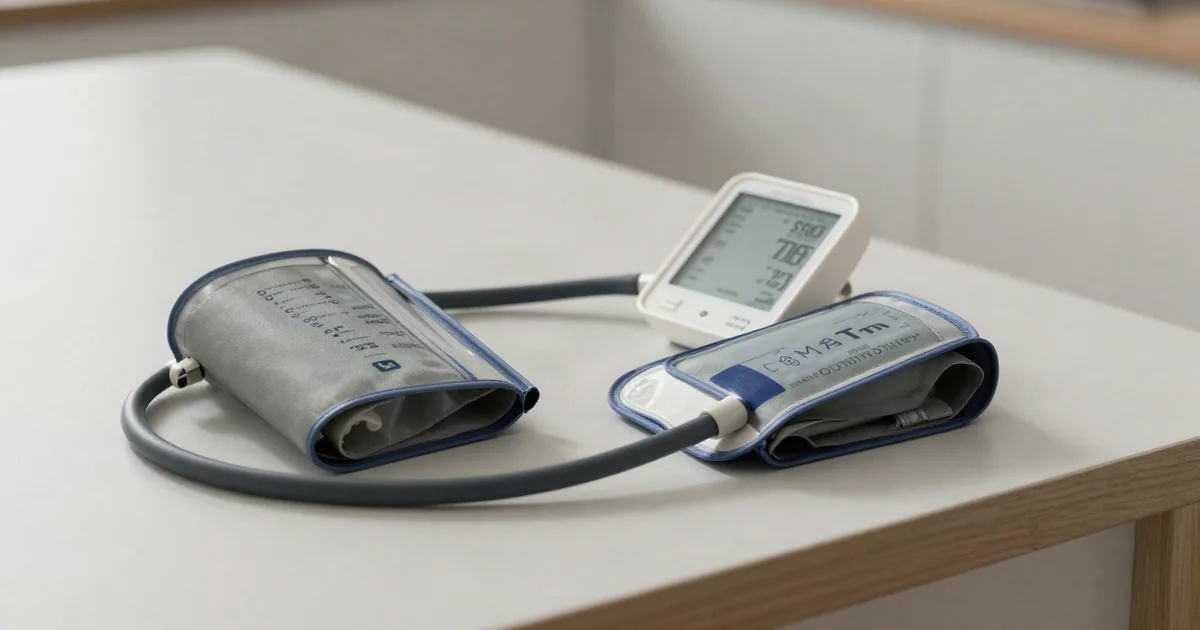
Quick answer: Most of the time it feels like nothing, which is why it gets missed for years. When it does show up it’s vague, a morning headache, tightness in the chest, breathlessness on stairs, flushing, or a feeling of unease that doesn’t match the moment, and the cuff is the only thing that tells you which one you’re dealing with.
I’m a man, so I’ll be careful about the parts that aren’t mine to describe. But I had blood pressure that ran very high for a long stretch, and I know exactly how little it felt like. Nothing. I felt normal. I felt fine.
That’s the thing to get across before any list of symptoms: the people who feel worst are usually not the ones with the highest numbers. The highest numbers often feel like nothing until something breaks.
What’s specific to women deserves its own page, because when it starts and how it hides are different. That part I’ll stick to what’s known and what women report.
What does high blood pressure actually feel like for a woman?
For most women, most of the time, it feels like a normal Tuesday.
A pressure of 160/100 can feel identical to 115/75. No dizziness, no pounding, no warning. Your arteries adapt to the higher pressure over months and years, the way a pipe doesn’t complain about a slow increase in flow until the joint gives. The body isn’t sending you a signal, it’s just coping.
About half of people with high blood pressure don’t know it. Not because they weren’t paying attention, because there was nothing to pay attention to.
Why does it feel different for women than for men?
Three reasons, and they stack.
Hormones, first. Estrogen keeps arteries flexible, so before midlife women usually run lower blood pressure than men of the same age. Around 55 to 65 that advantage goes away, and women catch up and then pass men in how common high blood pressure is. Not that women are protected forever. The clock starts later and then moves faster.
Symptom presentation, second. Heart disease research in women applies here too. Men report the textbook thing, the crushing chest pain. Women more often describe fatigue, poor sleep or just feeling off, and those get filed under stress or perimenopause.
Life stages, third. Pregnancy, preeclampsia and menopause each come with their own blood pressure story. There’s no male equivalent to any of them. The full picture on causes and symptoms in women goes further than this page can.
What symptoms actually show up?
When pressure is very high, these are the ones women report most. I’ll put them in order from most recognizable to most deceptive.
A headache in the morning, especially at the back of the head. Most everyday headaches are not blood pressure. But a pressure-like headache that’s there when you wake up, several days running, deserves a cuff the same day. I wrote about the feel of that one in what a hypertension headache feels like.
Chest tightness. Not always dramatic. Pressure, squeezing, heaviness with effort, and very often mistaken for heartburn, a strained muscle, or anxiety. With a high reading attached, that’s a same-day call.
Breathlessness. Winded by stairs you used to take without thinking, or short of breath lying flat at night. That second one is late.
Vision changes. Blurring, spots, brief flashes. Very high pressure stresses the small vessels in the eye, and sudden vision change with a high reading is an emergency combination.
Fatigue. The kind sleep doesn’t fix. It’s the most dismissed symptom there is, because it has fifty possible causes and blood pressure is rarely the first one anyone checks.
Flushing. Heat or redness across the face and neck. Unreliable on its own, because menopause and alcohol do the same thing, but women in their late forties get hot flashes and real pressure rises in the same season of life, and only a cuff sorts out which is which.
The unease. A sense that something is wrong, or a racing pulse with no trigger. Sometimes anxiety causes a spike. Sometimes raised pressure feels like anxiety. You cannot tell those apart by feel. You can tell them apart in ninety seconds with a cuff.
Is it really silent, or do I just not notice?
There’s no nerve that reports pressure. Your body has sensors for pain, temperature, stretch and oxygen, it doesn’t have one for 150/95. Symptoms show up when pressure has already caused damage somewhere: fluid in the lungs, a vessel in the eye, the brain.
Which is why my rule is the opposite of how most people live. I don’t check when I feel bad. I check when I feel fine, because that’s the only time the number is telling me something I don’t already know.
Does menopause change it?
Yes, reliably.
Before menopause, estrogen is doing some of the work. After it, average blood pressure in women climbs, and a rise of 5 mm Hg or more in the systolic number across the transition is common. Night sweats, broken sleep, midlife weight gain and stress all push in the same direction at the same time.
The nasty part is the overlap. A hot flash and a pressure spike feel like relatives, heat, a racing heart, a flushed face. Some women are treating “menopause symptoms” who actually have treatable high blood pressure. Some are being investigated for blood pressure when the flushing was hormonal. Both get sorted by writing numbers down for two weeks.
My rule for anyone in their mid-forties: check at home monthly, whatever you feel like. Two minutes, less guessing.
What about pregnancy?
Pregnancy is the one time this does announce itself, and the stakes are higher because it can move fast.
Preeclampsia warning signs, usually after 20 weeks: a severe headache that doesn’t respond to what normally works, vision changes, swelling of the face and hands, sudden weight gain, and pain in the upper right abdomen. In pregnancy, 140/90 counts as high, even though the same number in a non-pregnant adult is “only” stage 1.
If you’re pregnant and any of that is happening, call your provider the same day. Preeclampsia is manageable caught early and dangerous when it isn’t. And if you’ve had it, say so at every checkup for the rest of your life, because it raises your long-term risk.
So what do I do with this?
You buy a cuff you trust and learn to use it properly. Seated, back supported, feet flat, arm at heart height, five quiet minutes first, two readings a minute apart. The numbers explained page covers each result; the short version is under 120/80 normal, 130/80 a conversation, 140/90 a plan.
Then you deal with sodium, because it’s the lever most people can actually pull. I read every label now. Bread, sauce, anything in a packet, that’s where it hides.
When to call your care team
- 180/120 or higher with chest pain, breathlessness, sudden vision change, severe headache, confusion, weakness on one side, slurred speech or fainting, call emergency services. Don’t drive yourself.
- Pregnant with a severe headache, vision changes or upper abdominal pain, same day.
- A reading of 180/120 with no symptoms, rest, recheck in five minutes, and call your provider the same day if it holds.
- Readings that have crept from 120s into the 140s over a few weeks.
- Any new medication, cold remedy or supplement before you add it, several of them raise blood pressure, and the cold medicine page explains which.
General information, not medical advice. Diagnosis and targets belong to your care team, who can see your history, your kidneys and your medications. A blog can tell you what to measure. It can’t tell you what your number means.
Frequently asked questions
What does high blood pressure actually feel like for a woman?
For most women, most of the time, it feels like a normal Tuesday. A pressure of 160/100 can feel identical to 115/75.
Why does it feel different for women than for men?
Three reasons, and they stack. Hormones, first. Estrogen keeps arteries flexible, so before midlife women usually run lower blood pressure than men of the same age.
What symptoms actually show up?
When pressure is very high, these are the ones women report most. I'll put them in order from most recognizable to most deceptive.
Is it really silent, or do I just not notice?
There's no nerve that reports pressure. Your body has sensors for pain, temperature, stretch and oxygen, it doesn't have one for 150/95.
Does menopause change it?
Yes, reliably. Before menopause, estrogen is doing some of the work. After it, average blood pressure in women climbs, and a rise of 5 mm Hg or more in the systolic number across the transition is common.
What about pregnancy?
Pregnancy is the one time this does announce itself, and the stakes are higher because it can move fast. Preeclampsia warning signs, usually after 20 weeks: a severe headache that doesn't respond to what normally works, vision changes, swelling of the face and hands, sudden weight gain, and pain in the upper right abdomen.
Want the complete system?
This guide is based on Hardy's ebooks — plain-language, step-by-step PDFs you can read in one sitting. See all guides
Educational content only — not a substitute for advice from your doctor or pharmacist. Always work with your care team.