Is Peanut Butter Good for Diabetes?
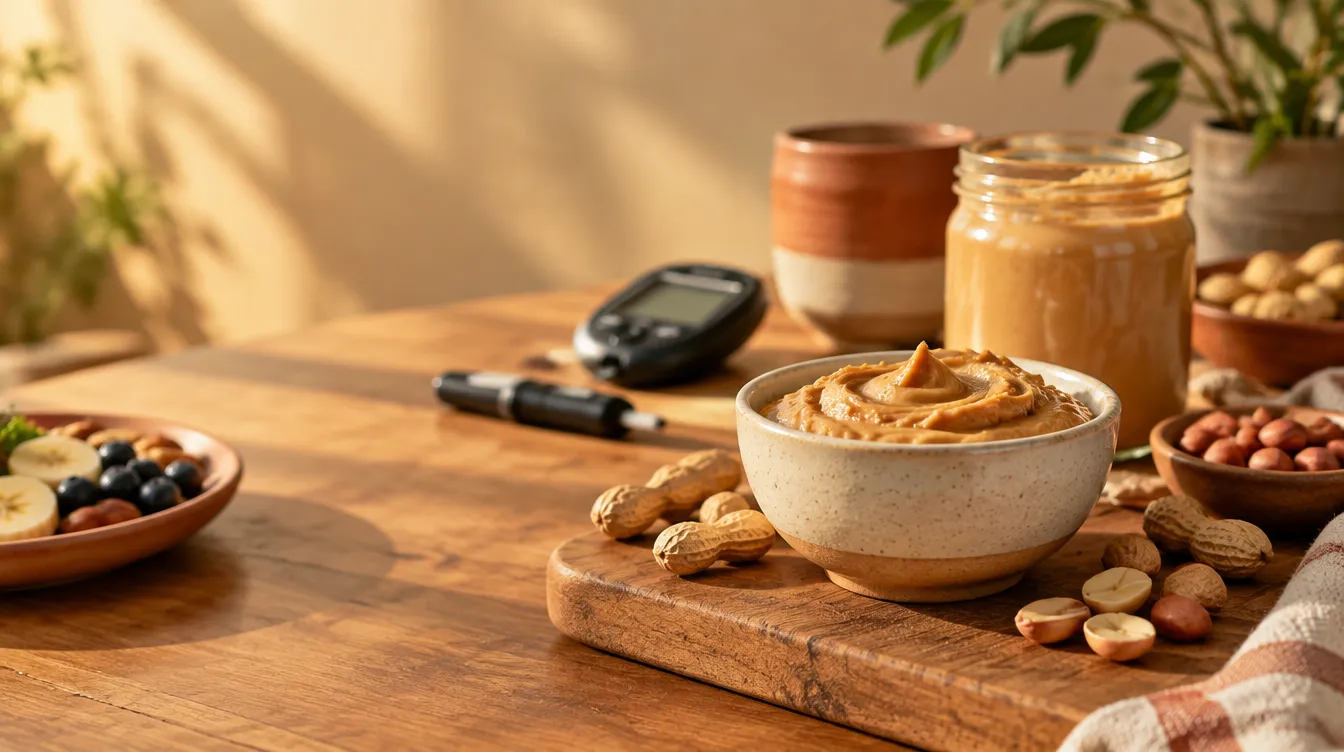
Quick answer: Yes — peanut butter is one of the most glucose-friendly foods in the aisle. It carries almost no carbohydrate (about 7 grams per 2-tablespoon serving, much of it fiber), its fat and protein slow the digestion of anything eaten with it, and studies repeatedly find nuts and peanuts improve blood sugar control and heart markers. The only real trap is the jar: many commercial versions add sugar, oils, and salt you don’t need.
Peanut butter occupies a rare spot in diabetes eating: a food people genuinely love that the evidence actually supports. This guide walks through what it does to your glucose, how much is reasonable, how to pick a jar that deserves the reputation, and the snack combinations where it works hardest.
What does peanut butter actually do to blood sugar?
Very little on its own. Two tablespoons carry roughly 7 grams of carbohydrate — and a meaningful share of that is fiber — alongside about 8 grams of protein and 16 grams of mostly unsaturated fat. A spoonful of peanut butter alone barely registers on a meter.
The bigger value is what it does to everything else. Fat and protein slow gastric emptying, so peanut butter converts fast-carb vehicles into slower ones: an apple with peanut butter spikes less than an apple alone, bread with peanut butter less than plain toast, celery with peanut butter barely moves at all. This is the plate-composition principle from our rice and bread guides in its most portable form — you can carry it to work in a small container.
Beyond glucose, the evidence on nuts and peanuts is unusually good: regular nut intake is associated with better HbA1c and lipid profiles in people with type 2 diabetes, and peanut studies specifically show improved post-meal responses when peanuts accompany a high-carb meal. Few foods combine “makes the meal flatter” with “improves the long-run markers” this cleanly. The NIDDK’s overview of diabetes eating places this in context — protein and unsaturated fats as part of the overall pattern, not as isolated fixes.
How much should you eat?
The natural serving is two tablespoons — about the size of a golf ball — which lands around 190 calories. The portion question matters more with peanut butter than with most foods because it’s calorie-dense and self-serve by the spoonful; nobody eats one tablespoon, and “standing at the counter with the jar” is the portion control method that never worked for anyone.
Practical moves:
- Portion it once. Two tablespoons into a small container or onto the apple before the meal starts. The measuring isn’t forever — it’s calibration, and your eye learns within a week.
- Count it as fat-plus-protein, not as “free.” It doesn’t raise glucose, but it does carry energy. For weight-management goals, two to four tablespoons a day across meals and snacks is the sensible band.
- Buy single-serve packets if counter-spooning is your pattern. They cost more per gram and solve the exact problem they appear to.
How do you pick a good jar?
The ingredient list should be two items long: peanuts, and maybe salt. That’s the entire buying decision. Everything else on the shelf is a variation on making it worse:
- “Reduced fat” peanut butter is the classic trap — the removed fat is usually replaced with added sugar to preserve texture, making it worse for glucose. The fat in peanut butter is the point.
- “No stir” versions typically add palm oil to keep the jar from separating — acceptable occasionally, but it shifts the fat profile toward saturated.
- Flavored versions (honey, chocolate, cinnamon-sugar) are desserts. Check the sugar line: many carry 3–4 times the sugar of natural peanut butter. The ADA’s food-label reading guide is the general tool here — added sugars hide under names this aisle uses liberally.
- Natural or old-fashioned (the two-ingredient jars) separate naturally — that’s a feature, stir it and refrigerate.
None of this means the standard jar will wreck your numbers in a single serving — the sugar dose per two tablespoons of even sweetened peanut butter is modest. It means the natural jar delivers all of the benefits above with zero trade-offs, usually for a similar price.
Where does peanut butter work hardest?
The snack window is where it shines, because most between-meal foods are fast carbs looking for a chaperone:
- Apple or banana slices + peanut butter — the classic, and the fat turns the fruit’s carbs into a two-hour curve instead of a spike.
- Celery or carrot sticks + peanut butter — the lowest-carb version of the pattern.
- Wholegrain crackers or dense toast + peanut butter — a slower version of the sandwich.
- A spoonful before a higher-carb meal — some people use it as a pre-meal buffer; the mechanism (slowed emptying) is real, the habit is optional.
It also travels: peanut butter is the backbone of most portable desk snacks with counted carbs — a jar at the office covers the 3 p.m. vending-machine moment better than willpower ever will. One caution for anyone combining snacks with overnight concerns: peanut butter is a fine evening snack, but a large any snack late at night interferes with the overnight patterns covered in our dawn phenomenon guide.
The takeaway
The summary worth keeping: peanut butter is one of the few foods where the enjoyable version and the evidence-aligned version are the same food. Two tablespoons of the two-ingredient jar, portioned on purpose, attached to a fast carb as its chaperone, is simultaneously a snack you look forward to and a documented glucose-smoothing habit. The failure modes are all fixable in one shopping trip — buy the short-ingredient-list jar, portion it once to calibrate your eye, and stop letting the counter and the spoon negotiate on your behalf. The meter, as always, stays the referee.
A word on allergies and alternatives, since peanut allergies make this guide moot for some households: the pattern — fat and protein chaperoning a fast carb — works identically with almond butter, cashew butter, or sunflower seed butter. Check the labels the same way; many alternative nut butters carry more added sugar than standard peanut butter, and sunflower seed butter in particular often comes sweetened. The two-ingredient rule is brand-agnostic. And for anyone whose household simply dislikes the stuff, no substitution is mandatory — the same chaperone job is done by cheese, hummus, Greek yogurt, or a handful of nuts; peanut butter is just the version with the best convenience-to-evidence ratio.
A quick note on where the evidence ends: most of the strong peanut data comes from nuts and peanuts as a food group, not from peanut butter specifically, and the sweetened shelf-stable jars are a further step from the studied versions. That’s the honest boundary of the claim — the pattern is well supported, the specific jar matters, and nobody should expect a spread to carry a metabolic plan. Peanut butter is a genuinely good building block with unusually good evidence behind its food group. It’s not a treatment, and it doesn’t earn exemption from the portion rule just because it’s friendly.
Frequently asked questions
Does peanut butter raise blood sugar? Barely — two tablespoons carry about 7 grams of carbohydrate, much of it fiber, so peanut butter alone produces almost no glucose rise. Its fat and protein slow the digestion of carbohydrate eaten alongside it.
Is natural peanut butter better than regular for diabetics? Yes, mildly — natural versions (peanuts, maybe salt) skip the added sugar and hydrogenated oils. The glucose difference per serving is small, but the natural jar delivers the full metabolic benefit with nothing added back.
How much peanut butter can a diabetic eat per day? Two to four tablespoons a day is a sensible band across meals and snacks. It doesn’t raise glucose, but it’s calorie-dense — portion it deliberately rather than by the spoonful.
Is peanut butter good before bed for diabetics? A small portion is fine and its slow digestion can blunt overnight dips. Large late snacks of any kind, though, can interfere with overnight glucose patterns — keep the serving small and the kitchen closing time consistent.
Does peanut butter help lower A1c? Not by itself — no single food moves A1c. But regular nut intake, peanuts included, is associated with better blood sugar control and lipid profiles in people with type 2 diabetes, and peanut butter is the easiest way most people keep that habit.
This guide is also available in Spanish: ¿Es buena la crema de cacahuete para la diabetes?.
Want the complete system?
This guide is based on Hardy's ebooks — plain-language, step-by-step PDFs you can read in one sitting. See all guides
Educational content only — not a substitute for advice from your doctor or pharmacist. Always work with your care team.