High Blood Pressure Diet Food List: What to Put in the Cart
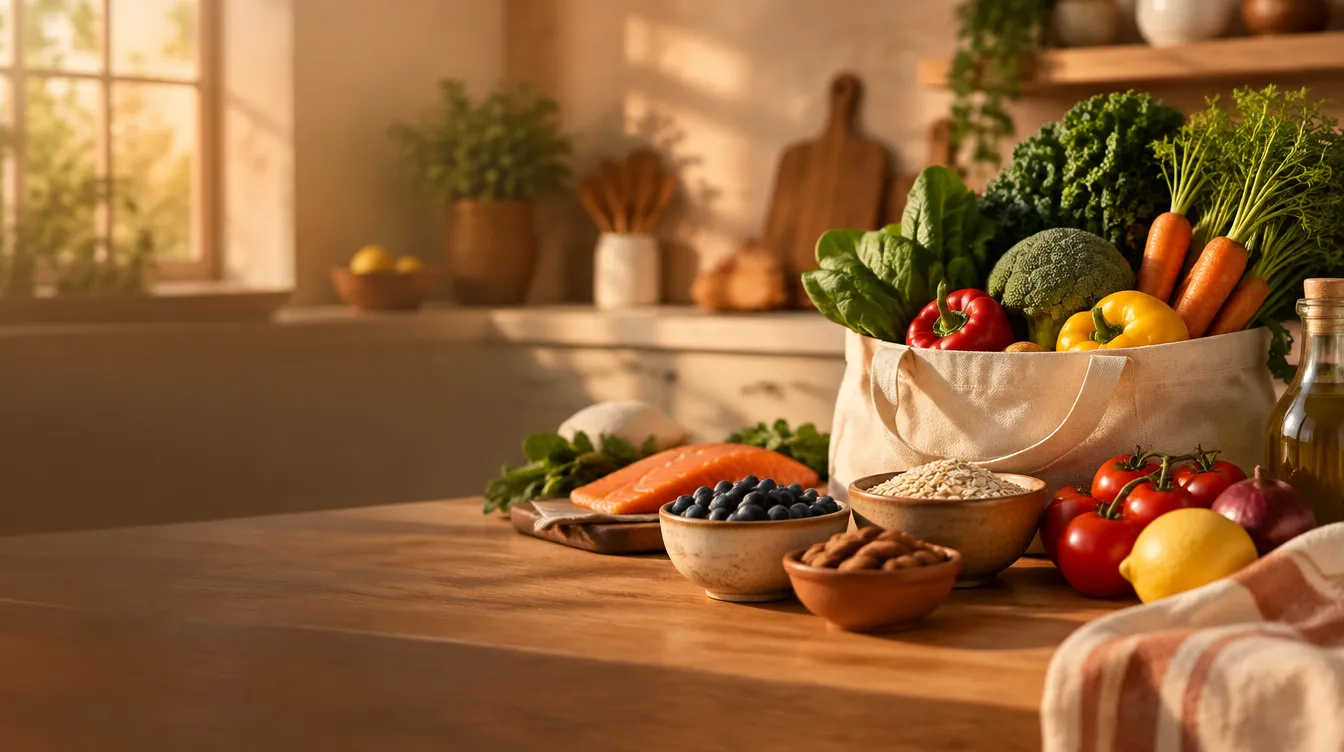
Quick answer: The food list that helps blood pressure is short on rules and long on two moves: add potassium-rich foods (potatoes, beans, bananas, greens, yogurt, fish) and cut the hidden sodium (bread, deli meat, canned soup, sauces, restaurant meals). That’s the DASH pattern in one cart — no banned foods, no weighing, no diet-speak.
Searching for a “high blood pressure diet” usually ends in two disappointments: a list of foods you’re never allowed to eat again, or advice so vague it doesn’t survive a trip to the grocery store. Neither is useful in a real kitchen on a real Tuesday.
This guide is the other version: what to actually put in the cart, which packaged foods quietly carry most of the week’s sodium, and how the whole thing fits together without turning meals into math. For the swap-by-swap version, One Cart of Lower-Sodium Groceries for Everyone walks a full cart.
The Snack Checker does that comparison for you: one barcode, and sodium, sugar and salt come back per 100 g.
What is the DASH diet, in plain language?
Quick answer: DASH is the most-studied eating pattern for blood pressure — more vegetables, fruits, beans, low-fat dairy, and whole grains; less salt and fewer processed foods. It’s a direction, not a prescription, and it doesn’t require perfection.
The reason DASH keeps winning studies is boring and good: it bundles the two levers that actually move blood pressure — more potassium, less sodium — into ordinary meals you’d feed your family anyway. Nobody at the table needs to know it’s a “diet.”
The realistic framing: aim the average week toward more plants and less processed food. One pizza night doesn’t undo anything.
Which foods help lower blood pressure?
Quick answer: potassium-rich foods are the core list — potatoes with skin, beans, bananas, leafy greens, yogurt, fish, avocado, tomatoes, oranges. Watermelon, beets, and oats have smaller supporting evidence.
Here’s the cart, sorted by section:
Produce
- Potatoes and sweet potatoes (with skin — that’s where the potassium lives)
- Bananas, oranges, and any fruit you’ll actually finish
- Spinach, kale, Swiss chard, and other leafy greens
- Tomatoes (fresh or no-salt-added canned)
- Avocado
- Beets and watermelon (smaller evidence, easy add)
Protein
- Beans and lentils — canned is fine, rinse them (that cuts a good chunk of the sodium)
- Fish, especially fatty fish like salmon or sardines, twice a week-ish
- Plain chicken or turkey you cook yourself, rather than deli versions
- Eggs — fine in the mix
Dairy and grains
- Plain yogurt (sweeten it yourself with fruit)
- Milk or fortified alternatives
- Oats and whole-grain bread (check the sodium label — bread is a hidden trap)
- Unsalted nuts
One important exception: if you have kidney disease, potassium is a medical question, not a nutrition tip — talk to your care team before loading up on the list above.
Which foods raise blood pressure through hidden sodium?
Quick answer: the usual suspects are bread and bakery items, deli and cured meats, canned soup, sauces and dressings, cheese, frozen dinners, and restaurant/fast food. The salt shaker is a minor character.
The reason these matter so much: most people’s sodium comes from processing, not cooking. Bread doesn’t taste salty, but a few slices a day add up fast. The practical moves:
- Read one number: milligrams of sodium per serving. As a rough guide, over ~400 mg per serving is a “trade down when easy” item; over ~600 mg is a weekday staple that deserves a swap.
- Rinse canned beans and vegetables — it removes a meaningful part of the sodium for free.
- Buy “no salt added” versions of the staples you use weekly (canned tomatoes, broth).
- Watch portion-shaped traps: sauces, dressings, and broths pour a lot of sodium into a small-looking serving.
Do I need to give up salt completely?
Quick answer: no. The goal is the sodium you don’t taste — packaged and restaurant food — not the pinch you add while cooking. Home cooking with a light hand on salt usually ends up lower-sodium than almost any restaurant meal.
Salt while cooking does something processing can’t: it’s visible, it’s in your control, and it lets you use less of it where it counts for flavor. Swap in acid (lemon, vinegar), heat, and herbs — flavor doesn’t have to leave with the salt shaker.
How fast does diet change blood pressure?
Quick answer: DASH-style changes can show up in readings within a few weeks for some people — but judge with a two-week log of consistent readings, not a single number after one good week.
Diet is a habit stack, not a switch. The way to keep it honest: measure the way you always do (same time, same setup), keep logging during the transition, and let the weekly average tell you what happened. If your care team adjusts medication because the habits are working, that’s the system doing its job — never a reason to stop or change medication on your own.
Free DASH dinner guide
If the sticking point is dinner, the meal where most of a day’s sodium lands, the free 20-page DASH dinner guide shows five dinners built without salt packets: browning, garlic, onion, herbs, lemon, and vinegar do the work instead. It is the companion to the paid 21-day cookbook, and it costs nothing.
Download the free DASH dinner guide — 20 pages, no signup. Snacks are the other half of that day: the free 21-snack guide covers the between-meal part, at or under 140 mg a serving.
Want the full guide?
If the hard part is the actual cart — what to swap, what stays, what the whole family will eat without complaining — the ebook One Cart of Lower-Sodium Groceries for Everyone gives you the complete swap-by-swap cart for the $6.99, built so one list feeds everyone at the table.
Related reads
- One Cart of Lower-Sodium Groceries for Everyone
- Low-Sodium Dinners That Taste Good
- Remedy for High Blood Pressure: What Actually Works Naturally
This guide is also available in Spanish: Lista de alimentos para la presión alta: qué poner en el carrito.
Frequently asked questions
What is the best diet for high blood pressure?
The DASH pattern has the strongest evidence: more vegetables, fruits, beans, low-fat dairy, and whole grains, with less sodium from processed food. Mediterranean-style eating is a close relative with similar support.
Is banana good for high blood pressure?
Bananas contribute potassium, which helps, but no single food moves blood pressure much on its own. The pattern across the whole week is what counts.
Is coffee bad for blood pressure?
Coffee temporarily raises readings for 30 minutes or so, but regular moderate coffee doesn't appear to raise baseline blood pressure for most people. Timing matters mainly when you're about to measure — see Coffee and Blood Pressure Readings.
Are eggs bad for high blood pressure?
For most people, eggs fit fine in a DASH-style pattern. The bigger lever remains overall sodium and the potassium-rich foods around them.
What should I eat for breakfast to lower blood pressure?
Something with potassium and little processing: oatmeal with fruit and unsalted nuts, plain yogurt with banana, or eggs on whole-grain toast. Any of these beats most packaged breakfast items on sodium.
Do I need to buy expensive "heart-healthy" products?
No. The highest-impact items on this list — potatoes, beans, oats, bananas, frozen vegetables, canned tomatoes without salt — are also among the cheapest in the store.
Want the complete system?
This guide is based on Hardy's ebooks — plain-language, step-by-step PDFs you can read in one sitting. See all guides
Educational content only — not a substitute for advice from your doctor or pharmacist. Always work with your care team.