Best Time to Take Blood Pressure Medication
Quick answer: For most people the best time is the same time every day, because nearly all blood pressure pills are built to work steadily for 24 hours, so which hour you pick matters far less than whether you hit it. Morning is the easy default unless your doctor told you otherwise, and the one hard rule is that you never double up after a missed dose.
The internet wants this to be a debate with a winner. Morning people, night people, a study for each side, and a comment section doing what comment sections do.
Here’s the part nobody leads with. The difference between 7 a.m. and 7 p.m. is small. The difference between taking it and not taking it is not.
I’ll be straight about my own situation before I go further. I don’t take a blood pressure pill right now. Mine came down with sodium, walking and time, and that was my doctor’s call after looking at my readings and my kidneys, not something I decided in my kitchen. If you’re on a pill, the pill is doing work that walking cannot do, and the rest of this page is about taking it properly, not about getting off it.
Morning or night, does the clock actually matter?
For most once-daily pills, not much.
Amlodipine, most ACE inhibitors, most ARBs and most thiazide diuretics are all built to smooth their effect across the full day. That’s the design goal. The pill doesn’t know the time, it just keeps a level in your blood, and as long as you refill that level on schedule the pressure stays handled.
The night-time question is real research though, not folklore. A large Spanish trial called Hygia found that bedtime dosing lowered cardiovascular risk, and for a few years that was the loudest headline in blood pressure. Then the UK’s TIME trial followed more than 21,000 people and found no meaningful difference between morning and evening dosing. When two good trials disagree on the size of an effect, the honest read is that the effect is small. Both of them agree on the part that matters: pick a schedule and keep it.
Two real exceptions. Diuretics, the water pills, will have you up all night if you take them late, and bad sleep is its own blood pressure problem, so most people take those in the morning. And if your pressure runs high overnight, or your doctor chose evening dosing for your drug, their instruction beats every general rule on this page.
I’d never switch the hour because of a headline. That’s a change your doctor makes with your readings in front of them.
Why does the same time every day beat the perfect time?
Because the biggest risk with these pills isn’t the wrong hour. It’s the missed dose.
The pill only protects you while it’s in your system, and the protection fades if the gap stretches. Miss one here and one there and the average is worse than the label promises, even if every single reading looks fine. That’s the quiet version of the problem.
Same-time-every-day works because it removes the decision. Hooking the pill to something you already do takes the remembering out of it, and remembering is the whole failure point. When the time floats, 8 a.m. Monday, lunch Tuesday, “whenever” Wednesday, you drift, then you forget, then you double up to catch up, which is the one thing you must not do.
Anchors that hold for me:
- Right before or after a daily meal. Food happens whether you’re organized or not. Some of these pills also sit better with food.
- With the coffee setup. Kettle, mug, pill bottle, same counter. My whole morning runs off that counter.
- At the bathroom sink. Toothbrush and bottle side by side.
- A phone alarm that says the thing. “BP pill, take it now” beats “reminder”, a word your brain has learned to swipe away.
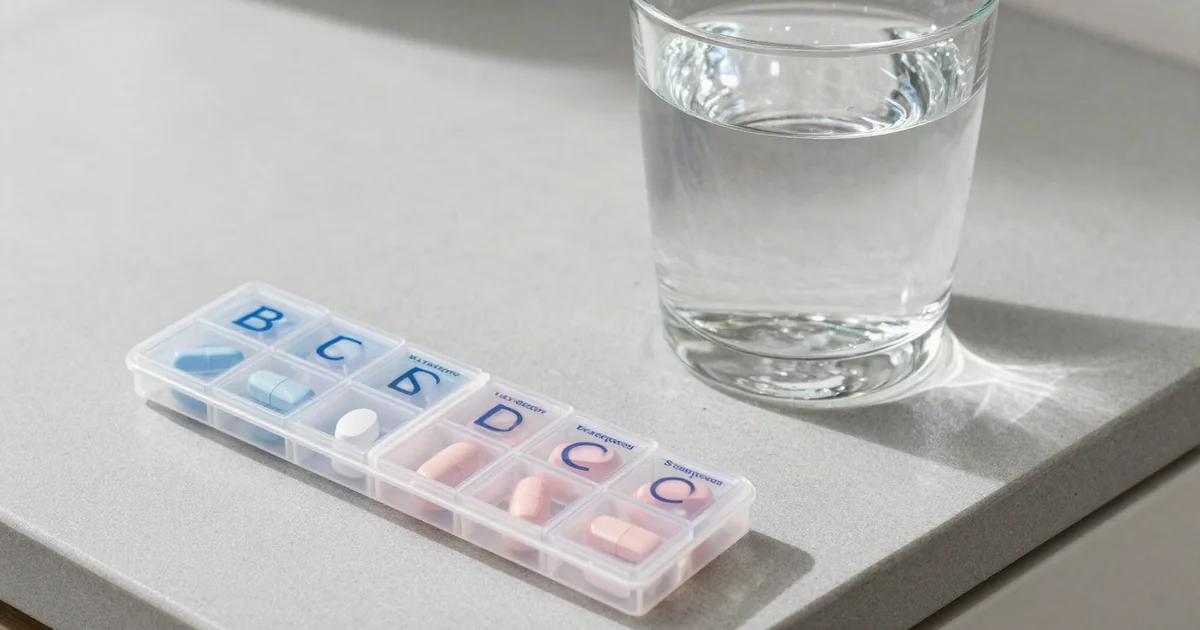
- A weekly organizer. An unfilled slot is a fact. Your memory is an opinion.
If your pressure still runs high while you’re taking it like clockwork, that’s information for your doctor, not a failure. Reading your blood pressure correctly at home is how you bring them something useful instead of a feeling.
What do I do if I miss a dose?
Never double up. That’s the whole rule and everything else is detail.
Two at once can drop your pressure too fast, and too fast means dizzy, and dizzy on a ladder with a tool bag in your hands is how a good week ends in an emergency room.
The general approach, and check it against your own label because drugs differ: if you remember within a few hours of your usual time, take it. If you’re close to or past the next dose, skip the missed one and take the next at its normal time. Then mention it at your next visit, because if you’re missing doses regularly the fix is a better anchor, not more discipline.
And never stop one of these abruptly because you feel fine. High blood pressure has almost no symptoms, which is exactly why people feel fine and quit, and some of these drugs need to be tapered rather than dropped. Feeling fine is the drug working, not the drug being unnecessary.
Can I take it with coffee?
Usually yes, with two wrinkles.
Caffeine gives pressure a small bump for a couple of hours, so a reading taken right after your first cup is partly a coffee reading. That’s not your body, that’s breakfast. Coffee and blood pressure readings goes through the timing properly.
The second wrinkle is absorption. Coffee can change how fast some pills come on, which rarely matters with a steady 24-hour medication, but if your pharmacist flagged an interaction for your drug, that flag wins. Two minutes at the counter.
Does the time matter if I work shifts?
Then the anchor moves with your wake time, not the clock.
“First thing after waking” survives a 5 a.m. start and a night shift. “At 7 a.m.” doesn’t survive either one. Take it after your feet hit the floor and you keep the routine through a schedule change. On a real rotation, ask your doctor whether the dose should shift by a few hours or stay fixed.
I install water systems 12 to 16 hours some days, and the days that go wrong are the ones where the routine lived in my head instead of on the counter. Pills next to the coffee maker get taken. Pills in a drawer get found in March.
When to call your care team
- A reading at or above 180/120, especially with chest pain, breathlessness, weakness on one side, trouble speaking or a bad headache. That’s emergency services, not a message.
- Dizziness on standing, fainting, or a fall after a dose.
- Swelling in the ankles, a persistent dry cough, or muscle cramps that showed up after a new pill. Those are common side effects and there’s usually a different drug that suits you better.
- Two or more missed doses in a week, or a refill gap, because that’s a plan problem worth solving out loud.
- Before any change of time, dose or brand, including a switch to a different manufacturer’s version of the same pill.
I don’t set targets for anyone. Mine came from my care team with my kidneys on the table, and yours should come from yours the same way. If the numbers are the confusing part, blood pressure numbers explained is the plain-language version.
General information, not medical advice. My numbers are mine. Ask your care team before you change how you eat, test or take anything, and never stop or move a medication on your own.
Frequently asked questions
Morning or night, does the clock actually matter?
For most once-daily pills, not much. Amlodipine, most ACE inhibitors, most ARBs and most thiazide diuretics are all built to smooth their effect across the full day.
Why does the same time every day beat the perfect time?
Because the biggest risk with these pills isn't the wrong hour. It's the missed dose. The pill only protects you while it's in your system, and the protection fades if the gap stretches.
What do I do if I miss a dose?
Never double up. That's the whole rule and everything else is detail. Two at once can drop your pressure too fast, and too fast means dizzy, and dizzy on a ladder with a tool bag in your hands is how a good week ends in an emergency room.
Can I take it with coffee?
Usually yes, with two wrinkles. Caffeine gives pressure a small bump for a couple of hours, so a reading taken right after your first cup is partly a coffee reading.
Does the time matter if I work shifts?
Then the anchor moves with your wake time, not the clock. "First thing after waking" survives a 5 a.m. start and a night shift.
Want the complete system?
This guide is based on Hardy's ebooks — plain-language, step-by-step PDFs you can read in one sitting. See all guides
Educational content only — not a substitute for advice from your doctor or pharmacist. Always work with your care team.