Does Stevia Raise Blood Sugar? What the Evidence Says
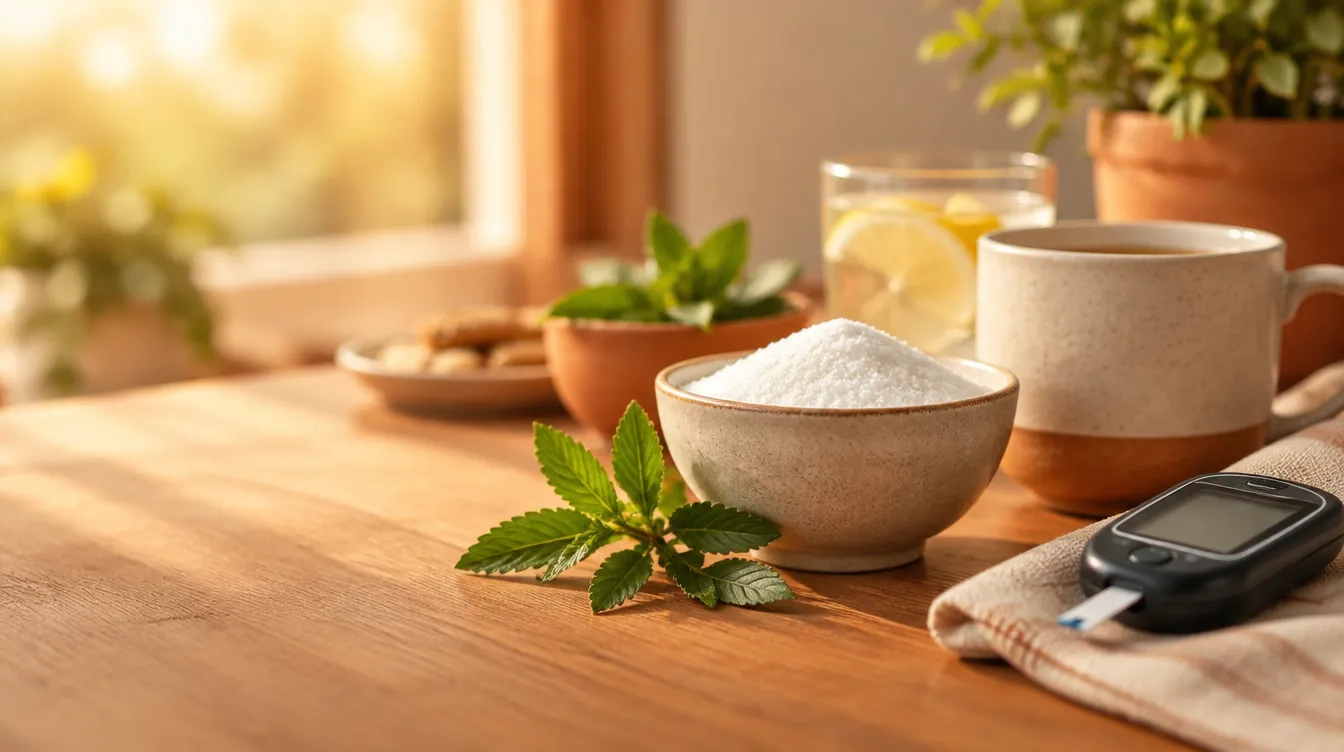
Quick answer: Pure stevia extract does not meaningfully raise blood sugar or insulin — it’s essentially glucose-neutral. The catch is the blend: many packets, powders, and liquids cut stevia with fillers like maltodextrin or dextrose, and those do raise glucose.
Stevia has become the default sweetener on a lot of diabetes shelves, and for good reason — it comes from a plant, it tastes sweet, and it carries essentially zero carbohydrate. But “does it raise blood sugar?” deserves a precise answer, because the answer changes depending on which version of stevia is in your hand — and most people never find out which one they’re using. This is the same carb-literacy that matters everywhere else on the plate — the American Diabetes Association’s carb guide makes the point that type and amount of carbohydrate drive the glucose curve, and that logic applies to the sweetener aisle too.
What exactly is stevia?
Stevia is a sweetener extracted from the leaves of Stevia rebaudiana, a shrub native to South America. The sweetness comes from compounds called steviol glycosides, which are hundreds of times sweeter than sugar while contributing no digestible carbohydrate. Two versions share the name, and they behave differently:
- Purified stevia extract — the white powder or clear liquid labeled stevia extract, rebaudioside A (Reb A), or steviol glycosides. This is the highly refined form approved for use as a sweetener, and it’s the version with the strongest evidence for being glucose-neutral.
- Raw-leaf and “natural” blends — greener powders sold as whole-leaf stevia, plus blends that mix stevia with other sweeteners or bulk agents. The leaf version is less refined, but the bigger difference in practice is what the blend contains.
Why is the packet not just stevia?
Because stevia is so intensely sweet, a packet that replaced sugar spoon-for-spoon would be almost empty — it would blow out of the cup. So manufacturers add bulk fillers to give it the weight and pour of sugar. Here’s the trap:
- Maltodextrin — a starch-derived powder that digests faster than table sugar and can produce a sharp glucose spike. Some stevia blends are mostly maltodextrin by weight.
- Dextrose — literally glucose under another name. A dextrose-based blend raises blood sugar by definition, just in a small dose per packet.
- Erythritol, inulin, or fiber-based fillers — these are the ones to prefer. Erythritol is a sugar alcohol that the body absorbs but mostly excretes unchanged, and it has minimal effect on glucose for most people.
The fix takes five seconds: read the ingredient list, not the front label. If the first ingredient is stevia extract, you’re fine. If the first ingredient is maltodextrin or dextrose, you’ve bought a packet with a side of fast carbs — small per packet, but they add up when you’re sweetening coffee and tea all day.
Does stevia raise insulin?
For purified stevia, the evidence consistently shows little to no effect on either blood glucose or insulin at normal use levels. That’s the core reason it earned its place in diabetes-friendly kitchens. A few honest caveats worth knowing:
- Taste-to-response conditioning. Some research suggests that very sweet taste can prime a small cephalic insulin response in some people — a reflex, not a digestion effect. It’s modest and doesn’t show up as meaningful glucose movement in most studies, but if you feel like sweeteners “do something” to you, your observation is worth testing with your meter.
- What the sweetener rides with matters more. Stevia-sweetened yogurt, protein bars, and diet drinks still contain their own carbs. The sweetener being neutral doesn’t make the product neutral — check the label on the food, not just the sweetener inside it.
- Baking changes the math. Purified stevia is fine in liquid form, but most baking blends need the volume that fillers provide, so home baking quietly reintroduces the maltodextrin question. Read the blend’s ingredients before the flour hits the bowl.
Can stevia cause side effects?
Yes, mostly digestive, and mostly with the blends and sugar-alcohol partners rather than purified stevia itself. Erythritol in larger amounts — the kind found in some baking blends — can cause bloating, gas, or looser stools in sensitive people, and the effect is dose-dependent: a teaspoon in coffee is usually fine, a cup in a baking recipe is a different load. Purified stevia at normal amounts has a long safety record, though some people notice a licorice-like aftertaste. The moderation rule is the same as everywhere else in this blog: a modest amount used regularly beats large amounts used occasionally — and any new sweetener deserves one meter check after the first week, just to confirm it agrees with you.
How does stevia compare to the other sweeteners on the shelf?
A quick map, because the aisle is confusing on purpose:
- Erythritol — near-zero glucose impact and about 70% of sugar’s sweetness; the main trade-off is digestive tolerance at higher doses.
- Sucralose — the yellow-packet sweetener; no digestible carbs, generally glucose-neutral in liquid form, though some studies report changes in gut bacteria with heavy long-term use and powdered baking blends often contain maltodextrin fillers too.
- Monk fruit — similar profile to stevia: intensely sweet, essentially glucose-neutral, and usually blended with the same fillers you’re now checking for.
- Aspartame — glucose-neutral but not heat-stable, so it’s a sweetener for drinks, not baking.
Two honest comparisons round this out. Agave nectar gets marketed as stevia-adjacent because it’s “natural,” but it’s a syrup with the same carb load as honey — often worse, since its fructose-heavy profile is the kind worth limiting anyway. And sugar alcohols as a family (sorbitol, xylitol, maltitol) sit between the extremes: lower glucose impact than sugar, higher than erythritol, with digestive costs that grow with dose. Maltitol in particular behaves close enough to real sugar that “sugar-free” candy made from it can move a reading — a fact people usually learn the hard way from a CGM graph.
A simple rule survives all this detail: the closer a sweetener product is to pure — nothing added but the sweetener itself — the safer it is for your numbers. Every step away from pure, whether fillers in stevia blends or sweeteners in “sugar-free” candy, reintroduces carbs by another name.
None of these are “free” in the sense of making dessert unlimited — they’re tools that let a dessert fit inside a carb budget. If you want the framework for that, our dessert carb budget guide shows how the allowance is built, and the snacks guide applies the same logic between meals.
The takeaway
So: keep the stevia — but know which stevia you bought. Purified extract is as close to glucose-neutral as sweeteners get, blends with maltodextrin or dextrose quietly carry fast carbs, and erythritol-heavy blends deserve a dose limit for your gut’s sake. Read the ingredient list once, note the fillers, and let your own post-consumption readings settle any remaining doubt — two tests after your usual sweetened coffee will tell you more than any label. The meter stays the referee, same as with bread and rice.
Frequently asked questions
Does stevia raise blood sugar or insulin? Purified stevia extract has little to no effect on blood glucose or insulin at normal use levels — it carries no digestible carbohydrate. The main exception is stevia blends cut with maltodextrin or dextrose, which do raise glucose.
Why do some stevia packets spike my blood sugar? Almost always the filler, not the stevia. Many blends use maltodextrin or dextrose as bulking agents — both digest into fast glucose. Check the ingredient list and choose blends whose first ingredient is stevia extract or a fiber/erythritol filler.
Is stevia better than sugar for diabetics? For glucose control, yes — sugar is pure fast carbohydrate, while purified stevia is essentially glucose-neutral. Stevia lets you keep sweetness without the carb load, though sweetened products still need their own label check.
What are the side effects of stevia? Purified stevia is well tolerated at normal amounts, though some people notice a licorice-like aftertaste. Digestive upset — bloating, gas, loose stools — usually comes from the erythritol or other fillers in blends, and grows with dose.
Is stevia safe to use every day? Yes, purified stevia has a long safety record at everyday use levels and is approved as a sweetener in major markets. Moderate amounts daily are a reasonable, sustainable habit — just avoid loading up on filler-heavy blends.
This guide is also available in Spanish: ¿Sube el azúcar en sangre la estevia? Lo que dice la ciencia.
Want the complete system?
This guide is based on Hardy's ebooks — plain-language, step-by-step PDFs you can read in one sitting. See all guides
Educational content only — not a substitute for advice from your doctor or pharmacist. Always work with your care team.