Diabetes and Kidney Stones: The Link Explained
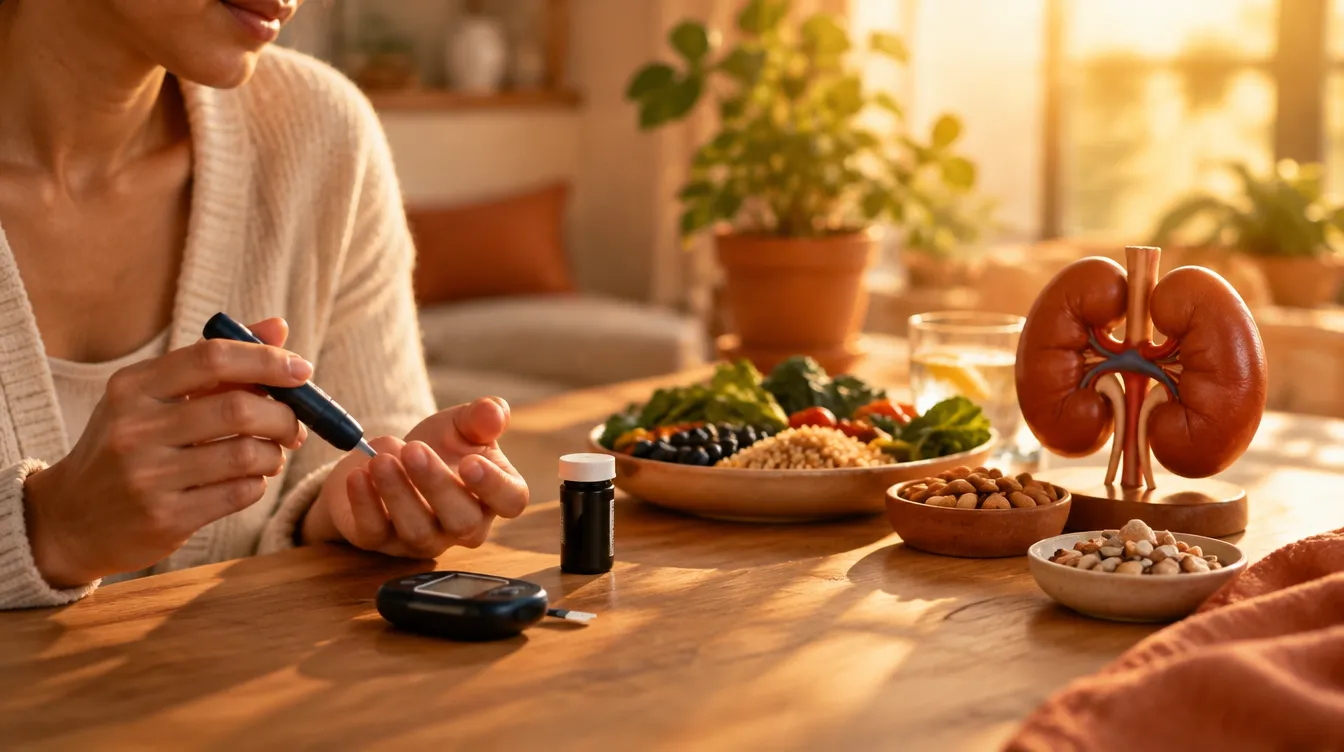
Quick answer: People with type 2 diabetes develop kidney stones noticeably more often than people without it — higher urinary uric acid, more acidic urine, and dehydration swings are the main drivers. Most stones are calcium-based, and the biggest protective lever is also the simplest: steady fluid intake that keeps urine pale. High fever with a stone, or a stone with a single working kidney, is an emergency — everything else is manage-and-wait with your doctor.
If you’ve had a kidney stone and diabetes, you’ve drawn two tickets from overlapping risk pools — and the connection is biological, not bad luck. Here’s what links them, what to do about it, and when a stone stops being a wait-and-see problem.
A packet in your hand can be checked in seconds with the free Snack Checker — barcode in, sodium, sugar and salt out.
Why does diabetes raise kidney stone risk?
Three mechanisms, all well documented:
- More uric acid in the urine. Insulin resistance raises uric acid levels, and people with type 2 diabetes excrete urine that’s more acidic on average. Uric acid dissolves poorly in acidic urine, so crystals form more easily — and uric acid stones are overrepresented in people with metabolic syndrome and diabetes.
- Dehydration swings. High glucose pulls water out through the urine (the same mechanism behind why high glucose makes you urinate more). Concentrated urine is the perfect crystal-forming environment; the cycle of high glucose → fluid loss → concentrated urine is a stone factory.
- Shared risk factors. Obesity, insulin resistance, and diets high in sodium and animal protein raise stone risk independently of diabetes — when they travel together, the risks multiply rather than add.
The most common stone type is still calcium oxalate, which everyone can form — but in people with diabetes, uric acid stones and mixed stones show up more often.
What actually lowers the risk?
The levers, roughly in order of evidence strength:
- Fluid, fluid, fluid. The single best-supported intervention: enough water to produce pale, nearly-clear urine — typically 2.5–3 liters of intake across the day for most adults, adjusted for your doctor’s advice (this changes if you have CKD or heart failure). Spread it across the day; a gallon at noon doesn’t cover you at midnight.
- Keep glucose in range. Every reading out of range is water leaving through the urine. Glucose control is stone prevention wearing a different hat.
- Don’t panic about oxalate foods — do pair them. Spinach, almonds, and tea carry oxalate, but eating them with calcium-containing foods binds oxalate in the gut where it can’t form stones. The old “avoid all oxalates” advice has largely given way to pairing.
- Moderate sodium and animal protein. Sodium pulls calcium into the urine; large meat servings acidify it. The same lower-sodium cooking habits we cover in our sodium guides do double duty here.
- Citrus helps. Lemon or lime in your water adds citrate, which chemically blocks crystal formation — the tastiest medical advice you’ll get this year.
- Vitamin C megadoses: skip. High-dose supplements convert to oxalate in the body. Food-level vitamin C is fine.
A word about the water habit, since “drink more” is where most prevention plans die: tie drinking to events that already happen — a full glass on waking, one with each meal, one when you take medications, one when you get home, one before bed. That’s five-plus glasses without a single act of willpower. Add a bottle on your desk or in the car for the between-times, and the pale-urine target stops being an aspiration. And if you exercise hard or work in heat, your fluid loss is higher than the averages — the urine color check adapts automatically, which is why it beats counting milliliters.
What does passing a stone feel like — and what needs care fast?
A stone moving through the ureter produces severe waves of pain in the side or lower back, often wrapping toward the groin, with nausea — classically among the worst pains people report. Small stones (under ~5mm) usually pass on their own with pain control and fluids; larger ones may need procedures.
Seek urgent care same-day if: pain is unbearable or uncontrolled by prescribed medication, you’re vomiting so much you can’t keep fluids down, you have fever or chills with the pain (infection behind an obstructed stone — a true emergency), you see blood in your urine beyond a pink tinge, or you can’t urinate. And if you have a single kidney or a kidney transplant, the threshold for calling your care team is much lower — that’s not a wait-and-see situation.
After the stone passes, ask for the stone to be analyzed if you can — its composition tells you which prevention levers matter most for your body, and a 24-hour urine test can refine that further.
What the stone itself tells you
If a stone passes or is removed, its analysis is the most personal piece of prevention data you’ll ever get:
- Calcium oxalate stone → the pairing-and-fluid levers matter most; oxalate foods stay on the menu with calcium alongside.
- Uric acid stone → the diabetes-metabolism connection is direct; urine alkalinization (often citrate-based prescription) plus reduced animal protein becomes the focus.
- Struvite stone → infection-formed; prevention is about urinary tract infections, not diet — a different conversation entirely.
And if stones recur, ask about the 24-hour urine test: it measures your actual volume, calcium, oxalate, citrate, and uric acid output, turning generic advice into a numbered prescription. Most people find that one test converts the vague “drink more water” advice into a specific fluid target they can actually hit — and retesting annually shows whether the levers are working.
The takeaway
So: the stone-and-diabetes overlap is real, but the response to it is refreshingly concrete. Drink enough to keep urine pale all day, keep glucose in range so less water leaves through the urine, pair oxalate foods with calcium instead of banning them, go easy on sodium and big meat servings, and put lemon in the water bottle. Then the red-flag list — fever with pain, uncontrolled vomiting, can’t-urinate, single kidney — is what you keep taped inside your brain rather than in a drawer. Everything else is manage-and-wait, with your doctor and your kidney-health reading alongside.
Frequently asked questions
Are people with diabetes more likely to get kidney stones? Yes — studies consistently find higher stone rates in people with type 2 diabetes, driven by more acidic urine, higher urinary uric acid, and glucose-driven dehydration. The connection is metabolic, not coincidental.
What is the best drink to prevent kidney stones with diabetes? Water, spread across the whole day, enough to keep urine pale — with lemon or lime for the citrate benefit. Sugar-sweetened drinks and colas work against you on both the stone and glucose fronts. If you have CKD or heart failure, your fluid target is a doctor conversation, not a generic number.
Can metformin cause kidney stones? No direct link. Metformin is cleared by the kidneys but isn’t associated with stone formation. The stone risk comes from diabetes physiology itself — though any kidney question is a good reason to keep up your regular kidney-function checks.
Does passing a kidney stone damage the kidneys? Usually not — a single uncomplicated stone passing on its own rarely causes lasting damage. Repeated stones, infections behind stones, or obstruction in a solitary kidney are the scenarios that can. That’s why prevention and prompt care for red-flag symptoms matter.
What diet changes help prevent stones with type 2 diabetes? The overlap is convenient: steady fluids, moderate sodium, moderate animal protein, calcium foods paired with oxalate foods rather than avoided, citrus in your water, and glucose control — nearly the same plate our kidney-health guides describe.
Related reading: CKD stages explained · Renal failure: acute vs chronic
This guide is also available in Spanish: Diabetes y cálculos renales: el vínculo explicado.
Want the complete system?
This guide is based on Hardy's ebooks — plain-language, step-by-step PDFs you can read in one sitting. See all guides
Educational content only — not a substitute for advice from your doctor or pharmacist. Always work with your care team.