Can You Drink Beer With Metformin?
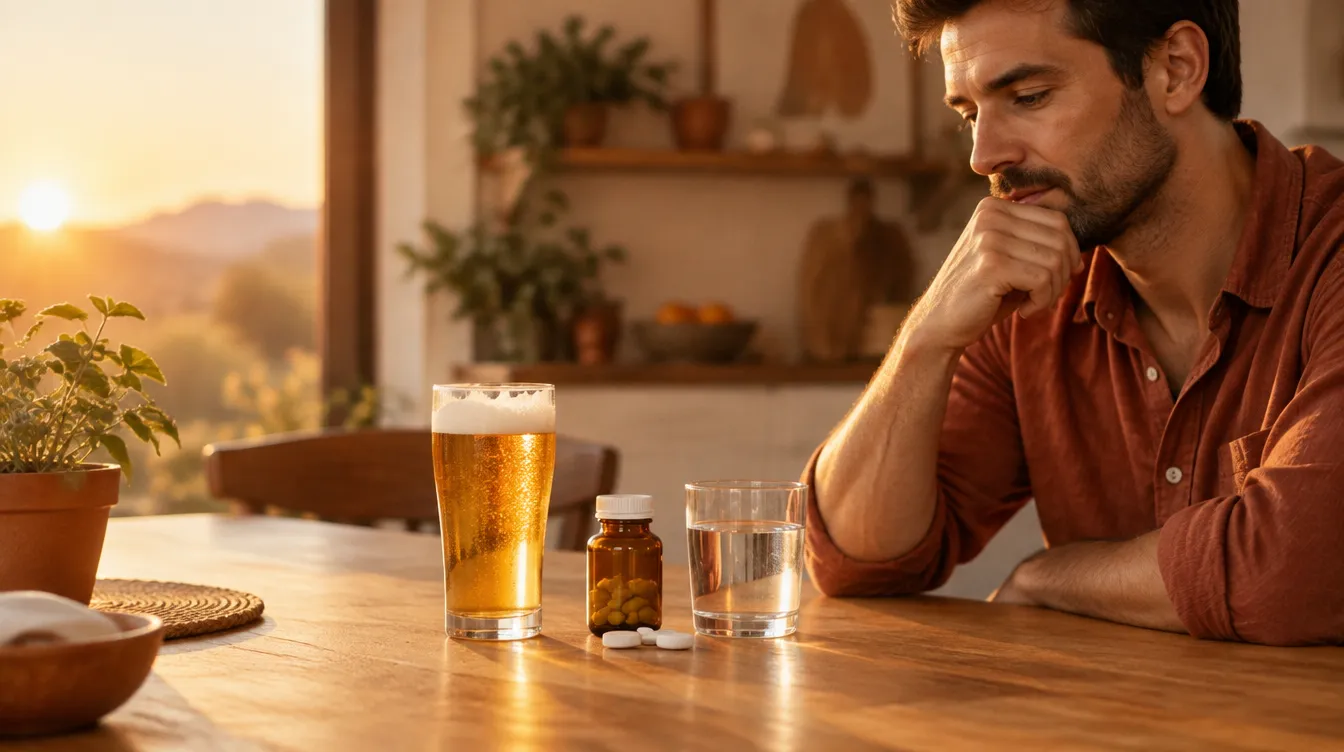
Quick answer: For most people taking metformin, moderate drinking — up to one drink a day for women, two for men, per standard guidance — is not forbidden, and beer itself doesn’t dangerously interact with metformin at moderate intake. The real caveats: alcohol blocks the liver’s glucose release (so heavy drinking on any diabetes medication risks a delayed low, especially overnight), metformin plus heavy alcohol is the combination linked to the rare-but-serious lactic acidosis warning, and beer delivers real carbs. The moderation rule does the heavy lifting.
The beer-and-metformin question gets asked constantly in diabetes forums, and the answers range from “absolutely not” to “it’s fine” — both wrong. The honest answer is about amounts, timing, and a couple of specific mechanisms. Here they are.
How do alcohol and metformin actually interact?
Two mechanisms matter, and neither involves beer “canceling” metformin:
- Alcohol pauses the liver. Your liver prioritizes clearing alcohol over releasing glucose. With metformin already telling the liver to release less glucose, a heavy drinking session stacks two glucose-suppressing effects — which is why lows from alcohol tend to arrive hours later, including overnight while you sleep. This risk is bigger with insulin or sulfonylureas, but metformin drinkers aren’t exempt when intake is heavy or food is skipped.
- The lactic acidosis label. Metformin’s rare serious warning is lactic acidosis, and heavy alcohol use is listed as a risk factor because alcohol impairs lactate clearance. To keep perspective: lactic acidosis is genuinely rare (a handful of cases per 100,000 patient-years), and it’s overwhelmingly associated with the combination of metformin plus kidney impairment, severe illness, or chronic heavy drinking — not a couple of beers with dinner. But it’s the reason “moderation” isn’t just a nice-to-have here.
- Beer is also a carb food. Regular beer runs roughly 10–15 grams of carbohydrate per 12 oz — more than people expect — plus alcohol calories. Light beer cuts both; the effect on your meter is testable the same way as any food (our rice guide explains the test-after method).
What’s a sensible limit?
The general alcohol guidance for adults with diabetes mirrors the population guidance — up to one standard drink per day for women, up to two for men — with diabetes-specific footnotes:
- Never drink on an empty stomach. Food in the stomach slows alcohol absorption and keeps the liver’s glucose-release machinery supplied. The “beer with dinner, not instead of dinner” rule is the single most protective habit.
- Count the carbs. Two regular beers add ~20–30 grams of fast-ish carbs to the day — worth fitting into the same budget logic as any other carb food.
- Test before bed on drinking nights. The delayed low is the mechanism people don’t see coming; a bedtime reading after more-than-usual drinking is cheap insurance. Our unexpected readings guide covers how to react without panic.
- Skip the drinking-on-empty-stomach-after-hard-exercise combination entirely. Exercise depletes liver glycogen, alcohol blocks its restock — that stack is where overnight lows live.
Who should drink less or not at all?
Some situations change the math, and they’re worth naming honestly:
- Kidney impairment — metformin’s dose is already kidney-adjusted, and alcohol plus reduced kidney function removes the safety margin. Ask your prescriber.
- Heavy or daily-multiple drinking — this is the actual lactic-acidosis risk profile, and it’s also independently bad for glucose. The problem isn’t metformin at that point.
- A history of pancreatitis — alcohol and pancreatitis don’t mix for anyone, and pancreatitis is on metformin’s warning list.
- Frequent lows or overnight lows already — adding a glucose-suppressing substance to an existing pattern needs a care-team conversation first.
- Pregnancy, certain liver conditions, or medications that interact with alcohol — the standard rules apply on top.
None of these are moral judgments; they’re just the cases where “moderation” needs to become “much less” or “none,” decided with your care team. One more practical point belongs here: your prescriber can only account for your drinking if you tell them the honest number. Most people underreport by half without noticing they’re doing it — the weekend glasses get rounded down and the weeknights vanish entirely. There’s no judgment channel on a glucose meter; if your fasting readings run higher after drinking weekends, that pattern tells you the same thing your doctor would, and it’s worth bringing to both of you.
What about wine, spirits, and “non-alcoholic” beer?
The same mechanisms apply with different numbers:
- Dry wine carries fewer carbs than beer (roughly 3–5 grams per glass) — but the alcohol itself is the driver of the delayed-low mechanism, so wine is gentler on the carb budget, not on the liver-pause problem.
- Spirits carry essentially no carbs — the danger flips entirely to the alcohol effect. A spirit mixed with soda water is a very different event than the same spirit in tonic or cola, where the mixer adds 20+ grams of fast sugar. Sugary mixers stack a spike on top of a substance that will later suppress glucose — the worst of both curves.
- Non-alcoholic beer varies enormously: some contain almost no alcohol and few carbs, others carry as much sugar as soda and meaningful alcohol. Check the label the same way you’d check a cereal box — and remember the alcohol-free label doesn’t always mean zero.
The pattern across all of them: the carb count is the visible thing, but the alcohol quantity is the thing that decides overnight risk. If you remember one sentence, make it that one.
And a note on testing the personal version: everyone’s response to the same two beers differs more than any table suggests. Two weekends in a row of “drink, test at bedtime, test at waking” gives you your own curve — sometimes the meter says the light beer is a non-event, sometimes it says even one regular beer buys you a weird 3 a.m. reading. Either answer is useful, and it’s exactly the kind of n=1 experiment our testing guides are built for.
The takeaway
So: a beer with dinner on a Saturday is not a rebellion against your metformin — it’s a food-and-alcohol event you can test, budget, and enjoy like any other. What the evidence doesn’t support is regular heavy drinking, drinking without food, or treating alcohol as harmless because metformin is “the mild one.” Count the carbs, keep the food, test before bed on bigger nights, and let your prescriber know your real habits — the kidney and liver checks they already run cover this ground. The meter, as always, gets the final word.
Frequently asked questions
Can I drink beer while taking metformin? In moderation — up to about one drink a day (women) or two (men), with food, not on an empty stomach — moderate drinking alongside metformin is generally considered acceptable for people without the complicating factors listed above. Heavy drinking with metformin is a genuinely bad idea for the lactic acidosis and delayed-low reasons.
Does alcohol lower blood sugar with metformin? Alcohol blocks the liver’s glucose release, and metformin already reduces it — so yes, the combination can push glucose down hours later, especially overnight or when drinking heavily without food. That’s the mechanism behind the bedtime-test advice.
Is light beer better than regular beer for diabetes? Light beer carries roughly a third less carbohydrate and alcohol by volume, so it’s the gentler choice — but alcohol quantity is the bigger variable for the overnight-low mechanism, so “lighter, fewer, with food” beats swapping brands while volume stays high.
How long after drinking should I worry about low blood sugar? The risk window is longest overnight and into the next morning — alcohol’s glucose-suppressing effect outlasts the buzz by hours. A bedtime reading on drinking nights is the practical safeguard.
Does metformin stop alcohol from working, or vice versa? No — neither cancels the other. The interaction is metabolic (liver prioritization and lactate clearance), not a blocking effect. The myth that metformin “protects” you from alcohol’s effects is exactly backward.
This guide is also available in Spanish: ¿Se puede beber cerveza con metformina?.
Want the complete system?
This guide is based on Hardy's ebooks — plain-language, step-by-step PDFs you can read in one sitting. See all guides
Educational content only — not a substitute for advice from your doctor or pharmacist. Always work with your care team.